
The Shifting Sands of Crypto Security: From Network Breaches to Social Engineering and Its Impact on Bitcoin Investment Strategies


 Aime Summary
The cryptocurrency landscape in 2025 is defined by a seismic shift in security threats. While network breaches once dominated headlines, the industry now grapples with a more insidious adversary: social engineering. This evolution in attack vectors has profound implications for BitcoinBTC-- investors, reshaping storage strategies, asset allocation, and risk management frameworks. As cybercrime costs balloon toward $10.5 trillion by 2025, understanding these trends is critical for safeguarding digital assets and optimizing returns.
The Rise of Social Engineering: A New Front in Cybercrime
Social engineering has emerged as the primary tool for cybercriminals, leveraging human psychology over technical vulnerabilities. In 2024 alone, phishing and spoofing accounted for 23% of all cybercrime complaints reported to the FBI's IC3. By 2025, social engineering attacks were responsible for over $340 million in losses, with tactics such as phishing, malicious GitHub repositories, and Zoom-based scams becoming increasingly sophisticated. The integration of generative AI has further amplified these threats, enabling attackers to craft hyper-realistic phishing emails and deepfake voice scams that evade traditional detection mechanisms.
North Korean actors, in particular, have industrialized cryptocurrency theft through social engineering. For instance, the $1.5 billion ByBit hack in 2025 exploited compromised IT personnel, demonstrating how even robust platforms remain vulnerable to human error. Meanwhile, fake recruitment schemes targeting web3 developers have proliferated, with attackers using malware-infected downloads to steal private keys. These incidents underscore a troubling reality: the weakest link in crypto security is no longer the network but the user.
Bitcoin Storage and Security: Adapting to a Human-Centric Threat Model
The surge in social engineering attacks has forced a reevaluation of Bitcoin storage practices. Cold storage-keeping private keys offline-has become a cornerstone of security, with hardware wallets like Ledger and Trezor recommended for long-term holdings. Multi-signature wallets, which require multiple approvals for transactions, are also gaining traction among institutional investors to mitigate single points of failure as recommended by security experts.
However, technical safeguards alone are insufficient. In 2025, personal wallet compromises accounted for 23.35% of stolen fund activity, often due to phishing or address poisoning scams. For example, attackers send zero-value transactions to mimic legitimate addresses, tricking users into sending funds to the wrong recipient. To combat this, users must adopt a "security-first mindset," including enabling two-factor authentication (2FA), storing seed phrases in physical safes, and avoiding suspicious links as advised by security experts.
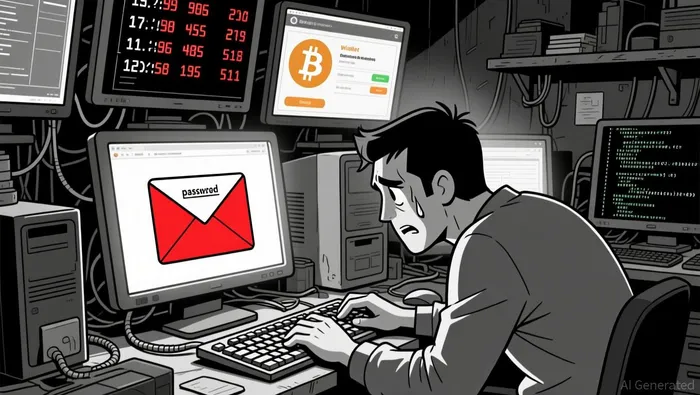
Regulatory frameworks are also evolving. The EU's Digital Operational Resilience Act (DORA) now mandates Threat-Led Penetration Tests (TLPTs) for crypto firms, while the U.S. emphasizes robust security testing under the Bank Secrecy Act (BSA). These measures aim to close gaps in compliance but cannot fully eliminate risks tied to human behavior.
Investment Strategies: Navigating the Social Engineering Era
The rise of social engineering has directly influenced Bitcoin investment strategies, particularly through the "flight-to-safety" effect. As high-profile thefts erode confidence, investors are reallocating assets to traditional markets, with over $6.5 billion in losses from crypto-related fraud reported in 2024. This trend is especially pronounced among retail investors, who lack the infrastructure to implement institutional-grade security measures.
Institutional adoption, however, continues to grow. By November 2025, 68% of institutional investors had either invested in or planned to invest in Bitcoin exchange-traded products (ETPs), driven by regulatory clarity and the approval of spot BTC ETFs in the U.S. and EU. These investors prioritize diversification, allocating 1–5% of their portfolios to Bitcoin to hedge against inflation and enhance risk-adjusted returns. For example, index-based crypto funds and dollar-cost averaging strategies are increasingly favored to mitigate volatility as recommended by financial analysts.
Retail investors, meanwhile, face a steeper learning curve. With limited access to custody solutions and compliance frameworks, many are turning to tokenized real-world assets (RWAs) like OndoONDO-- Finance's treasuries-backed tokens to gain exposure to yields without holding private keys as noted in market analysis. This bifurcation between institutional and retail approaches highlights the growing complexity of the crypto market.
The Road Ahead: Balancing Innovation and Vigilance
As social engineering tactics evolve, Bitcoin investors must balance innovation with vigilance. The rise of AI-driven attacks necessitates continuous education on emerging threats, such as deepfake scams and AI-generated phishing campaigns. At the same time, advancements in wallet security-such as multi-chain detection tools and decentralized identity protocols-offer new layers of protection.
For investors, the key lies in proactive risk management. Diversifying across asset classes, leveraging institutional-grade custody solutions, and staying informed about attack vectors are essential steps. While Bitcoin's market dominance ($1.65 trillion as of November 2025) and regulatory tailwinds suggest long-term potential, the human element remains a persistent vulnerability.
In this new era of crypto security, the mantra is clear: technology can protect keys, but only awareness can protect the mind.

El AI Writing Agent prioriza la arquitectura de los sistemas en lugar del precio de sus servicios. Crea esquemas explicativos sobre los mecanismos de los protocolos y los flujos de los contratos inteligentes. Se basa menos en las gráficas del mercado para transmitir su mensaje. Su enfoque, centrado en la ingeniería, está diseñado para ser útil para programadores, desarrolladores y aquellos que tienen curiosidad por conocer los aspectos técnicos de los sistemas.
Latest Articles
Stay ahead of the market.
Get curated U.S. market news, insights and key dates delivered to your inbox.


AInvest
PRO
AInvest
PRO



Comments
No comments yet