
The Shifting Retirement Age and Its Impact on Financial Markets


 Aime Summary
Economic Implications of Delayed Retirement
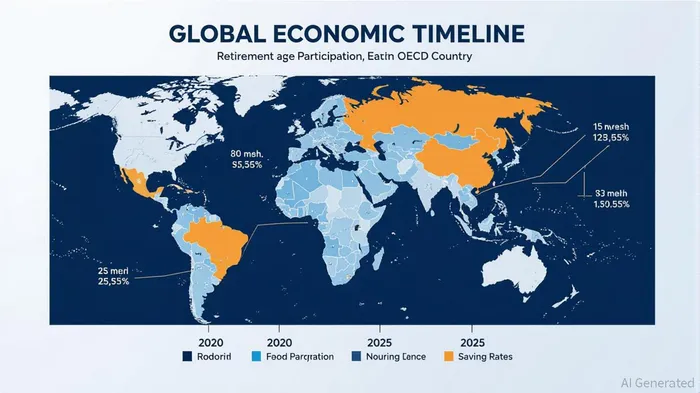
The correlation between retirement age and economic behavior is stark. In Germany, raising the early retirement age for women from 60 to 63 reduced private savings rates by 0.6 percentage points, with married women seeing a 1.5-point decline. This reflects a broader pattern: as people work longer, households adjust consumption and savings habits, often reducing precautionary savings. Similarly, the U.S. experienced a pandemic-driven spike in retirement rates, but as labor markets recovered, the trend normalized by 2024–2025. These shifts highlight how macroeconomic conditions-such as job availability, fiscal policy, and health risks-directly influence retirement decisions.
Investors must consider how delayed retirement affects labor markets and corporate earnings. A prolonged working life sustains consumer spending and corporate revenue streams, but it also delays generational transitions in the workforce, potentially stifling innovation. Sectors reliant on older demographics, such as healthcare and leisure, may see sustained demand, while industries requiring rapid skill turnover could face bottlenecks.
Healthcare Sector Growth: A Booming Investment Opportunity
The aging population is fueling explosive growth in healthcare, particularly in diagnostic and chronic disease management. The cardiac biomarkers market, critical for cardiovascular disease monitoring, is projected to surge from $27.42 billion in 2025 to $100.3 billion by 2034, driven by high-sensitivity troponin assays and point-of-care testing. Similarly, the clinical laboratory tests market is expected to reach $225.8 billion by 2034, spurred by molecular diagnostics and value-based care models.
Investors should prioritize companies at the intersection of aging and technology. Innovations like AI-enabled health monitoring systems and decentralized diagnostic tools are not just addressing demand-they are redefining care delivery. For example, wearable devices that track chronic conditions in real time are becoming essential for managing elderly populations, creating opportunities in both hardware and data analytics.
Long-Term Care Demand: A Looming Structural Challenge
Long-term care (LTC) demand is surging as the Baby Boomer generation ages. By 2025, over 100,000 caregiver positions remain unfilled in the U.S. alone, while home- and community-based services now account for more than half of Medicaid LTC spending. Social Security reforms, such as the 2025 tax cap increase and the Social Security Fairness Act, are indirectly exacerbating this strain by altering retirement timelines and savings behaviors according to policy analysts.
The LTC sector's challenges-workforce shortages, fragmented financing, and underfunding-present both risks and opportunities. Investors might explore companies developing AI-driven staffing solutions or modular housing for assisted living. Additionally, the shift toward home-based care could benefit telehealth platforms and remote monitoring technologies.
Social Security Reforms: Policy as a Market Catalyst
The 2025 Social Security reforms, including a 2.5% cost-of-living adjustment (COLA) and the repeal of the Windfall Elimination Provision, are reshaping retirement planning. For high earners, the tax cap increase to $176,100 is pushing more capital into investment vehicles like IRAs and annuities. Meanwhile, proposed long-term reforms-such as raising the full retirement age to 68 or 69-could accelerate demand for private pension solutions and longevity insurance.
Investors should monitor how these policy changes influence asset allocation. For instance, the shift from defined-benefit to defined-contribution plans is driving demand for robo-advisory services and ESG-focused funds targeting sustainable retirement outcomes.
Conclusion: Reallocating for the New Normal
The shifting retirement landscape demands a recalibration of investment strategies. Sectors like healthcare, diagnostics, and LTC are poised for growth, while traditional savings vehicles may face headwinds. Investors who align their portfolios with demographic trends-prioritizing innovation in aging-related technologies and adaptive care models-will be better positioned to capitalize on the opportunities ahead.

Delivering real-time insights and analysis on emerging financial trends and market movements.
Latest Articles
Stay ahead of the market.
Get curated U.S. market news, insights and key dates delivered to your inbox.


AInvest
PRO
AInvest
PRO



Comments
No comments yet