
The Shift in Investor Sentiment Amid Mixed U.S. Inflation and Spending Data
 Aime Summary
Assessing Inflation's Stickiness and the Fed's Dilemma
The September PCE data underscored the persistence of inflation, with core services and goods prices continuing to drive upward pressure. While the 0.2% monthly rise in core PCE was in line with expectations, it highlighted the Fed's struggle to reconcile its dual mandate of price stability and maximum employment. The Federal Open Market Committee (FOMC) acknowledged this tension in its September decision, citing a "shift in the balance of risks" from inflation to the labor market, where hiring has slowed and downside risks have intensified.
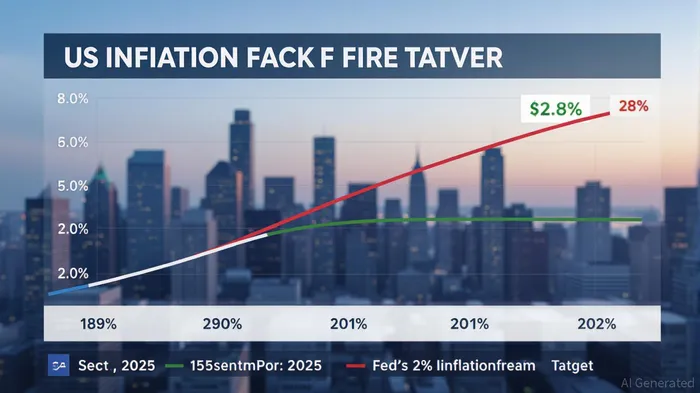
However, not all Fed officials agree on the urgency of further rate cuts. Raphael Bostic of the Atlanta Fed warned that inflation has exceeded the 2% target for nearly five years, with no clear signs of a near-term decline. Conversely, newly appointed Governor Stephen Miran advocated for a more aggressive 50-basis-point cut, reflecting internal divisions. This debate underscores the Fed's cautious approach: while it seeks to avoid stifling growth, it remains wary of prematurely abandoning its inflation-fighting mandate.
Market Resilience and Investor Repositioning
The September rate cut, the first in nine months, initially buoyed markets. Small-cap stocks rallied as investors bet on a more accommodative monetary environment, while large-cap technology shares lagged, reflecting concerns over stretched valuations. J.P. Morgan analysts anticipate two additional cuts in 2025 and one in 2026, but emphasize that the Fed's path will hinge on labor market data. In a non-recessionary easing cycle, risk-on assets like the S&P 500 and high-yield bonds could outperform, while gold may serve as a diversifier.
Yet, optimism is tempered by structural headwinds. Vanguard has highlighted challenges in sectors such as housing and private equity, where affordability and liquidity issues persist despite rate cuts. Meanwhile, fears of a financial market meltdown have intensified following the U.S. government shutdown, which delayed key economic data releases and left investors in the dark. Morgan Stanley's Mike Wilson urges a "rolling recovery" strategy, anticipating broader market strength in 2026 but cautioning against overexposure to high-tech sectors where AI-driven investments are increasingly funded by debt rather than cash flows.
Navigating a Low-Inflation Regime
As the Fed inches toward a low-inflation regime, investors must reposition portfolios to balance growth and risk. BlackRock recommends reducing high cash allocations and favoring intermediate-duration fixed income and credit opportunities, given the potential for prolonged easing. Similarly, Wellington Management suggests focusing on sectors poised to benefit from rate cuts, including small/mid-cap stocks and consumer discretionary plays.
However, the path to a 2% inflation target remains uncertain. The Cleveland Fed's inflation expectations model shows long-term expectations at 2.29%, suggesting consumer confidence in price stability. Yet, with core services inflation stubbornly elevated and labor market signals mixed, the Fed's next moves will likely dictate market direction.
Conclusion
Investor sentiment is shifting amid a complex macroeconomic landscape. While the September rate cut and softening inflation data have provided a tentative green light for risk-taking, structural challenges and policy uncertainty demand a measured approach. As the Fed navigates its "curious kind of balance," investors must prioritize flexibility, hedging against both inflationary relapses and growth disappointments. The coming months will test market resilience-and the ability of policymakers to engineer a soft landing.

Delivering real-time insights and analysis on emerging financial trends and market movements.
Latest Articles
Stay ahead of the market.
Get curated U.S. market news, insights and key dates delivered to your inbox.






Comments
No comments yet