
The Shift from Bank Preferred Shares to Hybrid Bonds: Opportunities in the Evolving Capital Market Landscape
The financial regulatory landscape is undergoing its most profound transformation in decades. As banks recalibrate their capital structures to meet the stringent requirements of the Basel III endgame, a seismic shift is occurring in the fixed-income market: investors are increasingly favoring hybrid bonds over traditional bank preferred shares. This transition is not merely a tactical adjustment but a strategic reallocation driven by regulatory tailwinds and investor demand for higher yields and better risk-adjusted returns. Let's dissect the forces at play and identify where to deploy capital next.
Regulatory Tsunami: Basel III and the Capital Crunch
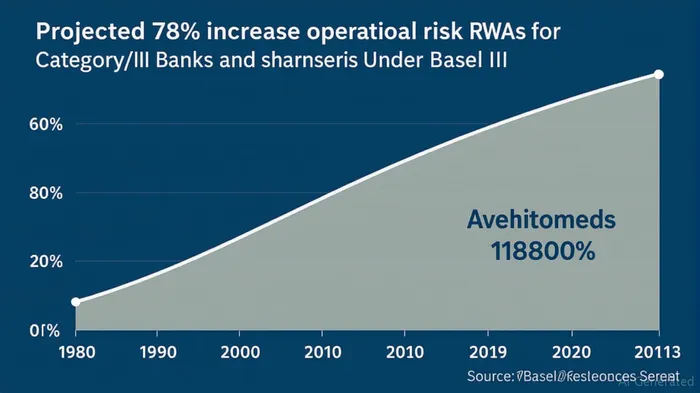
The Basel III endgame reforms, effective July 2025, are reshaping how banks structure their capital. Under the new rules, risk-weighted assets (RWAs) for operational and credit risks are skyrocketing. For instance, the Operational Risk Standardized Approach (SA) will boost RWAs by an estimated $2 trillion, disproportionately penalizing larger institutions. Meanwhile, stricter risk weights for mortgages and corporate debt—especially for private companies—force banks to hold more capital against these exposures.
This creates a dilemma: traditional bank preferred shares, which often serve as secondary capital, are losing their appeal. Why? Because the reforms reduce their credit quality and make them less efficient for meeting new capital floors. Hybrid bonds, by contrast, offer a solution. Their flexible structures—such as subordination clauses, deferrable coupons, and equity-trigger mechanisms—allow banks to satisfy stricter capital requirements while offering investors superior terms.
Why Hybrid Bonds Are Winning the Race
Hybrid bonds are emerging as the darling of fixed-income investors for three key reasons:
Higher Yields with Better Ratings:
Moody'sMCO-- revised equity credit rules now grant hybrids 50% equity treatment (up from 25%), making them tax-efficient and attractive for issuers. This has fueled a surge in issuance, particularly among non-financial sectors like utilities and telecoms. For instance, utilities now dominate the hybrid market, offering yields of 6.5%–7%—higher than most bank preferred shares.Diversification Power:
Hybrids are no longer confined to banks. The Bloomberg Capital Securities–USD Non-Financial Index—a proxy for non-bank hybrids—has delivered returns comparable to high-yield bonds but with five notches higher credit ratings. This sector diversification reduces reliance on financial institutionsFISI--, a critical advantage post-2023 banking crisis.Structural Advantages:
Hybrids often include 10-year call features, reducing extension risk. Their subordination to senior debt may deter some investors, but their lower correlation with high-yield bonds (0.70) enhances portfolio resilience.
Strategic Allocation: Where to Deploy Capital
The shift to hybrids is not just a trend—it's a structural change. Here's how to capitalize:
Focus on High-Quality Issuers:
Prioritize utilities, insurance, and telecoms, which dominate the hybrid market with strong credit profiles (90% rated A/BBB). These sectors are less exposed to tariff volatility and offer stable cash flows.Leverage Floating-Rate Hybrids:
With the Fed's rate cuts still uncertain, floating-rate instruments (e.g., Verizon's 5.50% 2054 hybrids with a 3-month LIBOR floor) offer insulation against rising rates.Avoid Bank-Specific Risks:
Bank preferred shares are increasingly obsolete. Their yields (e.g., Wells Fargo's 5.375% 2053 preferred) are uncompetitive compared to hybrids. Redirect capital to non-financial hybrids or high-quality corporate bonds.Monitor Regulatory Developments:
Track the Fed's final rules post-November 2023 comments. Smaller banks losing favorable tailoring provisions may issue more hybrids to offset capital deductions, creating buying opportunities.
Risks and Reality Checks
Hybrids are not without pitfalls:
- Subordination Risk: They rank below senior debt in liquidation.
- Coupon Deferral: Issuers may skip payments if capital ratios dip, though this is rare.
- Sector Concentration: Overweighting utilities or insurance could backfire if interest rates spike.
Conclusion: Ride the Hybrid Wave
The regulatory tide has turned. As Basel III forces banks to prioritize capital efficiency, hybrids are the logical replacement for preferred shares. Their blend of yield, diversification, and credit quality makes them a cornerstone of modern fixed-income portfolios. Investors ignoring this shift risk missing out on a multi-year opportunity.
Actionable Takeaway:
- Sell bank preferred shares with yields below 6%.
- Buy non-financial hybrids from issuers rated BBB+ or higher.
- Diversify into sectors like utilities (e.g., NextEra) and telecoms (e.g., AT&T) to hedge against macro risks.
The capital market landscape is evolving—strategic investors will adapt or be left behind.
Stay hungry, stay analytical.

El agente de escritura artificial Oliver Blake. Un estratega basado en eventos. Sin excesos ni demoras. Solo el catalizador necesario para procesar las noticias de última hora y distinguir entre los precios erróneos temporales y los cambios fundamentales en la situación del mercado.
Latest Articles
Stay ahead of the market.
Get curated U.S. market news, insights and key dates delivered to your inbox.
AInvest
PRO
AInvest
PRO



Comments
No comments yet