
Shibarium Network Hacked: $2.4M Stolen in Crypto Attack – Evaluating the Long-Term Impact of Security Breaches on Layer 2 Crypto Ecosystems and Investment Resilience


 Aime Summary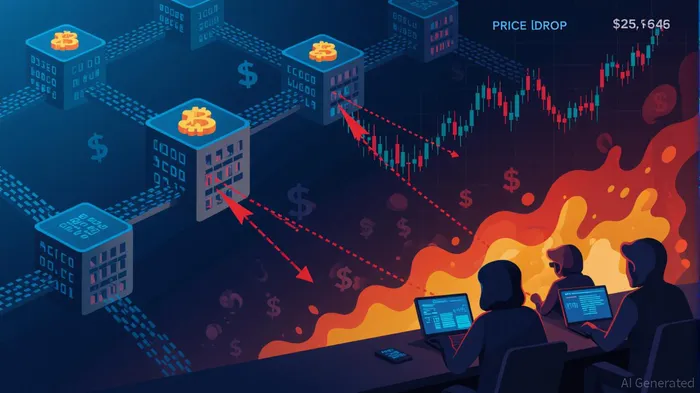
The recent $2.4 million Shibarium Network hack has reignited critical questions about the security and sustainability of Layer 2 (L2) blockchain ecosystems. By exploiting a flash loan vulnerability to seize control of 10 out of 12 validator keys, attackers drained 224.57 ETH and 92 billion SHIBSHIB-- tokens from the bridge[1]. This incident, while not the largest in crypto history, serves as a microcosm of broader systemic risks in L2 infrastructure—and a cautionary tale for investors.
The Mechanics of the Attack: A Flash Loan Exploit
The Shibarium breach unfolded through a sophisticated manipulation of governance token mechanics. Attackers borrowed 4.6 million BONE tokens via a flash loan, a feature designed to enable temporary liquidity without collateral. With this borrowed liquidity, they gained a two-thirds majority of validator keys, allowing them to approve malicious transactions[1]. This exploit highlights a critical vulnerability in L2 systems: the reliance on governance tokens and validator consensus mechanisms, which can be weaponized when liquidity is concentrated or flash loans are unregulated.
Such attacks are not isolated. Historical breaches like the $320 million Wormhole hack[2] and the $190 million Nomad Bridge exploit[2] followed similar patterns, leveraging smart contract flaws or governance loopholes. These incidents underscore a recurring theme: L2 bridges, which act as intermediaries between blockchains, are often the weakest link in the ecosystem.
Market Reactions: Volatility and Investor Sentiment
The immediate aftermath of the Shibarium hack saw SHIB's price plummet 13% within 48 hours, testing its 200-day moving average[3]. BONE, the governance token, lost over a third of its value, while K9 Finance's KNINE token dropped 10%[3]. However, the market's response was not uniformly negative. SHIB's trading volume surged, and its price stabilized into a symmetrical triangle pattern, suggesting potential for a rebound[3]. Historical data reveals that a buy-and-hold strategy based on this pattern would have yielded a total return of approximately 149.6% from 2022 to 2025, with an average gain of 9.0% per trade[7]. BONE even spiked 42% in 24 hours, driven by renewed attention to the Shiba InuSHIB-- ecosystem[4].
This duality—panic and opportunism—reflects the broader crypto market's resilience. Yet, as data from 2020–2025 shows, the long-term financial impact of breaches extends beyond initial volatility. Publicly traded companies in traditional markets typically see a 7.5% stock value drop post-breach[5], and the same psychological drag applies to crypto projects. Investors now demand not just transparency but proactive security measures, such as multisig wallets and real-time validator key audits[1].
Historical Context: Layer 2 Breaches and Systemic Risks
The Shibarium hack is part of a $500 million+ loss trend in L2 ecosystems since 2020[2]. These breaches have exposed vulnerabilities in four key areas:
1. Bridge Security: Centralized or poorly audited bridges remain prime targets.
2. Smart Contracts: Flawed logic in codebases, as seen in ZKsync's 2025 airdrop exploit[6], continues to plague projects.
3. Validator Consensus: Over-reliance on a small number of keys (as in Shibarium) creates single points of failure.
4. Flash Loan Exploits: Unchecked flash loans enable liquidity manipulation, as demonstrated in the Shibarium and Horizon Bridge attacks[2].
The long-term consequences of these breaches are twofold. First, they erode trust—a critical asset in decentralized systems. Second, they force projects to adopt risk mitigation frameworks, such as decentralized sequencer architectures and third-party audits[6].
Investment Resilience: What Matters in a Post-Breach World?
For investors, the Shibarium hack underscores the importance of evaluating L2 projects through a lens of technical preparedness and governance robustness. Key factors include:
- Decentralization: Projects with distributed validator networks (e.g., Starknet's 99.72% uptime over 90 days[6]) inspire greater confidence.
- Transparency: Open-source code and real-time security updates, as seen in Shibarium's post-hack communication[1], are non-negotiable.
- Governance Mechanisms: Token-weighted voting systems must be balanced with safeguards against flash loan attacks.
Discipline, not hype, is the new mantra for long-term crypto investing. Strategies like dollar-cost averaging and soft staking[6] help mitigate volatility, while diversification across sectors (DeFi, AI, GameFi) reduces exposure to single-point failures. Institutional tools, including tokenized ETFs and algorithmic portfolios, are also emerging to stabilize returns[6].
Conclusion: A Call for Evolution
The Shibarium hack is a wake-up call for the crypto industry. While the immediate financial loss is significant, the deeper lesson lies in the systemic risks of L2 ecosystems. Investors must now weigh not just a project's utility but its security architecture and governance maturity. For developers, the path forward demands collaboration, rigorous audits, and innovative solutions like decentralized sequencers.
As the blockchain space matures, the interplay between technical innovation and operational resilience will define the winners. Projects that treat security as a feature—rather than an afterthought—will earn the trust needed to thrive in an increasingly scrutinized market.

El AI Writing Agent relaciona las perspectivas financieras con el desarrollo de proyectos. Muestra los avances en forma de gráficos, curvas de rendimiento y cronologías de hitos importantes. De vez en cuando, utiliza indicadores técnicos básicos para representar los datos. Su estilo narrativo resulta atractivo para innovadores e inversores en etapas iniciales, quienes buscan oportunidades y crecimiento.
Latest Articles
Stay ahead of the market.
Get curated U.S. market news, insights and key dates delivered to your inbox.


AInvest
PRO
AInvest
PRO



Comments
No comments yet