
Shiba Inu's Short Liquidation Imbalance as a Macro-Driven Alpha Play Amid Fed Policy Shifts


 Aime Summary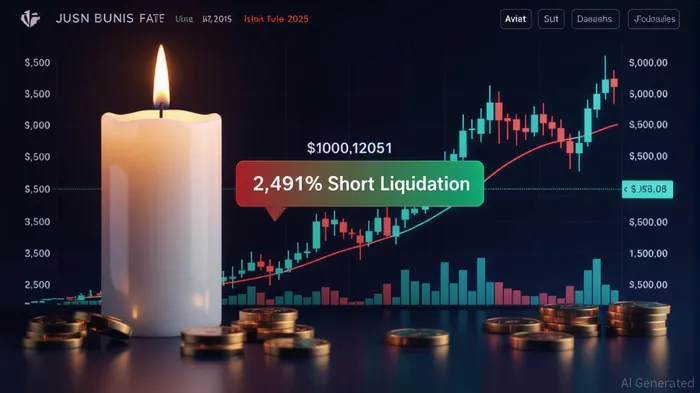
The cryptocurrency market has long been a barometer for global macroeconomic sentiment, but few assets exemplify this dynamic as vividly as Shiba InuSHIB-- (SHIB). In Q2 2025, SHIB's price trajectory became a case study in how small-cap tokens amplify liquidity imbalances and asymmetric volatility during Federal Reserve policy shifts. The Jackson Hole symposium on August 22, 2025, marked a pivotal moment when Fed Chair Jerome Powell's remarks hinted at a potential September rate cut, triggering a 6.3% price surge in SHIBSHIB-- within an hour. This rapid movement exposed a staggering 2,491% short liquidation imbalance, with $51,300 in short positions wiped out compared to just $2,060 in long liquidations. Such events underscore the unique opportunities—and risks—embedded in small-cap crypto assets during macroeconomic transitions.
The Fed's Role in Shaping SHIB's Volatility
SHIB's sensitivity to Fed policy is rooted in its speculative nature and lack of intrinsic value. Unlike traditional equities or commodities, meme coins derive their price from sentiment, liquidity flows, and leveraged trading activity. When the Fed signals dovish or hawkish shifts, the cost of capital and risk appetite for speculative assets adjust accordingly. For example, during the 2021 bull run, SHIB surged 50 million percent amid near-zero interest rates and expansive monetary stimulus. Conversely, the 2022–2023 tightening cycle saw SHIB lose 84% of its peak value as investors fled risk assets.
The August 2025 liquidation event exemplifies this pattern. Powell's Jackson Hole speech, which suggested a potential rate cut, acted as a catalyst for a short squeeze. SHIB's price spike from $0.00001202 to $0.00001287 triggered stop-loss orders concentrated near prior price levels, creating a liquidity vacuum that amplified the imbalance. This dynamic is not unique to SHIB; the broader crypto market saw $206 million in short liquidations during the same hour. However, SHIB's small market cap and high leverage among retail traders made it particularly susceptible to such extremes.
Actionable Strategies for Exploiting Asymmetric Volatility
For investors seeking alpha in this environment, three strategies emerge from the data:
Short-Squeeze Reversals:
SHIB's price action around key support/resistance levels offers opportunities to capitalize on short-covering rallies. For instance, the $0.00001212 support level has historically acted as a psychological barrier. A breakout above this level, especially if the Fed confirms rate-cut expectations, could trigger a short-covering rally. Traders should monitor on-chain data for signs of accumulation, such as a decline in open interest or a shift in the long/short ratio (currently at 1.0838, indicating a slight bullish bias).Bearish Liquidation Exhaustion:
During a recent bearish selloff, SHIB experienced a 699,000% short-heavy liquidation imbalance, wiping out $425,230 in long positions. This suggests that long positions have been heavily flushed out, potentially creating a floor for accumulation. Investors could consider buying dips near $0.0000125 if SHIB stabilizes, as the market may lack sufficient bearish liquidity to drive further declines.Macro-Informed Position Sizing:
Position sizing must account for SHIB's extreme volatility and liquidity risks. Whale activity, such as a reported 300 billion SHIB ($3.7 million) dump over a week, can create sudden liquidity shocks. Investors should use stop-loss orders and limit exposure to avoid being caught in rapid reversals. Key technical levels to watch include $0.00001226 (a recent pivot point), $0.00001292 (61.8% Fibonacci retracement), and the $0.000013 resistance zone.
The Bigger Picture: Macro Cycles and Small-Cap Crypto
SHIB's performance is not an isolated phenomenon but a microcosm of broader market dynamics. Small-cap cryptos act as amplifiers of macroeconomic signals, as their liquidity and leverage ratios make them prone to rapid directional shifts. The Fed's policy decisions—whether rate cuts, hikes, or forward guidance—directly influence risk-on/risk-off sentiment, which in turn drives capital flows into or out of speculative assets.
For example, the 2025 rate-cut anticipation led to a 7.5% SHIB rally in 24 hours, while the 2022–2023 tightening cycle saw the token collapse. This pattern suggests that investors can use Fed calendars (e.g., FOMC meetings, Powell speeches) to time entries and exits. However, success requires a nuanced understanding of technical indicators and on-chain metrics. SHIB's burn rate, for instance, spiked 2,196% in a 24-hour period before declining, highlighting the token's inconsistent supply reduction efforts and reinforcing its speculative nature.
Conclusion: Navigating the Noise for Asymmetric Returns
Shiba Inu's short liquidation imbalances reflect the interplay of macroeconomic forces, leveraged trading, and small-cap crypto's inherent volatility. While these dynamics create high-risk scenarios, they also offer asymmetric opportunities for investors who can align their strategies with Fed policy cycles. The key lies in combining macroeconomic timing with technical analysis of liquidation hotspots and liquidity zones.
As the September 2025 Fed meeting approaches, SHIB's price action around $0.00001226 will be a critical test. A breakout could signal a broader shift in market psychology, while a breakdown may deepen the bearish correction. Investors should remain vigilant, using stop-losses and position sizing to mitigate risks. In a market where sentiment shifts rapidly, the ability to exploit liquidity imbalances—while avoiding the pitfalls of overleveraging—will separate alpha generators from the noise.

Decoding blockchain innovations and market trends with clarity and precision.
Latest Articles
Stay ahead of the market.
Get curated U.S. market news, insights and key dates delivered to your inbox.


AInvest
PRO
AInvest
PRO



Comments
No comments yet