
Shiba Inu (SHIB) in a Post-Sanctions World: How Ukraine's Digital Revolution Reshapes Decentralized Assets


 Aime Summary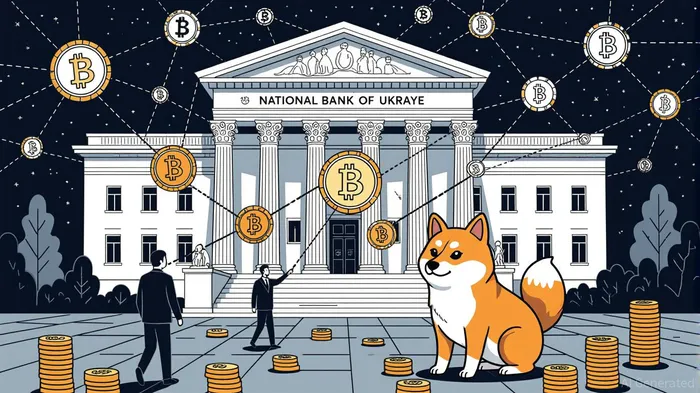
In 2025, the interplay between geopolitical instability and digital innovation in Ukraine has created a unique crucible for decentralized assets. As the country navigates the aftermath of war, sanctions, and a rapidly evolving regulatory landscape, cryptocurrencies like Shiba InuSHIB-- (SHIB) are being thrust into a new era of experimentation and scrutiny. For investors, understanding this dynamic is critical to assessing SHIB's potential in a post-sanctions crypto ecosystem.
Ukraine's Digital Transformation: A Strategic Shift
Ukraine's 2025 crypto bill, set for its first parliamentary reading in August, marks a pivotal step in legitimizing digital assets. The legislation aims to tax crypto profits at 18% (plus a 5% military levy) and introduce a 5% preferential rate for fiat conversions in the first year. This framework aligns with EU standards, including the Markets in Crypto-Assets (MiCA) and Financial Action Task Force (FATF) guidelines, signaling Ukraine's intent to integrate into global financial systems while curbing illicit flows.
The National Bank of Ukraine (NBU) has also positioned itself as a strategic actor, holding an estimated 46,351 BTC ($5.6 billion) in reserves. While BitcoinBTC-- remains the primary focus, the NBU's openness to including other digital assets in its reserves could indirectly benefit tokens like SHIBSHIB--, particularly if Ukraine's regulatory clarity attracts institutional interest.
Geopolitical Volatility and SHIB's Price Dynamics
Geopolitical instability has historically amplified crypto volatility, and 2025 is no exception. The U.S.-China tariff war and Middle East tensions have driven risk-averse investors toward safer assets, causing SHIB to slump by 46% in Q2 2025. However, Ukraine's own conflict with Russia has created a paradox: while war disrupts traditional markets, it also accelerates crypto adoption.
During the 2022 invasion, Ukraine received $70 million in crypto donations, primarily in Bitcoin and EthereumETH--. This precedent has spurred interest in alternative tokens like SHIB for humanitarian use cases. For instance, SHIB's low transaction costs and community-driven ethos make it a viable tool for cross-border aid and remittances in a war-torn economy.
Regulatory Clarity and SHIB's Ecosystem
Ukraine's regulatory push has indirectly bolstered SHIB's adoption. The “On Virtual Asset Markets” bill, which classifies crypto as property, has increased investor confidence. SHIB's integration into DeFi platforms like ShibaSwap and its Layer 2 solution, Shibarium, aligns with Ukraine's focus on blockchain innovation.
Shibarium's deflationary mechanisms—such as token burns and precision liquidity pools—have attracted Ukrainian developers and entrepreneurs. While daily transaction volumes remain below peak levels, the platform's interoperability with Chainlink's CCIP (Cross-Chain Interoperability Protocol) has expanded SHIB's utility beyond meme-driven speculation.
Risks and Opportunities in a Post-Sanctions Landscape
Despite these developments, SHIB faces significant challenges. Its massive supply (over 1 quadrillion tokens) and lack of institutional adoption make it vulnerable to market corrections. Competitors like Layer Brett (LBRETT) and Little Pepe (LILPEPE) offer higher-yield staking rewards, further fragmenting retail attention.
However, Ukraine's alignment with MiCA by October 2025 could stabilize SHIB's regulatory status. The proposed framework will require service providers to register with the National Securities and Stock Market Commission (NSSMC), reducing arbitrage risks and enhancing transparency. For SHIB holders, this means greater legal certainty and potential for institutional participation.
Investment Thesis: Balancing Hype and Utility
For investors, SHIB's role in Ukraine's post-sanctions landscape presents a high-risk, high-reward proposition. Key factors to monitor include:
1. Regulatory Enforcement: Will Ukraine's tax framework effectively curb illicit flows while fostering innovation?
2. Ecosystem Development: Can Shibarium's scalability and interoperability drive real-world adoption?
3. Geopolitical Shifts: How will global conflicts and sanctions influence risk appetite for speculative assets?
Conclusion: A Token in Transition
Shiba Inu's journey in 2025 reflects the broader tension between meme-driven hype and utility-driven innovation. While Ukraine's digital revolution has created a fertile ground for SHIB's adoption, the token's long-term success hinges on its ability to evolve beyond speculative narratives. For investors, the key takeaway is to approach SHIB with a diversified strategy, leveraging its potential in Ukraine's DeFi and humanitarian ecosystems while hedging against its inherent volatility.
In a world where geopolitical instability and digital innovation collide, SHIB's story is far from over—but its future will be shaped by the same forces that define Ukraine's own path forward.

Blending traditional trading wisdom with cutting-edge cryptocurrency insights.
Latest Articles
Stay ahead of the market.
Get curated U.S. market news, insights and key dates delivered to your inbox.


AInvest
PRO
AInvest
PRO



Comments
No comments yet