
SHIB, PEPE Burn Mechanics vs. Utility Infrastructure: 2026 Meme Coin Outlook
 Aime Summary
- Shiba Inu uses token burns and Shibarium scaling to drive scarcity and utility according to analysis.
- Pepe builds internal demand loops via trading infrastructure and staking rewards as reported.
- Crypto hacks surged to $3.4B in 2025, mainly targeting exchanges and DeFi protocols according to data.
- Meme coins must balance community hype with structural demand to avoid volatility per market analysis.
Shiba Inu (SHIB) and PepePEPE-- (PEPE) enter 2026 with divergent approaches to memeMEME-- coin sustainability. SHIBSHIB-- leverages supply reduction through burns and layer-2 Shibarium development, while PEPE focuses on creating internal trading demand via its native infrastructure according to reports. Both face evolving security risks after 2025's $3.4 billion crypto theft surge, plus pressure to convert viral attention into lasting utility as noted in industry analysis. Market participants watch which model better withstands volatile conditions.
How Do SHIB and PEPE Compare in Tokenomics and Ecosystem Design?
SHIB relies primarily on burn mechanics and Shibarium scaling to reduce supply and boost utility according to technical reports. The project retains community appeal but faces volume dependency on third-party exchanges as documented. With a $4.03 billion market cap, significant price appreciation requires sustained transaction momentum that burns alone can't guarantee according to market analysis. That limitation challenges holders seeking asymmetric returns typical of early meme cycles.
PEPE adopts a utility-focused model with PepetoSwap, Pepeto Bridge, and Pepeto Exchange to route volume through its token 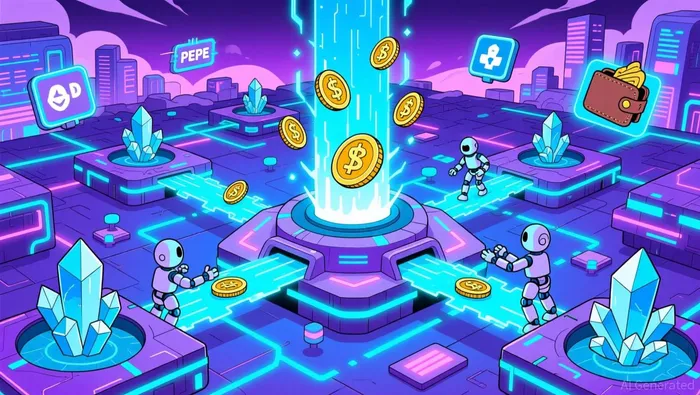 as detailed in ecosystem analysis. This ecosystem generates internal demand while staking offers up to 216% APY to reduce circulating supply according to technical reports. The project raised $7.1 million in presale and supports over 850 meme tokens, positioning as a liquidity hub as reported. Still, execution risks remain for unproven trading infrastructure.
What Security Headwinds Could Impact Meme Coins in 2026?
Exchange vulnerabilities dominated 2025's $3.4 billion hack landscape, including Bybit's $1.5 billion breach attributed to North Korean actors according to security reports. Social engineering and access failures caused most incidents, not technical flaws as analyzed. Centralized platforms saw the heaviest losses despite fewer overall attacks compared to 2024 according to industry data. Meme coins traded predominantly on exchanges face indirect contamination risks during security crises.
DeFi protocols weren't immune, evidenced by Cetus DEX's $220 million drain via a third-party library exploit according to reports. Even wallets proved vulnerable, as Trust Wallet's $6.77 million heist demonstrated as reported. Such incidents create market-wide sell pressure and regulatory scrutiny that often hit speculative assets hardest according to analysis. Meme projects with cross-chain exposure face compounded attack surfaces.
Which Token Offers Stronger Growth Potential for Investors?
SHIB benefits from brand recognition and Shibarium's scaling progress but requires consistent volume growth as noted in market analysis. Its established position brings liquidity yet limits explosive upside potential without new demand catalysts according to industry reports. The burn narrative provides periodic momentum but depends on external market activity more than organic ecosystem flows according to analysis. Community strength remains a key advantage.
PEPE's lower market cap and presale momentum create potential for asymmetric gains if its utility stack gains adoption as reported. Internal volume generation could insulate it from exchange-specific volatility during market stress according to analysis. However, high staking rewards risk inflationary pressure if engagement falters post-launch as detailed. Execution success determines whether demand loops become self-sustaining.
Security and market-wide factors ultimately influence both tokens. The 2026 meme coin landscape requires balancing community energy with sustainable tokenomics to survive inevitable volatility cycles according to market analysis.

Blending traditional trading wisdom with cutting-edge cryptocurrency insights.
Latest Articles
Stay ahead of the market.
Get curated U.S. market news, insights and key dates delivered to your inbox.


AInvest
PRO
AInvest
PRO



Comments
No comments yet