
SHIB Ecosystem Evolution: DeFi Mechanics and Investor Risk Context
 Aime Summary
- Shiba Inu operates as a decentralized ecosystem utilizing a multi-token model (SHIB, LEASH, BONE) and community governance to drive its DeFi products without central leadership.
- The ecosystem relies on staking, burning mechanisms, and the Shibarium Layer 2 network to manage supply and transaction costs, aiming to evolve beyond its meme origins.
- Macro risks for digital assets include surging AI-fueled crypto fraud schemes, with the IRS warning of sophisticated social engineering tactics targeting investors in southern US states.
- Cipher Digital reported a severe financial deterioration in Q2 2026, posting a net loss of $267.5 million driven by soaring interest expenses and non-cash valuation losses on bitcoinBTC--.
Shiba Inu (SHIB) has transitioned from its origins as a meme project into a comprehensive decentralized ecosystem of financial tools. The project operates without central leadership, relying instead on community governance where token holders vote on proposals via the BONE governance token. This structure distinguishes it from many centralized crypto ventures, aiming for a truly autonomous operation.
The ecosystem utilizes a three-token model to manage value and utility. SHIB serves as the primary currency for transactions, while LEASH provides scarcity within the network. BONE facilitates governance, allowing holders to influence the direction of the protocol. This multi-token approach is designed to create a self-sustaining economic environment.
ShibaSwap acts as the decentralized exchange within the ecosystem, allowing users to trade assets and earn rewards by providing liquidity. Value accrual mechanisms include staking, where users lock tokens to secure the network and earn rewards, and burning, which permanently removes tokens from circulation to manage supply. These mechanisms are central to the project's deflationary goals.
To address scalability and cost issues inherent to the EthereumETH-- network, the ecosystem employs Shibarium, a Layer 2 network. Shibarium processes transactions off the main chain to lower costs, verified through a proof-of-stake consensus involving BONE token validators. This infrastructure is critical for handling increased transaction volumes without prohibitive fees.
How Does the Tokenomics Structure Support Long-Term Viability?
The tokenomics of Shiba InuSHIB-- are designed to drive utility and reduce supply over time. The burning mechanism permanently removes tokens from circulation, theoretically increasing the scarcity of the remaining supply. This deflationary pressure is a key factor for investors assessing long-term value.
Staking provides another layer of utility, incentivizing holders to lock their assets. This reduces circulating supply and secures the network. The integration of these mechanisms aims to create a robust DeFi environment that can sustain itself without external funding.
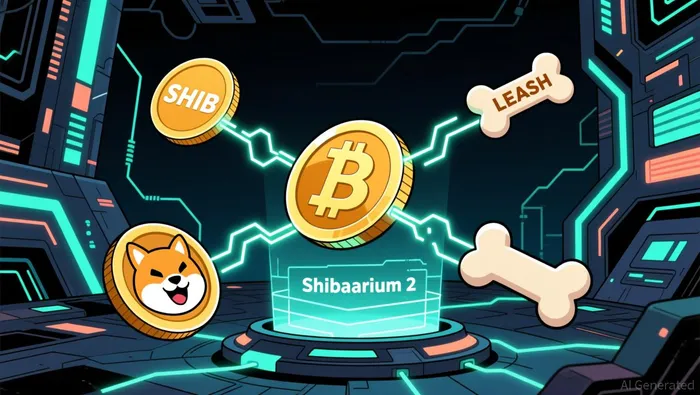
Community governance via BONE tokens ensures that development and proposals are driven by user consensus. This decentralized approach aligns the interests of developers and holders, fostering a collaborative ecosystem. The model relies on active participation to maintain relevance and utility.
What Are the Key Risks and Market Context for Investors?
While Shiba Inu focuses on ecosystem development, the broader digital asset market faces significant headwinds. The IRS has issued urgent warnings about artificial intelligence fueling surges in crypto fraud schemes. These AI-driven scams exploit sophisticated social engineering tactics to deceive investors, particularly in southern US states like Florida, Georgia, and Texas.
Investors are advised to report such incidents to the FBI Internet Crime Complaint Center (IC3). The rise in AI-fueled fraud highlights the increasing sophistication of threats facing crypto holders. This trend underscores the importance of security awareness in the current market environment.
Financial performance in the crypto mining sector also reflects broader challenges. Cipher Digital reported a severe financial deterioration in Q2 2026, driven by soaring interest expenses and large non-cash valuation losses. The company posted a net loss of $267.5 million, contrasting sharply with a much smaller loss in the prior year period.
Bitcoin mining revenue at Cipher Digital fell to $24.8 million from $43.6 million in the prior year quarter. Costs remained elevated, with total costs and operating expenses surging to $103.4 million. This deterioration in core operational profitability signals a difficult operating environment for miners.
The company's operating loss widened to $78.5 million from $45.2 million year-over-year. Beyond operations, Cipher Digital faced substantial non-operating headwinds, including a $150.5 million non-cash loss due to the change in fair value of warrant liability. These factors contribute to a challenging outlook for the sector.
Despite these losses, Cipher Digital generated $35.9 million in interest income, suggesting a substantial cash balance. However, this income was insufficient to offset the combined operating and financing losses. The adjusted EBITDA swung to a negative $30.0 million from a positive $32.3 million, indicating a severe decline in profitability.
The contrast between Shiba Inu's decentralized governance model and the financial struggles of traditional crypto miners highlights the diverse landscape of digital assets. Investors must navigate both technological innovation and macroeconomic risks. The rise in AI-fueled fraud adds another layer of complexity to risk management.
Shiba Inu's evolution into a DeFi ecosystem represents a shift toward utility-driven value. However, the success of such projects depends on sustained community engagement and effective governance. The broader market context, including regulatory warnings and financial volatility, remains a critical factor for investors.
The integration of Layer 2 solutions like Shibarium addresses scalability concerns, potentially enhancing user experience. Yet, the long-term viability of the ecosystem hinges on its ability to deliver measurable value to token holders. The interplay between tokenomics, governance, and market conditions will define its future trajectory.

Blending traditional trading wisdom with cutting-edge cryptocurrency insights.
Latest Articles
Stay ahead of the market.
Get curated U.S. market news, insights and key dates delivered to your inbox.


AInvest
PRO
AInvest
PRO




Comments
No comments yet