
Shell Stock Surges as Geopolitical Tensions Spur Oil Price Hikes
 Aime Summary
Oil prices surged 10% after U.S. and Israeli strikes on Iran, with Brent crude hitting $79.25 per barrel. ShellSHEL-- and BPBP-- shares rose sharply as energy markets reacted to the risk of supply disruptions in the Strait of Hormuz. Global oil markets face a supply surplus in 2026, but geopolitical risks could still drive prices above $100 per barrel. Shell's financial performance is highly sensitive to oil price movements, with $10/b Brent swings affecting free cash flow yields by ~2 percentage points. The Thai government intervened to halt fuel price hikes by Shell and Caltex amid fears of supply shortages.
Oil prices have surged 10% after U.S. and Israeli strikes on Iran caused regional tensions to escalate, sending shockwaves through global energy markets. Shell and BP shares followed suit as investors anticipated potential supply disruptions in the Strait of Hormuz, a vital global energy chokepoint. The rapid rise in oil prices is a direct response to the geopolitical uncertainty, which has led to immediate market volatility and concerns over longer-term inflationary pressures. Analysts are now assessing how long the instability will persist and what that means for oil prices and the global economy.
Why Is Shell Stock Rising Amid Rising Oil Prices?
Shell and BP shares jumped nearly 8.8% on March 2, 2026, as energy prices surged following the U.S. and Israeli military actions in Iran and subsequent retaliatory attacks. Brent crude hit a near-year high of $79.25 per barrel, driven by fears of a potential closure of the Strait of Hormuz, which carries about 20% of global oil and 15% of LNG supplies. Energy analysts like Alan Gelder of Wood Mackenzie warned that even a partial blockage could push oil prices above $100 per barrel, especially if Gulf producers have to shut in output. Shell's free cash flow yields are highly sensitive, rising by approximately 2 percentage points for every $10 increase in the price of Brent crude.
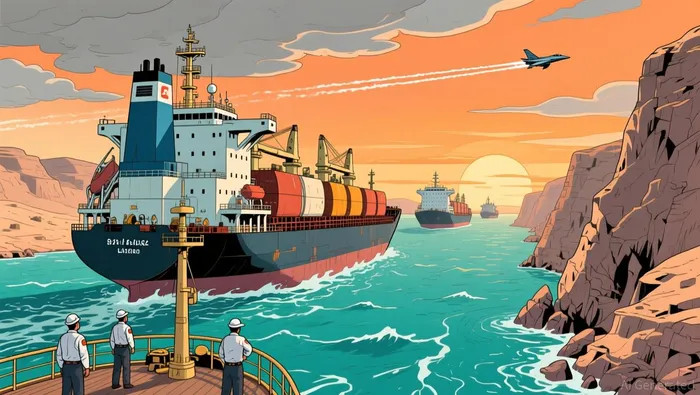
This volatility is not just a short-term event. The current conflict echoes the 2022 Russia-Ukraine war, which pushed oil prices to over $125 per barrel in its early days. While analysts at Goldman Sachs and Citigroup suggest the price rise may moderate if flows in the Strait of Hormuz are quickly restored, prolonged disruptions pose a real risk of extended market instability.
What Does the Oil Price Surge Mean for Shell and Investors?
Shell is navigating a dual challenge: a global structural oversupply in 2026, which is expected to see Brent crude average around $58 per barrel, and the persistent risk of geopolitical shocks that could cause sudden price spikes. The company is highly leveraged, with $45.7 billion in net debt, and its financial performance is directly tied to oil prices. Analysts at Ainvest note that Shell's free cash flow yields could increase significantly in the event of a sustained oil price increase, especially if Gulf storage limits are exceeded and prices push toward $120 per barrel.
For investors, Shell's stock is likely to remain volatile as global energy markets continue to react to Middle East tensions. The company is also in the process of restructuring its business, with CEO Wael Sawan focusing on LNG trading and upstream operations. Shell is evaluating its Shell Ventures portfolio and is seeking to divest non-core assets to streamline operations and improve returns for shareholders.
What to Watch in the Coming Weeks
The coming weeks will be critical in determining whether the recent oil price surge is a short-lived event or the start of a more extended period of volatility. Analysts are monitoring several key factors:
- The status of the Strait of Hormuz: Even if the flow of oil is partially restored, the perception of risk could keep prices elevated.
- Geopolitical developments in the Middle East: The longer the conflict persists, the greater the risk of widespread economic effects.
- OPEC+ production adjustments: Eight OPEC+ nations have already announced plans to increase production by 200,000 barrels per day starting next month in an effort to stabilize markets.
- Regional fuel price controls: The Thai government's intervention to halt Shell and Caltex price hikes highlights how policy decisions can affect both local and global markets.
- Impact on energy-related sectors: While energy stocks like Shell are benefiting, travel and airline sectors are struggling with rising fuel costs and reduced demand. Defense and freight sectors, however, are seeing gains from increased security concerns and tighter shipping capacity.
For now, the market is in a holding pattern, waiting for more clarity on the ground. If the situation in the Middle East de-escalates quickly, oil prices could stabilize at around $80–$90 per barrel. But if the conflict deepens, the risk of a $100-per-barrel price becomes real—and with it, broader economic effects that could ripple through global markets.

Stay ahead of the market.
Get curated U.S. market news, insights and key dates delivered to your inbox.


AInvest
PRO
AInvest
PRO



Comments
No comments yet