
Shell Seeks to Tap South Africa's Deepwater Drilling Potential Amid Environmental Concerns
ByAinvest
Sunday, Jul 13, 2025 5:34 pm ET2min read
BP--
The approval comes as a result of Shell's application submitted in 2024, and it aligns with the African Energy Chamber's (AEC) advocacy for the exploration of South Africa's offshore hydrocarbon resources. The AEC, the voice of the African energy sector, considers this a crucial step towards alleviating energy poverty in the country [1].
Analysts have responded to this news with varying forecasts. While some predict a potential upside of 7.51% for Shell's stock, with an average price target of $77.39, others estimate a potential downside of 9.38% for Shell's future fair value [1].
Shell's drilling campaign is set to explore the potential of the Orange Basin, which is close to commercial finds made in Namibia, including the Venus-1X field developed by TotalEnergies. The Venus field is expected to position Namibia as a major oil producer by 2029 [1].
Despite the potential, Shell has faced significant opposition from environmental groups, including Greenpeace, which has sought to disrupt the progress. However, the recent environmental authorization alleviates these concerns, allowing Shell to proceed with its drilling activities [1].
South Africa's reliance on imported oil and gas products makes this exploration crucial for the country's fuel security. The country is a net importer of oil and gas, with crude imported from the Middle East and other African states, making it highly susceptible to global oil dynamics and price fluctuations [1].
The approval of Shell's drilling campaign follows the commercial discovery of offshore oil and gas resources by TotalEnergies at the Brulpadda and Luiperd fields in 2019 and 2020, respectively. However, these developments were deemed commercially unviable, further underscoring the need for expanded exploration efforts [1].
South Africa's Ministry of Mineral and Petroleum Resources has been advocating for increased exploration efforts in the country, seeking to address challenges related to fuel security. The ministry's regulatory reforms, including the Upstream Petroleum Resources Development Act of 2024, aim to improve the operating climate for foreign companies and attract new investments in frontier exploration [1].
NJ Ayuk, Executive Chairman of the AEC, stated, "Drill, baby drill. This milestone marks the start of a new era of energy development in South Africa and is poised to reshape the trajectory of the country’s economic growth. But the work is only beginning. The country has a lot of work to do if it is to realize the potential of its oil and gas industry. The AEC calls for greater coordination across the industry, faster approval timelines, and increased investment offshore" [1].
References:
[1] https://energychamber.org/a-step-towards-energy-security-shell-gets-greenlight-to-drill-offshore-south-africa/
[2] https://www.tradingview.com/news/zacks:9579b8aa6094b:0-oil-majors-shell-and-bp-resume-energy-projects-across-libya/
SHEL--
TTE--
Shell has secured approval to drill up to five deepwater wells in South Africa's Orange Basin, reaching depths of 8,200 to 10,500 feet. Analysts forecast a potential upside of 7.51% for Shell's stock, with an average price target of $77.39. However, GuruFocus estimates a potential downside of 9.38% for Shell's future fair value.
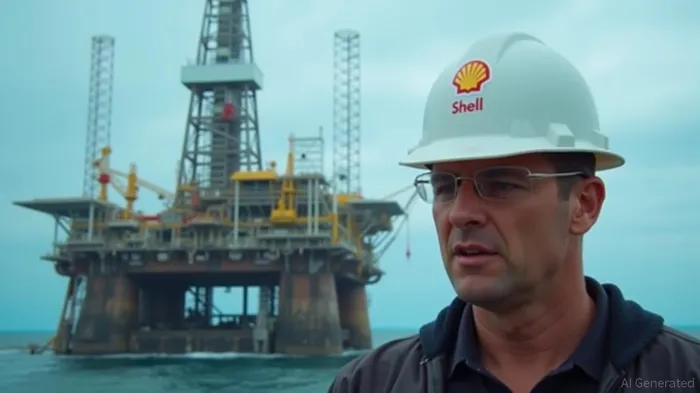
Shell plc has received environmental authorization to drill up to five deepwater wells in South Africa's Orange Basin, marking a significant step towards enhancing the country's energy security. The drilling campaign, scheduled to commence this year, will involve wells reaching depths between 2,500m and 3,200m in the Northern Cape Ultra Deep Block [1].The approval comes as a result of Shell's application submitted in 2024, and it aligns with the African Energy Chamber's (AEC) advocacy for the exploration of South Africa's offshore hydrocarbon resources. The AEC, the voice of the African energy sector, considers this a crucial step towards alleviating energy poverty in the country [1].
Analysts have responded to this news with varying forecasts. While some predict a potential upside of 7.51% for Shell's stock, with an average price target of $77.39, others estimate a potential downside of 9.38% for Shell's future fair value [1].
Shell's drilling campaign is set to explore the potential of the Orange Basin, which is close to commercial finds made in Namibia, including the Venus-1X field developed by TotalEnergies. The Venus field is expected to position Namibia as a major oil producer by 2029 [1].
Despite the potential, Shell has faced significant opposition from environmental groups, including Greenpeace, which has sought to disrupt the progress. However, the recent environmental authorization alleviates these concerns, allowing Shell to proceed with its drilling activities [1].
South Africa's reliance on imported oil and gas products makes this exploration crucial for the country's fuel security. The country is a net importer of oil and gas, with crude imported from the Middle East and other African states, making it highly susceptible to global oil dynamics and price fluctuations [1].
The approval of Shell's drilling campaign follows the commercial discovery of offshore oil and gas resources by TotalEnergies at the Brulpadda and Luiperd fields in 2019 and 2020, respectively. However, these developments were deemed commercially unviable, further underscoring the need for expanded exploration efforts [1].
South Africa's Ministry of Mineral and Petroleum Resources has been advocating for increased exploration efforts in the country, seeking to address challenges related to fuel security. The ministry's regulatory reforms, including the Upstream Petroleum Resources Development Act of 2024, aim to improve the operating climate for foreign companies and attract new investments in frontier exploration [1].
NJ Ayuk, Executive Chairman of the AEC, stated, "Drill, baby drill. This milestone marks the start of a new era of energy development in South Africa and is poised to reshape the trajectory of the country’s economic growth. But the work is only beginning. The country has a lot of work to do if it is to realize the potential of its oil and gas industry. The AEC calls for greater coordination across the industry, faster approval timelines, and increased investment offshore" [1].
References:
[1] https://energychamber.org/a-step-towards-energy-security-shell-gets-greenlight-to-drill-offshore-south-africa/
[2] https://www.tradingview.com/news/zacks:9579b8aa6094b:0-oil-majors-shell-and-bp-resume-energy-projects-across-libya/
Stay ahead of the market.
Get curated U.S. market news, insights and key dates delivered to your inbox.
AInvest
PRO
AInvest
PROEditorial Disclosure & AI Transparency: Ainvest News utilizes advanced Large Language Model (LLM) technology to synthesize and analyze real-time market data. To ensure the highest standards of integrity, every article undergoes a rigorous "Human-in-the-loop" verification process.
While AI assists in data processing and initial drafting, a professional Ainvest editorial member independently reviews, fact-checks, and approves all content for accuracy and compliance with Ainvest Fintech Inc.’s editorial standards. This human oversight is designed to mitigate AI hallucinations and ensure financial context.
Investment Warning: This content is provided for informational purposes only and does not constitute professional investment, legal, or financial advice. Markets involve inherent risks. Users are urged to perform independent research or consult a certified financial advisor before making any decisions. Ainvest Fintech Inc. disclaims all liability for actions taken based on this information. Found an error?Report an Issue




Comments
No comments yet