
Shell Secures Nod for Venezuelan Gas Exports to Trinidad Amid US Sanctions Relaxation
ByAinvest
Thursday, Oct 9, 2025 10:34 am ET1min read
SHEL--
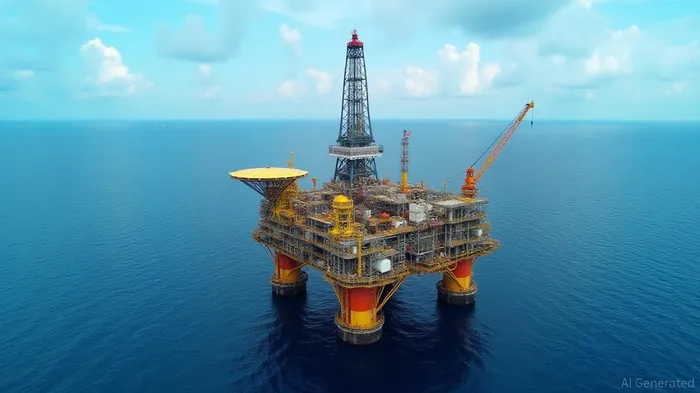
The Dragon gas field, located in shallow Caribbean waters near the maritime border of Venezuela and Trinidad, holds over 4 trillion cubic feet of proven natural gas reserves. Trinidad’s Atlantic liquefied natural gas (“LNG”) complex and petrochemical plants have been experiencing chronic feedstock shortages, making the Dragon field a vital resource for the country’s energy sector [1].
Shell’s strategy aligns with a targeted approach to re-engage with Venezuela’s offshore energy assets despite ongoing U.S. sanctions. The company is optimistic about securing a long-term license from the U.S. Treasury’s Office of Foreign Assets Control, which would enable it to develop the Dragon field without violating current sanctions [1].
Unlike oil transactions that risk direct financial support to the Maduro regime, natural gas deals are seen as less politically sensitive, especially when structured to avoid hard currency payments to Venezuela. The United States appears more willing to green-light such operations if companies circumvent direct financial engagement with the government of Venezuela [1].
In recent months, high-level diplomacy has taken place, with Trinidadian officials working closely with Shell and U.S. counterparts to revive the Dragon project. Prime Minister Kamla Persad-Bissessar has maintained a strong dialogue with U.S. Secretary of State Marco Rubio, who reaffirmed U.S. support for the initiative, provided it does not significantly benefit Venezuela’s leadership [1].
Shell’s return to the Dragon field could signal a new chapter in U.S.-Venezuela-Trinidad energy relations, potentially unlocking billions of dollars in investment, stabilizing regional energy markets, and offering a measured blueprint for future engagement in Venezuela’s resource-rich waters [1].
Shell is poised to resume operations at the Dragon gas field offshore Venezuela, aiming to boost natural gas supplies to Trinidad and Tobago. The move reflects growing confidence that the Trump administration will grant a new U.S. sanctions exemption license. The Dragon field holds over 4 trillion cubic feet of proven natural gas reserves, critical for Trinidad's energy sector, which has been experiencing feedstock shortages. Shell is optimistic about securing a long-term license from the U.S. Treasury's Office of Foreign Assets Control.
Shell plc (SHEL) is positioning itself to resume operations at the Dragon gas field offshore Venezuela, aiming to bolster natural gas supplies to Trinidad and Tobago. This strategic move reflects growing confidence that the Trump administration will soon grant a new U.S. sanctions exemption license, according to Bloomberg, as cited in a World Oil article [1].The Dragon gas field, located in shallow Caribbean waters near the maritime border of Venezuela and Trinidad, holds over 4 trillion cubic feet of proven natural gas reserves. Trinidad’s Atlantic liquefied natural gas (“LNG”) complex and petrochemical plants have been experiencing chronic feedstock shortages, making the Dragon field a vital resource for the country’s energy sector [1].
Shell’s strategy aligns with a targeted approach to re-engage with Venezuela’s offshore energy assets despite ongoing U.S. sanctions. The company is optimistic about securing a long-term license from the U.S. Treasury’s Office of Foreign Assets Control, which would enable it to develop the Dragon field without violating current sanctions [1].
Unlike oil transactions that risk direct financial support to the Maduro regime, natural gas deals are seen as less politically sensitive, especially when structured to avoid hard currency payments to Venezuela. The United States appears more willing to green-light such operations if companies circumvent direct financial engagement with the government of Venezuela [1].
In recent months, high-level diplomacy has taken place, with Trinidadian officials working closely with Shell and U.S. counterparts to revive the Dragon project. Prime Minister Kamla Persad-Bissessar has maintained a strong dialogue with U.S. Secretary of State Marco Rubio, who reaffirmed U.S. support for the initiative, provided it does not significantly benefit Venezuela’s leadership [1].
Shell’s return to the Dragon field could signal a new chapter in U.S.-Venezuela-Trinidad energy relations, potentially unlocking billions of dollars in investment, stabilizing regional energy markets, and offering a measured blueprint for future engagement in Venezuela’s resource-rich waters [1].
Stay ahead of the market.
Get curated U.S. market news, insights and key dates delivered to your inbox.
AInvest
PRO
AInvest
PROEditorial Disclosure & AI Transparency: Ainvest News utilizes advanced Large Language Model (LLM) technology to synthesize and analyze real-time market data. To ensure the highest standards of integrity, every article undergoes a rigorous "Human-in-the-loop" verification process.
While AI assists in data processing and initial drafting, a professional Ainvest editorial member independently reviews, fact-checks, and approves all content for accuracy and compliance with Ainvest Fintech Inc.’s editorial standards. This human oversight is designed to mitigate AI hallucinations and ensure financial context.
Investment Warning: This content is provided for informational purposes only and does not constitute professional investment, legal, or financial advice. Markets involve inherent risks. Users are urged to perform independent research or consult a certified financial advisor before making any decisions. Ainvest Fintech Inc. disclaims all liability for actions taken based on this information. Found an error?Report an Issue


ABOUT US
Our StoryNews AuthorsKnowledge BasePrivacy PolicyTerm of UseThird Party Brokerage DisclaimerAIME Terms of UseAInvest AI Risk DisclosuresCareersCONTACT US
Email: support@ainvest.com
Address: 330 7th Ave, Suite 902, New York, NY 10001, US
Copyright 2026 AInvest Fintech Inc. All rights reserved.


Comments
No comments yet