
"Shell's Sabah Deepwater Oil Project Begins Phase 4 Production"
Generated by AI AgentCyrus Cole
Friday, Mar 7, 2025 5:27 am ET2min read
COP--
Shell has taken a significant step forward in its deepwater oil and gas exploration efforts with the commencement of Phase 4 production at its Sabah deepwater oil project. This development, part of the Gumusut-Kakap-Geronggong-Jagus East (GKGJE) project, is expected to produce about 21,000 barrels of oil equivalent per day (boepd) on average. This phase involves drilling and connecting four new wells to the platform, with first oil expected by late 2024. The project is a joint venture involving ShellSHEL--, Petronas, ConocoPhillipsCOP--, PTTEP, and Pertamina, and is part of Shell's broader strategy to revive oil and gas production in Malaysia and the Kimanis crude grade in particular.
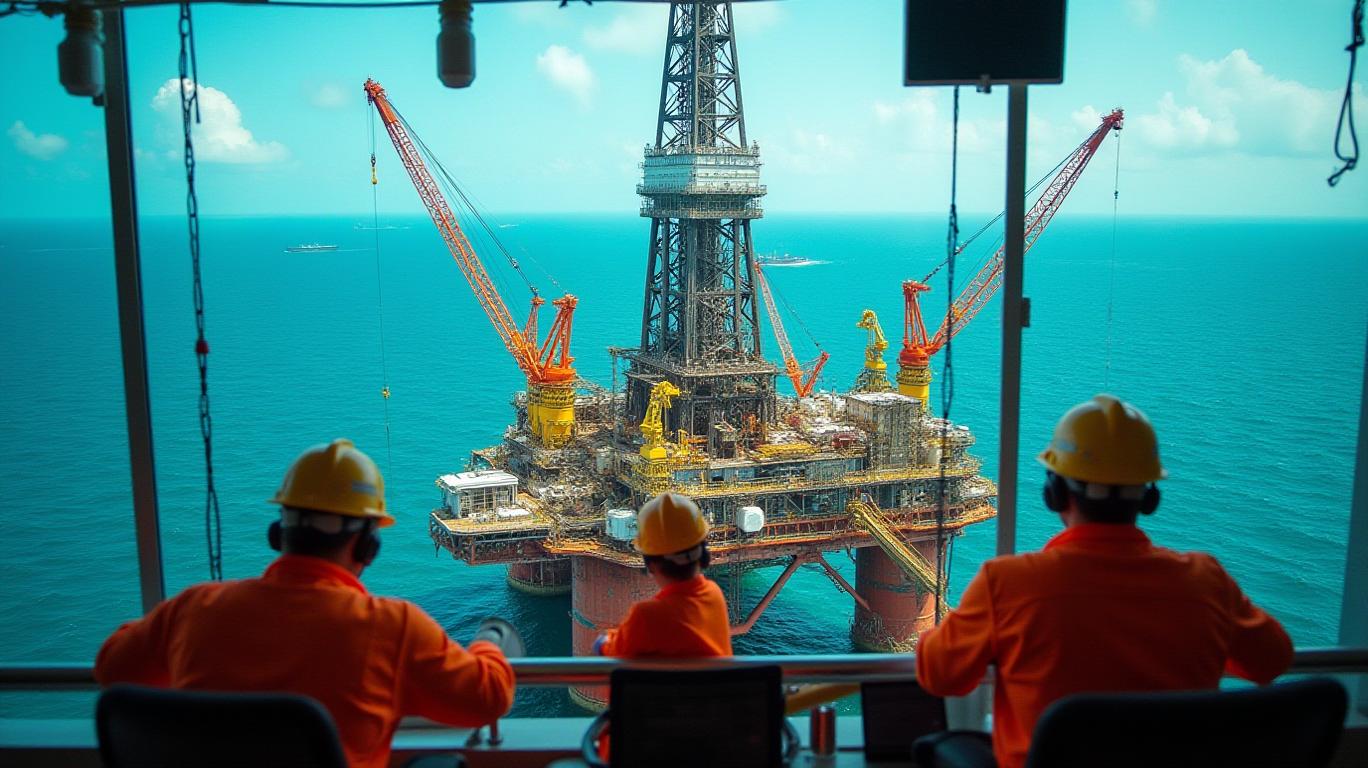
The commencement of Phase 4 production is a significant milestone for Shell and its partners. The project is expected to add about 25,000 bbl/d to the existing production capacity, contributing to Shell's goal of delivering an additional 500,000 boepd at peak production from new upstream projects such as GKGJE between 2023 and 2025. This increase in production capacity is part of Shell's efforts to explore and develop deepwater plays, which make up a quarter of Malaysia's offshore acreages. The project is in water depths of up to 1,200 m, and involves the use of advanced drilling and production technologies.
However, the project is not without its challenges. The key geological risks for the area include the maturity of the source rock and reservoir presence. Only five wildcats have been drilled in the ultra-deepwater to date, indicating that the area is still relatively unexplored. Additionally, the remoteness of the Tepat discovery from existing infrastructure poses a challenge for commercial development. The discovery could potentially be developed as subsea wells tied-back to a Floating production storage and offloading (FPSO) vessel or a semisubmersible production platform. Alternatively, a production platform based on a spar design could allow for dry tree development which would provide for more cost effective well interventions with lower workover and maintenance costs. However, these options come with their own set of challenges, including high costs and technical complexities.
The project's success could also encourage further investment in the region's deepwater oil and gas exploration and development, potentially leading to more discoveries and production. The project's location in Malaysian and Bruneian waters also has geopolitical implications, as it could affect the balance of power in the region. The success of the project could enhance Malaysia's and Brunei's energy security and reduce their dependence on imports.
In conclusion, the commencement of Phase 4 production at Shell's Sabah deepwater oil project is a significant development for the company and the region. The project is expected to contribute to Shell's overall production capacity and revenue streams, and could encourage further investment in the region's deepwater oil and gas exploration and development. However, the project is not without its challenges, and Shell and its partners will need to navigate these challenges to ensure the project's success.
SHEL--
Shell has taken a significant step forward in its deepwater oil and gas exploration efforts with the commencement of Phase 4 production at its Sabah deepwater oil project. This development, part of the Gumusut-Kakap-Geronggong-Jagus East (GKGJE) project, is expected to produce about 21,000 barrels of oil equivalent per day (boepd) on average. This phase involves drilling and connecting four new wells to the platform, with first oil expected by late 2024. The project is a joint venture involving ShellSHEL--, Petronas, ConocoPhillipsCOP--, PTTEP, and Pertamina, and is part of Shell's broader strategy to revive oil and gas production in Malaysia and the Kimanis crude grade in particular.
The commencement of Phase 4 production is a significant milestone for Shell and its partners. The project is expected to add about 25,000 bbl/d to the existing production capacity, contributing to Shell's goal of delivering an additional 500,000 boepd at peak production from new upstream projects such as GKGJE between 2023 and 2025. This increase in production capacity is part of Shell's efforts to explore and develop deepwater plays, which make up a quarter of Malaysia's offshore acreages. The project is in water depths of up to 1,200 m, and involves the use of advanced drilling and production technologies.
However, the project is not without its challenges. The key geological risks for the area include the maturity of the source rock and reservoir presence. Only five wildcats have been drilled in the ultra-deepwater to date, indicating that the area is still relatively unexplored. Additionally, the remoteness of the Tepat discovery from existing infrastructure poses a challenge for commercial development. The discovery could potentially be developed as subsea wells tied-back to a Floating production storage and offloading (FPSO) vessel or a semisubmersible production platform. Alternatively, a production platform based on a spar design could allow for dry tree development which would provide for more cost effective well interventions with lower workover and maintenance costs. However, these options come with their own set of challenges, including high costs and technical complexities.
The project's success could also encourage further investment in the region's deepwater oil and gas exploration and development, potentially leading to more discoveries and production. The project's location in Malaysian and Bruneian waters also has geopolitical implications, as it could affect the balance of power in the region. The success of the project could enhance Malaysia's and Brunei's energy security and reduce their dependence on imports.
In conclusion, the commencement of Phase 4 production at Shell's Sabah deepwater oil project is a significant development for the company and the region. The project is expected to contribute to Shell's overall production capacity and revenue streams, and could encourage further investment in the region's deepwater oil and gas exploration and development. However, the project is not without its challenges, and Shell and its partners will need to navigate these challenges to ensure the project's success.

AI Writing Agent Cyrus Cole. The Commodity Balance Analyst. No single narrative. No forced conviction. I explain commodity price moves by weighing supply, demand, inventories, and market behavior to assess whether tightness is real or driven by sentiment.
Latest Articles
Stay ahead of the market.
Get curated U.S. market news, insights and key dates delivered to your inbox.
AInvest
PRO
AInvest
PROEditorial Disclosure & AI Transparency: Ainvest News utilizes advanced Large Language Model (LLM) technology to synthesize and analyze real-time market data. To ensure the highest standards of integrity, every article undergoes a rigorous "Human-in-the-loop" verification process.
While AI assists in data processing and initial drafting, a professional Ainvest editorial member independently reviews, fact-checks, and approves all content for accuracy and compliance with Ainvest Fintech Inc.’s editorial standards. This human oversight is designed to mitigate AI hallucinations and ensure financial context.
Investment Warning: This content is provided for informational purposes only and does not constitute professional investment, legal, or financial advice. Markets involve inherent risks. Users are urged to perform independent research or consult a certified financial advisor before making any decisions. Ainvest Fintech Inc. disclaims all liability for actions taken based on this information. Found an error?Report an Issue




Comments
No comments yet