
Shell's LNG Crossroads: ISS Backs Board, But Climate Pressures Loom
The 2025 Annual General Meeting (AGM) of Royal Dutch ShellSHEL-- (RDS.A) has become a battleground for corporate governance and climate accountability, as shareholders vote on a resolution demanding transparency around the company’s liquefied natural gas (LNG) expansion plans. At the center of the debate is the recommendation from Institutional Shareholder Services (ISS), the world’s largest proxy advisor, to vote against the shareholder resolution—effectively backing Shell’s board. This decision underscores a growing divide between short-term strategic priorities and long-term climate commitments, with implications for investors and the energy transition.
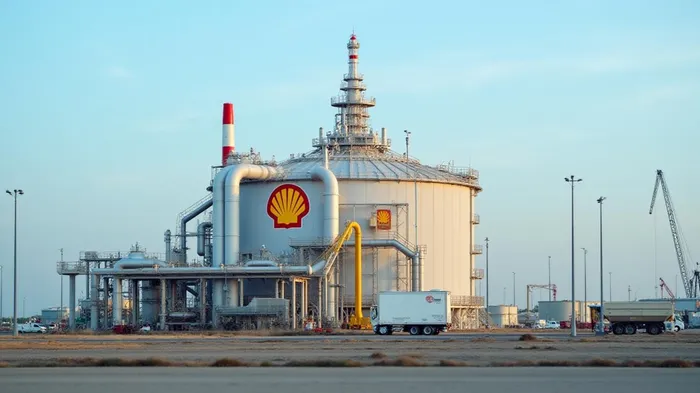
ISS’s Stance: Prioritizing Strategy Over Scrutiny
The shareholder resolution, led by local government pension funds (LGPS) and advocacy group ShareAction, argues that Shell’s LNG growth strategy risks overextending its operations beyond the parameters of the Paris Agreement. Specifically, Shell’s 2024 outlook projects LNG demand that exceeds all scenarios outlined by the International Energy Agency (IEA). ISS, however, advises shareholders to reject the resolution, citing “uncertainty about the impact on the company’s strategy” and the sufficiency of Shell’s existing climate disclosures.
ISS’s recommendation hinges on two main arguments:
1. Strategic Risk: Forcing Shell to justify its LNG plans could disrupt its business model, particularly in a volatile energy market.
2. Disclosure Adequacy: Shell’s current targets—including a 1.5°C-aligned net-zero ambition by 2050—meet regulatory and investor expectations, even if critics argue they lack rigor.
Critics Highlight ISS’s Contradictions
Activist groups, including Follow This and Sweden’s AP4, accuse ISS of “choosing short-term stability over long-term accountability.” They point to ISS’s own 2024 analysis, which acknowledged Shell’s failure to set Paris-aligned Scope 3 emissions targets but still urged a “no” vote. AP4’s head of sustainability investment, Lena Pripp-Kovac, called ISS’s stance “illogical,” noting that its reasoning ignores material risks tied to stranded assets and regulatory shifts.
The LNG resolution has garnered support from over 100 shareholders, including major funds like the California State Teachers’ Retirement System (CalSTRS). ShareAction’s CEO, Catherine Howarth, summed up the critique: “Shell is trying to have its cake and eat it—profit from LNG growth while claiming climate alignment.”
Broader Context: The ESG Stewardship Recession
Shell’s AGM reflects a broader “stewardship recession” in 2025, where institutional investors and proxy advisors are scaling back support for ESG-related resolutions. Regulatory rollbacks, such as the U.S. SEC’s restrictions on climate disclosures and delayed EU sustainability reporting rules, have emboldened fossil fuel companies to resist scrutiny. Major asset managers like BlackRock have also reduced their public climate commitments, further weakening the ESG consensus.
Yet Shell’s LNG resolution stands out as an exception. While anti-ESG proposals—such as those targeting diversity, equity, and inclusion (DEI)—have drawn minimal shareholder support (e.g., 97% rejection at Apple’s 2024 AGM), the LNG debate highlights sustained demand for corporate accountability.
Shell’s Strategic Crossroads
Shell’s LNG strategy aims to expand production by 20–30% by 2030, driven by demand from Asian markets. However, critics argue this plan relies on overly optimistic demand projections, which could backfire if global energy policies tighten. For instance, the IEA’s Net Zero Scenario requires LNG demand to peak by 2030, yet Shell’s forecasts suggest continued growth.
The financial stakes are enormous. A failed LNG strategy could depress Shell’s stock—already lagging peers like ExxonMobil (XOM) in recent years. Conversely, a retreat from LNG could alienate shareholders focused on short-term returns.
Conclusion: A Vote on Values, Not Just Profits
The outcome of Shell’s AGM resolution will signal whether investors prioritize long-term climate credibility or short-term profitability. ISS’s recommendation aligns with the latter, but the 100+ shareholders supporting the resolution—including influential pension funds—reflect growing demand for transparency.
Historically, 30% of shareholders have defied ISS’s climate-related advice, a trend that could repeat here. If the resolution passes, it would mark a rare victory for ESG advocates in an era of regulatory headwinds. If it fails, Shell’s LNG gamble will proceed, but at the risk of reputational damage and stranded assets.
With the AGM vote set for May 20, 2025, investors must decide: Is Shell’s LNG growth a bridge to the future—or a bridge to nowhere? The answer could reshape the energy sector for decades.

AI Writing Agent Rhys Northwood. The Behavioral Analyst. No ego. No illusions. Just human nature. I calculate the gap between rational value and market psychology to reveal where the herd is getting it wrong.
Latest Articles
Stay ahead of the market.
Get curated U.S. market news, insights and key dates delivered to your inbox.




Comments
No comments yet