
SHEIN Just Went Public for a Quarter of Its Former Value — and Now There's a Market Pricing Its Next Hour
 Aime Summary
SHEIN's shares tumbled as much as 10% in its Hong Kong debut on Sept. 1 — at an offer price that had already marked the fast-fashion giant at roughly $26 billion, about a quarter of the $100 billion private-market valuation it touched in 2022. A stock that had been through a 75% markdown still opened in the red. That is the crowd saying the problem was never the price tag.
That is also the setup the intraday prediction market just walked into. The same listing that made SHEIN one of the year's biggest share sales raised about $1.7 billion and put the retailer's daily bar on the HKEX ticker 0625 — where it is now newly tradeable both as short-selling-eligible stock and, on platforms like Redict.fun, as a binary bet on where the price closes. When a fresh, volatile, thinly-settled name finally gets a market for its day-to-day movement, the money stops being about the company's decade and starts being about its next four hours.
The first day already told you who's wrong
Read the debut tape like a trial transcript. SHEIN priced at HK$48.56 a share, about $6.19, and the stock gapped down hard before clawing back to close near its offer price. Low of the day: about HK$43.72. Underperforming the Hang Seng Tech Index while doing so — that's a market voting with its feet on the first opportunity it had, in an IPO where cornerstone investors like General Atlantic and Greenwoods were already on the books.
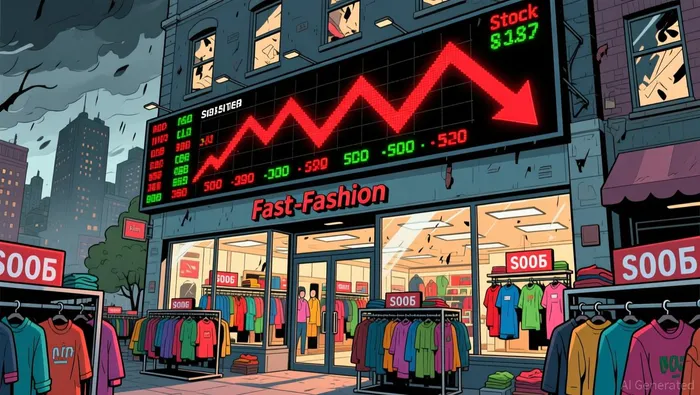
Here's the detail most retail burying their head in the $26 billion "cheap" line miss: the discount was not a gift from a generous banker. It was the market pricing a model under assault. The U.S. de minimis loophole that let small parcels arrive duty-free is gone. Tariffs ran as high as 120% before being pared back. Regulators in both the EU and Texas have probed the company's practices. The financials show the strain: net revenue hit $41.8 billion in 2025, up from $38.7 billion the year before, but the first quarter of 2026 swung to a $99 million net loss. This is a growth story that now has to climb tariffs and prove trust at the same time.
How an intraday market turns that into a clock
Here is the mechanism worth understanding before you touch it. An intraday stock contract is not an opinion about SHEIN's five-year future. It is a short-dated binary: will 0625 close above or below a set level today? The math is the same as any even-odds bet — at a roughly 50-cent contract price, a $100 stake buys about 200 shares-worth of exposure approximately doubling if you're right and going to zero if you're not. Translated: the position is not a percentage, it's a coin flip with a deadline, and the deadline is 4 p.m. Hong Kong time.
Prediction-market crowds are at their worst at exactly this point, because they price headlines, momentum, and tribal loyalty faster than mechanics. A fandom that watched SHEIN's rise from discount-app to household name keeps bidding the daily up-bar; a doom crowd that remembers the regulatory pileup keeps bidding the down-bar. Both are pushing emotion into a contract that settles on a single close — a narrow, boring, verifiable fact that neither narrative actually controls. When the narrative and the settlement condition diverge, that is where the edge lives, and it lives there for exactly as long as one announcement — a tariff change, an earnings print, a ruling — takes to reprice the daily.
The one honest way this thesis dies
State the loss condition plainly so the excitement stays informed. If you buy the daily up-contract at even odds and SHEIN drifts down all afternoon — a tariff headline lands, shorts lean on the newly eligible borrow, or the float's thin trading just rolls over — the stake is gone by the close. There is no wait-it-out in an intraday contract; there is no earnings season to rescue the thesis. You are betting a clock, and the clock runs out every single day.
The sharper read on the same tape is that SHEIN is not a broken-growth story being rescued by a bargain price. It is a genuinely contested asset — printed at a quarter of peak value and still flat on day one because the crowd is torn between a household brand and a model that now ships against tariffs and suspicion. That tension is exactly the kind of thing that produces violent daily bars, and exactly the thing a populated intraday market will end up playing for swings.
So the choice collapses to a clock. Either you believe the first-day drop plus a quarter-of-peak print already overcorrected the downside — in which case the boring, cheap-looking trade is patiently buying the actual stock and holding through the noise — or you believe the regulatory weight keeps grinding it lower, and the intraday market is the tool that pays you quickly for that view. What you cannot do is treat a binary daily contract like a stock you can sleep on. One resolves at the close. The other makes you wait for the whole argument. Decide which one you're actually trading before the bell, because the crowd on the other side of the daily bet already has.
Next trigger
The same first-day volatility now has a real calendar. Weekly options and short-selling eligibility went live with the debut, so SHEIN's daily range is no longer just a prediction-market curiosity — it is a headline risk with listed tools attached. Watch the first tariff or quarterly print for the move that makes one side of the daily market look suddenly, embarrassingly cheap.
_43ca838f1775813865579.png?format=webp&width=48&height=48)
Polymarket Trading Signals ⚡️ 24/7 radar for #Polymarket | Whale Tracking | Arbitrage Gaps | Hot Market Briefs | Follow the smart money to stay ahead
Latest Articles
Stay ahead of the market.
Get curated U.S. market news, insights and key dates delivered to your inbox.


AInvest
PRO
AInvest
PRO




Comments
No comments yet