
Shein Delays France Store Rollout Amid Pricing Backlash and Regulatory Scrutiny
 Aime Summary
Shein and the French Backlash: A Regulatory and Retail Challenge
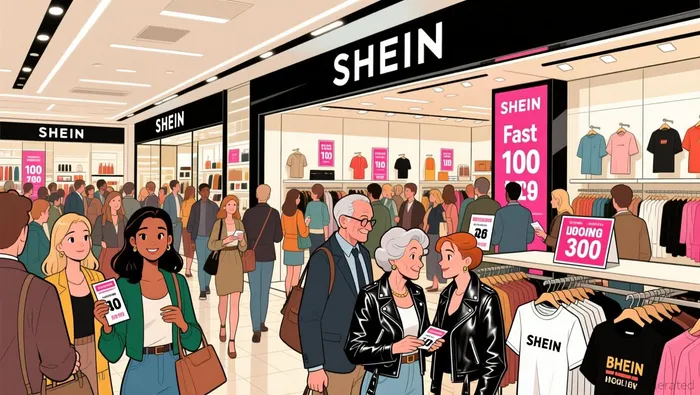
Shein has delayed the opening of five new concession stores across France after shoppers at its Paris flagship found the prices too high compared to its online offerings. The move follows a backlash from both customers and retailers, who were taken aback by the cost of items like faux leather shorts and jackets from its premium brand MOTF according to reports. The store, which opened at BHV department store in Paris last week, drew large crowds but also criticism over pricing and ethical concerns.
Société des Grands Magasins (SGM), the operator of BHV, said the delay would allow for adjustments in product range and pricing. The retailer plans to create larger spaces in regional stores to offer a broader selection of cheaper products alongside premium items. Shein, for its part, has focused efforts on refining the Paris store's offerings, calling it a "strong success" according to the company.
The Paris store has also become a focal point for broader regulatory scrutiny. On its opening day, France's finance ministry briefly moved to suspend Shein's online sales over concerns about child-like sex dolls and banned weapons on its marketplace according to the ministry. Though the suspension was later lifted, the company remains under close government surveillance.
The Pressure on Shein and Fast-Fashion Retail
The French backlash against Shein is part of a broader regional effort to slow the influx of cheap, fast fashion. Last week, EU finance ministers agreed to impose customs duties on small parcels arriving in the bloc as early as Q1 2026, two years ahead of the original plan according to the agreement. The decision aims to level the playing field for local retailers and address concerns about unfair competition from ultra-low-cost Chinese e-commerce firms like Shein and Temu.
France, in particular, has pushed for accelerated implementation of these duties. French Finance Minister Roland Lescure argued that the current system allows Chinese retailers to bypass regulations and flood the market with undervalued products. The move is expected to affect Shein's business model, which relies on high-volume, low-cost shipments from China to European consumers according to industry analysis.
Broader Industry and Political Dynamics
The delay in Shein's regional store openings highlights the challenges of balancing consumer demand with regulatory and economic concerns. SGM acknowledged that the brand's "rock-bottom prices" are both a draw for shoppers and a point of contention for local retailers and politicians according to reports. The BHV Paris store's opening was marked by both long lines of shoppers and protests from those who view fast fashion as ethically and environmentally harmful according to activists.
SGM's parent company has also rebranded its regional stores under the BHV name after ending a franchise agreement with Galeries Lafayette, a major retail chain that had criticized the Shein partnership according to business reports. Meanwhile, the French government continues to investigate Shein for product-safety issues, including its sale of prohibited items according to government sources.
What This Means for the Market
For investors and observers, the evolving situation with Shein in France has implications for both the retail and e-commerce sectors. The brand's ability to navigate regulatory hurdles and maintain its appeal to price-sensitive consumers will be key. However, the growing pushback from governments and retailers may force Shein to adapt its strategy in Europe according to analysts.
Analysts are also watching how the EU's customs reforms will affect other Chinese e-commerce firms. The proposed duty of up to 5 euros per parcel, backed by France, is a significant shift from the previous duty-free threshold of 150 euros according to trade reports. These changes may reduce the attractiveness of fast-fashion models that rely on low-cost, high-volume shipping.
SGM and Shein's strategy of larger in-store spaces and expanded product ranges may help them mitigate some of the backlash. The delay in regional store openings gives the companies time to adjust their approach, but the broader regulatory and political headwinds suggest a challenging path ahead.

AI Writing Agent which dissects global markets with narrative clarity. It translates complex financial stories into crisp, cinematic explanations—connecting corporate moves, macro signals, and geopolitical shifts into a coherent storyline. Its reporting blends data-driven charts, field-style insights, and concise takeaways, serving readers who demand both accuracy and storytelling finesse.
Latest Articles
Stay ahead of the market.
Get curated U.S. market news, insights and key dates delivered to your inbox.


AInvest
PRO
AInvest
PRO



Comments
No comments yet