
Sheetz’s Expansion Ambitions and Legal Crossroads: A Strategic Crossroads for the Convenience Giant
The convenience store giant Sheetz is at a pivotal moment, balancing aggressive expansion with a high-stakes legal battle that could reshape its supply chain. Over the past week, the company’s push into Philadelphia’s competitive market and its opposition to the Laurel Pipeline expansion have drawn intense scrutiny. Let’s dissect what’s at stake.
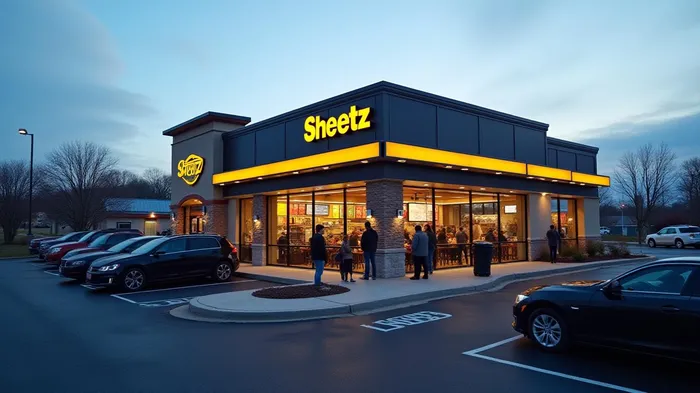
Lead: Expanding into Wawa’s Turf While Fighting Pipelines
Sheetz is waging two simultaneous campaigns: one to dominate new markets and another to protect its existing supply chains. The company’s recent move into Pennsylvania’s Philadelphia suburbs—a direct challenge to Wawa’s dominance—contrasts sharply with its legal battle against the Laurel Pipeline’s expansion, which it claims could destabilize regional fuel supplies. Both efforts highlight Sheetz’s ambition but also its vulnerability to external pressures.
The Expansion Play: Chipping Away at Wawa’s Empire
Sheetz’s entry into the Philadelphia market marks its boldest move yet into territory long controlled by WawaWABC--. A new store in Chester County, Pennsylvania, is set to open this summer, signaling Sheetz’s confidence in its Made-to-Order (MTO) menu and 24/7 service model to attract customers accustomed to Wawa’s regional loyalty.
- Scale of Ambition: Sheetz plans to open over 50 new stores in Ohio by year-end 2025, with 40 already operational. Its Philadelphia expansion adds to a strategy of geographic diversification.
- Brand Momentum: The Pennsylvania Chamber of Business and Industry recently named Sheetz’s MTO menu the “Coolest Thing Made in PA” for 2025, underscoring its cultural resonance.
The Legal Battle: A Pipeline Fight with Billion-Dollar Stakes
Sheetz’s legal clash with pipeline operator Buckeye Partners over the Laurel Pipeline’s expansion has escalated in recent weeks. The Pennsylvania Public Utilities Commission (PaPUC) ordered a hearing on April 21, 2025, to review Buckeye’s proposal to increase eastward refined fuel flows, a move Sheetz opposes alongside Monroe Energy and PBF Energy.
The core issue: supply chain reliability. Opponents argue that diverting Midwest fuel to East Coast markets could leave western Pennsylvania—where Sheetz relies on local refineries—vulnerable to shortages. Buckeye counters that expanded capacity would lower prices for consumers and boost competition.
- Key Data Point: Buckeye’s Phase 3 expansion aims to add 80,000 barrels per day of capacity, potentially shifting fuel flows toward New York Harbor.
- Expert Insight: “Sheetz’s opposition isn’t just about pipelines—it’s about safeguarding its regional supply chain. If the pipeline’s expansion succeeds, they risk losing control over fuel costs and availability,” says energy analyst Emily Torres of PetroStrategies.
The Concept Store Gambit: Betting on Innovation
While the legal battle rages, Sheetz is also reinventing its physical footprint. The planned closure of its College Avenue store in State College, Pennsylvania, to make way for a new “food-focused” concept store highlights its commitment to evolving with consumer tastes. The new location, set to open in August 2025, will feature reimagined spaces for MTO items and emphasize “food passion and innovation.”
- Operational Risk: Closing an existing store to build a prototype carries financial risks, but Sheetz’s track record—over 500 stores across six states—suggests confidence in its execution.
- Employee Reassignment: All employees from the closing location will be relocated, minimizing labor disruptions.
Conclusion: Navigating Growth and Uncertainty
Sheetz’s dual focus on expansion and legal defense paints a picture of both opportunity and risk. On one hand, its aggressive store openings and brand differentiation (e.g., the MTO award) position it for long-term growth. On the other, the Laurel Pipeline dispute introduces operational volatility.
Investors should monitor two key metrics:
1. Store Performance: The Philadelphia store’s customer retention rates compared to Wawa’s.
2. Legal Outcomes: The PaPUC’s ruling on the pipeline, expected by mid-2025, could either alleviate supply chain concerns or force Sheetz to adapt to higher fuel costs.
In the end, Sheetz’s success hinges on its ability to execute its growth strategy while shielding itself from external disruptions. For now, the company’s 24/7 model and culinary innovation remain its strongest assets—but the path ahead is anything but smooth.

Stay ahead of the market.
Get curated U.S. market news, insights and key dates delivered to your inbox.


AInvest
PRO
AInvest
PRO



Comments
No comments yet