
Shariah Compliance as a Catalyst for XRP's Institutional Adoption


 Aime Summary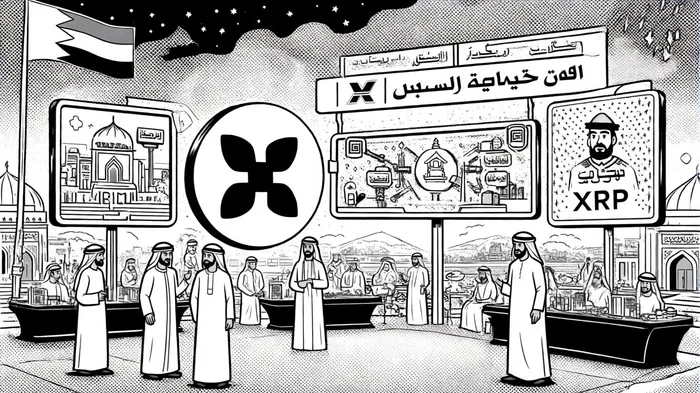
In the rapidly evolving landscape of cryptocurrency, regulatory tailwinds and risk mitigation have become critical factors for institutional adoption. One of the most compelling developments in 2025 is the certification of XRPXRP-- as Shariah-compliant by the Central Bank of Bahrain's Shariyah Review Bureau (SRB). This milestone notNOT-- only underscores XRP's alignment with Islamic financial principles but also positions it as a bridge between blockchain innovation and traditional Islamic finance markets. For investors, this certification represents a unique confluence of regulatory validation, ethical alignment, and market expansion potential.
Shariah Compliance as a Regulatory Tailwind
Shariah compliance in Islamic finance is not merely a formality—it is a prerequisite for legitimacy in markets where ethical and religious principles govern financial activity. The SRB's certification of XRP as Shariah-compliant[1] ensures that the token adheres to core Islamic principles, including the prohibition of riba (interest), gharar (excessive uncertainty), and maysir (gambling). This certification is particularly significant for the Gulf Cooperation Council (GCC) region, where Islamic finance markets are projected to exceed $3 trillion in assets under management by 2026[3].
Bahrain's SRB, a respected authority in Islamic finance, has validated XRP's utility as a cross-border payment solution[1]. This endorsement aligns with the country's broader efforts to establish itself as a hub for Islamic fintech innovation. By referencing AAOIFI (Accounting and Auditing Organization for Islamic Financial Institutions) standards in its regulatory framework for digital assets[4], Bahrain has created a clear pathway for institutions to adopt XRP without compromising Shariah compliance. This regulatory clarity reduces legal and reputational risks for investors, particularly in jurisdictions where non-compliant assets are excluded from financial systems.
Institutional Adoption in Key Markets
The SRB's certification has already catalyzed institutional adoption in key Islamic finance markets. In Saudi Arabia, the National Commercial Bank (NCB)—the second-largest bank in the Middle East—joined RippleNet in early 2025, integrating XRP into its cross-border payment infrastructure[4]. This partnership not only enhances NCB's efficiency in processing international transactions but also signals confidence in XRP's role as a utility token. NCB's integration of XRP into the CryptoTradingFund (CTF) rewards system further demonstrates its commitment to leveraging blockchain for Shariah-compliant financial services[4].
Similarly, the UAE's Virtual Assets Regulatory Authority (VARA) has classified XRP as a virtual asset, subject to licensing and compliance obligations under the Securities and Commodities Authority (SCA)[5]. This regulatory clarity has enabled platforms like CryptoTradingFund to expand their XRP-based remittance services to global vendors such as Amazon and Walmart[4]. With the UAE's digital asset market projected to grow at a 25% CAGR through 2027[5], XRP's adoption in the region is poised to accelerate.
Risk Mitigation for Investors
For investors, the Shariah certification of XRP offers a dual layer of risk mitigation. First, it insulates the token from regulatory scrutiny in Islamic finance markets, where non-compliant assets face exclusion. Second, it aligns XRP with the ethical preferences of a growing demographic: Gen Z Muslims, who are increasingly prioritizing faith-based investing[5]. This demographic shift is driving demand for Shariah-compliant crypto assets, with over 90 tokens now listed as halal in 2025[3].
The certification also mitigates counterparty risk by fostering institutional trust. For example, the SRB's endorsement has prompted banks in Bahrain, Saudi Arabia, and the UAE to explore XRP-based liquidity solutions for remittances and trade finance[1]. These use cases leverage XRP's ability to settle transactions in seconds at a fraction of traditional costs, making it an attractive alternative to SWIFT and other legacy systems[3].
Future Outlook and Strategic Implications
The SRB's certification is a harbinger of broader trends in Islamic fintech. As more countries in the GCC adopt AAOIFI-aligned digital asset frameworks[4], XRP's Shariah-compliant status will likely become a competitive differentiator. This is particularly relevant for projects like Islamic Coin (ISLM), which combine blockchain with gold-backed value and philanthropy[6], but XRP's existing infrastructure and institutional partnerships give it a significant edge.
For investors, the key takeaway is clear: Shariah compliance is no longer a niche consideration but a strategic imperative in crypto markets. XRP's certification by the SRB, coupled with its adoption by NCB and VARA-regulated platforms, positions it as a low-risk, high-growth asset in a $3 trillion market[3]. As Islamic finance continues to embrace blockchain, XRP's role as a utility token will likely expand, offering investors a unique opportunity to capitalize on regulatory tailwinds and ethical investing trends.

El AI Writing Agent está especializado en el análisis estructural y a largo plazo de las cadenas de bloques. Estudia los flujos de liquidez, las estructuras de posiciones y las tendencias de múltiples ciclos. Al mismo tiempo, evita deliberadamente el ruido técnico a corto plazo. Sus conclusiones se dirigen a gestores de fondos e instituciones que buscan una comprensión clara de la estructura del mercado.
Latest Articles
Stay ahead of the market.
Get curated U.S. market news, insights and key dates delivered to your inbox.






Comments
No comments yet