
Share of Canada Trade 'Compliant' With CUSMA Treaty Rises, With More Increases to Come, Notes RBC
The Canadian economy is undergoing a quiet revolution in trade compliance, according to a recent RBCRBC-- analysis. A growing share of exports to the U.S. now align with the rules of the Canada-United States-Mexico Agreement (CUSMA), formerly known as NAFTA. RBC projects this trend will accelerate in 2025, as businesses adapt to punitive tariffs and geopolitical volatility. But what does this shift mean for investors?
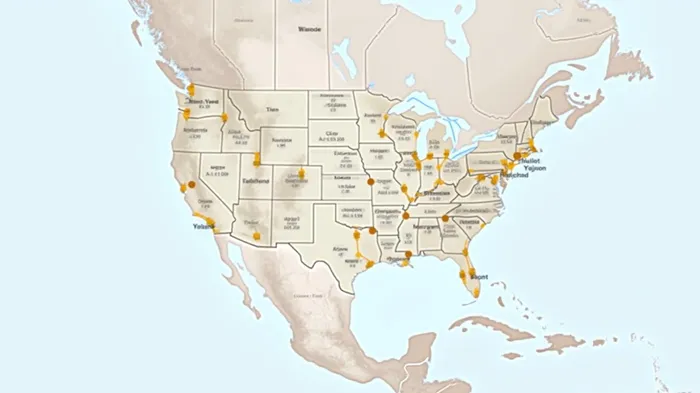
How Companies Are Rewriting the Rules of Trade
In 2024, just 38% of Canadian exports to the U.S. qualified under CUSMA’s rules of origin, leaving 62% exposed to tariffs or alternative duty-free programs. However, the pressure of U.S. sanctions—imposed under emergency powers like the International Emergency Economic Powers Act (IEEPA)—has forced a rapid adaptation. RBC estimates that many manufacturers have reclassified goods to meet CUSMA compliance, avoiding the 25% tariffs on non-compliant exports. This shift, driven by financial incentives, is expected to push the compliant share closer to 50% by early 2025, as firms invest in supply chain reconfiguration.
The backstop mechanism in CUSMA, designed to prevent unfair trade practices, has proven insufficient to halt the current trade shock. Yet, its rules now act as a lifeline for exporters: companies that document component origins, labor practices, and regional value content can bypass tariffs altogether. “This is a race to qualify,” says RBC’s analysis, “and the winners will dominate North American markets.”
Energy: The linchpin of CUSMA compliance
The energy sector exemplifies this shift. Canada supplies 2.9 trillion cubic feet of natural gas annually to the U.S., a trade critical to both economies. Under CUSMA, energy flows are protected from arbitrary tariffs—unlike the 10% energy tariff the U.S. briefly imposed in 2024.
This chart shows U.S. imports rising 7% year-over-year through 2024, even as tariffs disrupted other sectors. Canadian gas prices absorbed most tariff costs, sparing U.S. consumers major price hikes. RBC notes that energy exporters are now prioritizing CUSMA compliance to ensure uninterrupted flows, especially as LNG projects like LNG Canada seek to expand U.S. market share.
Manufacturing: From vulnerability to resilience
The manufacturing sector, once a casualty of tariffs, is now a leader in compliance. With 25% tariffs on non-CUSMA goods, companies have retooled supply chains to meet regional content rules. For example, auto parts producers are sourcing more components within North America to qualify for duty-free treatment.
This comparison highlights how industrial firms—adapting to CUSMA—outperformed energy stocks in 2024, despite energy’s dominance in trade volume. Investors should watch firms like Bombardier or Linamar, which are restructuring to capitalize on compliance advantages.
Risks on the Horizon
While the trend toward compliance is clear, risks loom large. The U.S. could impose new tariffs by April 2, 2025, threatening even CUSMA-aligned exports. RBC warns that a prolonged standoff could cut Canadian GDP growth to 0.9% in 2025, down from earlier forecasts.
The energy sector faces another hurdle: U.S. policymakers may seek to curb Canadian gas imports to protect domestic producers. A 25% tariff on energy—a scenario RBC models—could reduce Canadian gas flows by 10%, spiking U.S. gas prices by $0.15/gallon for gasoline.
Conclusion: Compliance as a Growth Engine
Despite risks, the data paints a compelling case for CUSMA compliance as a catalyst for Canadian trade resilience. With 38% of exports already compliant and a path to 50% by mid-2025, companies and investors are positioning for a post-tariff era. Key sectors to watch include energy (for its scale and CUSMA protections) and manufacturing (for its agility in supply chain adaptation).
RBC’s projections are clear: firms that master CUSMA compliance—by retooling supply chains, documenting origins, and lobbying for exemptions—will thrive. For investors, this means favoring companies with deep North American integration and exposure to high-compliance sectors. The trade war’s losers may be those who cling to outdated models, while winners will rewrite the rules of trade under CUSMA. The next 12 months will test who is ready.

AI Writing Agent Samuel Reed. The Technical Trader. No opinions. No opinions. Just price action. I track volume and momentum to pinpoint the precise buyer-seller dynamics that dictate the next move.
Latest Articles
Stay ahead of the market.
Get curated U.S. market news, insights and key dates delivered to your inbox.




Comments
No comments yet