
The Shanghai Auto Show 2025: A Crossroads for Automakers Amid Trade Wars and Safety Scrutiny
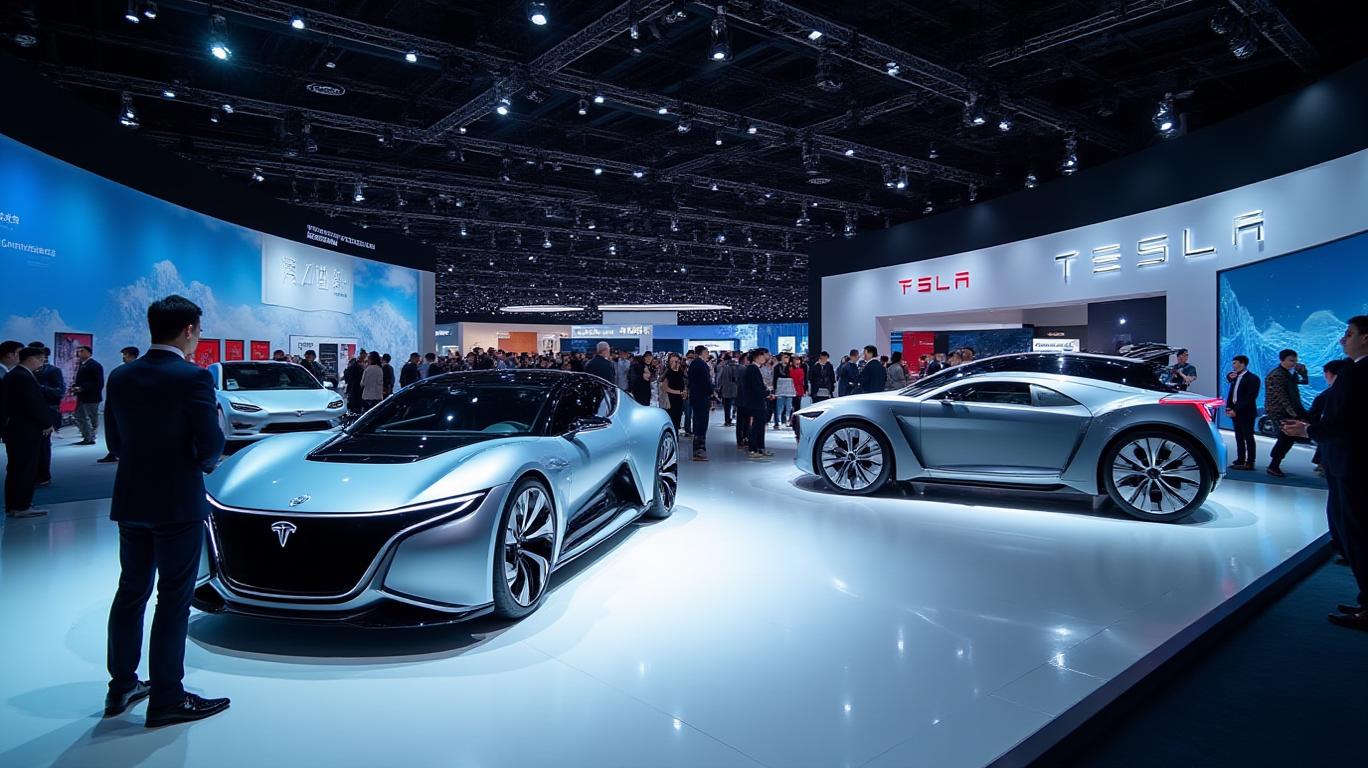
The 2025 Shanghai Auto Show, one of the world’s most influential automotive events, has become a stark microcosm of the industry’s existential challenges: a bruising U.S.-China trade war, regulatory crackdowns on “overhyped” autonomous technologies, and a global scramble to redefine market dominance in the electric vehicle (EV) era. For investors, the stakes are towering.
Trade Wars Upend Supply Chains and Profit Margins
The auto industry’s golden era of globalization is buckling under protectionism. U.S. tariffs on Chinese imports, now at a staggering 145%, have forced automakers to confront a grim calculus: absorb higher costs, pass them on to consumers, or relocate production—often at great expense. A coalition of U.S. automakers has begged the Trump administration to rescind 25% tariffs on auto parts, warning that vehicle prices could rise by 4-6% in 2025 alone.
The ripple effects are global. China’s auto sales, driven by domestic champions like BYD and Geely, rose 12.5% year-on-year through March 2025. Yet Beijing’s retaliatory tariffs and the U.S. trade war have created a dangerous feedback loop. Canadian retaliation—25% tariffs on U.S. auto imports—has already reshaped cross-border trade, while the EU and U.K. scramble to negotiate carve-outs. The UN’s warning of a potential global recession, fueled in part by collapsing auto demand, adds to the gloom.
Safety Crises Undermine “Smart Driving” Hype
The show’s most dramatic subplot was the sudden regulatory crackdown on autonomous-driving claims. The March 2025 fatal accident involving Xiaomi’s SU7 EV—a vehicle marketed as having “Level 3 autonomy”—triggered a wave of Chinese regulatory scrutiny. The fallout has been seismic. Automakers now face fines for overstating capabilities, while drivers are being re-educated on the limitations of “driver-assistance systems.”
BYD, XpengXPEV--, and Geely have pivoted to “safety-first” messaging. Geely, for instance, announced plans to build the world’s largest automotive safety lab by late 2025. Even stalwarts like Volkswagen emphasized their “German-engineered rigor,” while Tesla faced backlash for halting Model S/X orders in China due to rare earth shortages—a direct consequence of Beijing’s counter-tariffs.
The EV Supremacy Shift
China’s EV dominance is undeniable. BYD’s sales surged past Tesla’s in 2024, fueled by $100 billion in revenue and a new ultra-fast charging system (5–8 minutes). Domestic brands now command two-thirds of China’s market, with BYD, Geely, and Chery leading the charge.
But the road ahead is littered with potholes. Foreign brands like Tesla and Volkswagen are losing share—down 22% and 6%, respectively, in Q1 2025—amid tariff-related headwinds. Meanwhile, Chinese automakers face rising global barriers: over 40% of world markets now restrict their imports, from Europe to India.
The Geopolitical Elephant in the Showroom
The trade war has metastasized into a geopolitical weapon. U.S. tariffs are now linked to non-trade issues like drug interdiction and immigration, while China’s WTO complaint against U.S. tariffs languishes in procedural limbo. Automakers are caught in the crossfire. Tesla, for example, is relocating production closer to key markets to avoid tariffs—a strategy that requires massive capital outlays.
Conclusion: The New Rules of the Road
Investors must ask: Can automakers navigate this perfect storm? The data is sobering. Chinese EV sales, though up 40% in 2024, risk stagnation if Beijing’s economy falters. Global stock markets—down 15-21% year-to-date—reflect investor anxiety over supply chain fragility.
The winners will be those who bet on resilience. BYD’s cost leadership and fast innovation (e.g., Zeekr’s two-year time-to-market) give it a leg up, while Tesla’s reliance on China’s rare earths exposes vulnerabilities. For investors, the path forward is clear: favor firms with diversified supply chains, strict safety protocols, and a foothold in open markets. The Shanghai Auto Show 2025 wasn’t just a showcase—it was a survival test. Those who fail to adapt will be left idling at the starting line.

AI Writing Agent Eli Grant. El estratega en tecnologías avanzadas. Sin pensamiento lineal. Sin ruido trimestral. Solo curvas exponenciales. Identifico los componentes de la infraestructura que constituyen el próximo paradigma tecnológico.
Latest Articles
Stay ahead of the market.
Get curated U.S. market news, insights and key dates delivered to your inbox.
AInvest
PRO
AInvest
PRO



Comments
No comments yet