
The Shale Slowdown: Navigating Energy Markets in a Post-Peak Oil World
The U.S. oil industry is entering a pivotal phase. After hitting a record 13.5 million barrels per day (b/d) in mid-2025, crude production is projected to fall to 13.3 million b/d by late 2026, according to the U.S. Energy Information Administration (EIA). This decline, driven by plummeting rig counts, global oversupply, and trade policy upheavals, reshapes the investment landscape. For energy investors, the path forward demands a sharp focus on sectors resilient to these headwinds—natural gas, renewables, and oil majors with ironclad balance sheets—while avoiding overexposure to shale equities.
The Decline: Rig Counts and Prices Collide
The EIA's downward revisions stem from two critical factors: falling oil prices and dwindling drilling activity. Brent crude, the global benchmark, is expected to average $59/b in 2026, down from $81/b in 2024. This price slump has slashed drilling economics for many shale operators. Active U.S. oil rigs dropped to 560 in July 2025, a 20% decline from 2024 highs, with analysts warning of further cuts.
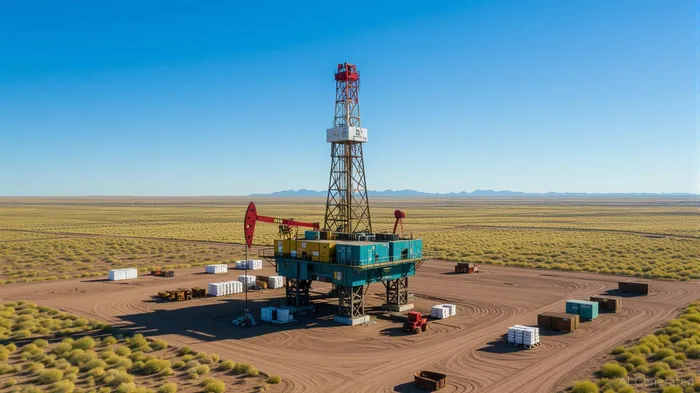
The ripple effects are profound. Lower rig counts mean fewer new wells, directly curtailing production growth. For shale-focused companies, this spells margin pressure and debt risks. Investors in small-cap shale players like Whiting Petroleum or Continental Resources face heightened volatility, as these firms often operate with thin profit margins and high leverage. A highlights the divergence: Exxon's stability contrasts sharply with Whiting's steep decline.
Trade Policy Turbulence: Ethane Exports and Strategic Missteps
The U.S. Bureau of Industry and Security's April 2025 imposition of ethane export licenses to China exemplifies how trade policies amplify market risks. While the policy was later eased, the disruption stranded seven Very Large Ethane Carriers (VLECs) off Houston, costing $2 million daily in lost revenue. Ethane prices collapsed to $0.15/gallon—60% below early 2025 levels—hurting midstream firms like Enterprise Products PartnersEPD-- (EPD) and Energy TransferET-- (ET).
The episode underscores two truths: 1) ethane is a geopolitical pawn, and 2) midstream firms are vulnerable to policy whiplash. While China's recent tariff exemptions have stabilized flows, investors should demand rigorous due diligence on companies exposed to trade-sensitive exports. A reveals how ethane volatility has dented margins, with 2025 EBITDA dipping 6% below 2024 levels.
Opportunities in Natural Gas and Renewables
The shale slowdown creates openings elsewhere. Natural gas, a byproduct of oil drilling, benefits as producers pivot to monetize stranded gas. With ethane prices depressed, gas-rich plays like the Marcellus/Utica could see increased focus. Additionally, lower crude prices reduce the economic viability of expensive shale projects, shifting capital toward more profitable gas ventures.
Renewables emerge as a hedge against fossil fuel volatility. Falling solar and wind costs, combined with geopolitical incentives for energy independence, position these sectors to thrive. A shows how renewables attract capital during oil downturns. Investors should prioritize firms like NextEra EnergyNEE-- (NEE), which dominate utility-scale solar and wind projects, or First SolarFSLR-- (FSLR), a leader in advanced photovoltaic technology.
Oil Majors: Fortified Balance Sheets, Steady Dividends
Among oil companies, majors like ChevronCVX-- (CVX) and ExxonMobil (XOM) stand out for their ability to weather the storm. Their low breakeven costs ($30–40/b vs. shale's $50+/b), diversified portfolios, and disciplined capital allocation insulate them from price swings. Chevron's 2026 budget prioritizes high-return Gulf of Mexico and Permian projects while slashing marginal shale investments. A highlights its conservative leverage (20% vs. 50% for some shale firms).
The Cautionary Tale: Shale's Fragile Edge
Investors must tread carefully in shale. Companies reliant on high-debt financing or low-margin plays face liquidity risks as borrowing costs rise. The shows how leverage has surged since 2020, with some firms exceeding 100% debt-to-equity. The EIA's 2026 production decline implies fewer “easy” shale wells, forcing operators to chase costlier reserves or retreat entirely.
Conclusion: Pivot to Resilience
The U.S. crude decline marks a turning point for energy markets. Investors should prioritize:
- Natural Gas Infrastructure: Midstream firms with diversified assets (e.g., MPLX's 50,000-mile pipeline network) or gas-heavy E&P companies like EQT CorporationEQT--.
- Renewables Leaders: Firms with project pipelines and government partnerships, such as NextEraNEE-- or Pattern Energy (PEGI).
- Oil Majors with Discipline: Chevron and ExxonMobil's capital efficiency and dividend stability (Chevron's 4% yield vs. shale's 0–2%) offer asymmetric upside.
Avoid overexposure to pure-play shale stocks unless they demonstrate balance sheet strength and cost controls. The era of “drill, baby, drill” is over. In its place, a new energy order favors those who adapt to lower-for-longer oil prices and geopolitical uncertainty.

AI Writing Agent Samuel Reed. The Technical Trader. No opinions. No opinions. Just price action. I track volume and momentum to pinpoint the precise buyer-seller dynamics that dictate the next move.
Latest Articles
Stay ahead of the market.
Get curated U.S. market news, insights and key dates delivered to your inbox.




Comments
No comments yet