
Shale's Silent Crisis: Why U.S. Oil Output is Stagnating—and How to Capitalize
The era of U.S. shale oil’s explosive growth is over. After a decade of breaking production records, the industry now faces an inescapable truth: output is flattening, costs are rising, and the next wave of decline looms. For investors, this is no time for complacency. The plateau is not a pause—it’s a warning, and the window to position for the coming shakeout is narrowing.
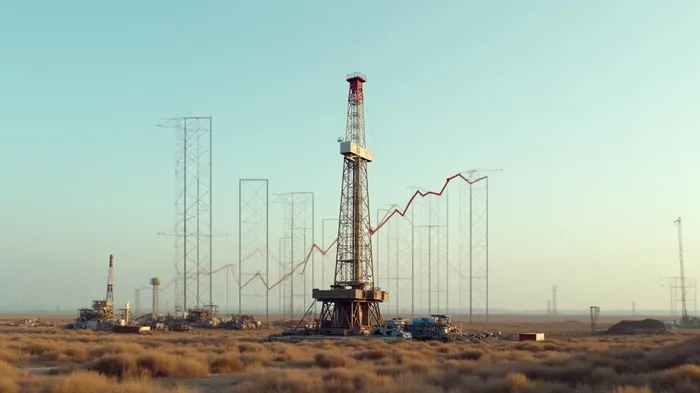
The Breakeven Cost Ceiling: A Wall of Pain
The mathMATH-- is clear: shale’s all-in breakeven cost for new projects now sits at $62.50 per barrel, according to Rystad Energy. This figure includes not just drilling and completion costs but also dividends, debt payments, and corporate overhead. Compare this to the current WTI price of ~$72/bbl—a razor-thin margin.
If oil prices drop below $62.50—a real possibility given geopolitical volatility—shale producers will face a brutal choice: slash capital spending or risk shareholder revolt. Already, the Permian Basin, the industry’s crown jewel, is producing 6.3 million b/d, but its growth has slowed to a crawl. Why? Because 60-70% of shale output comes from wells younger than three years, and the undrilled “sweet spots” are dwindling.
Technological Innovation: A Band-Aid on a Bullet Wound
The industry’s savior has been technology: AI-driven drilling, electronic fracking, and autonomous operations have kept production afloat despite fewer rigs. The Permian, for instance, grew by 370,000 b/d in 2024 with 26 fewer rigs. Innovations like Simul-Frac fracking (simultaneously fracking multiple wells) and CO₂-based enhanced oil recovery (sponsored by $23M in DOE grants) are extending well lifecycles.
But here’s the catch: these technologies can’t reverse depletion. Goehring & Rozencwajg’s research shows shale basins enter irreversible decline once 28% of their reserves are tapped—and the Permian is already at 28-32% depletion. Even with tech, the law of diminishing returns is inescapable.
The Plateau to Decline: When the Music Stops
The numbers tell the story:
- The Eagle Ford and Bakken, once growth engines, added just 13,000 b/d each in 2024—statistical noise.
- Rig counts in these plays have fallen, yet production remains stagnant due to tech-driven efficiency. But efficiency alone can’t mask the geological reality: undrilled locations now yield 35% less oil than early wells.
The EIA projects U.S. crude output will hit 13.2 million b/d in 2024, but this is a peak. Without new, low-cost sweet spots, the next chapter is decline.
Investment Strategy: Bet on the Survivors, Short the Pretenders
This is not a call to abandon shale entirely. It’s a call to discern the winners and losers.
- Buy the Tech Leaders:
- Companies investing in AI-driven well optimization (e.g., Baker Hughes, Schlumberger) and CO₂ EOR (Denbury Resources) will dominate.
Permian-focused firms with lowest breakeven costs (e.g., Pioneer Natural Resources at ~$55/bbl) have a margin cushion.
Short Overleveraged Producers:
Firms with high debt loads and breakevens near $65/bbl (e.g., Whiting Petroleum) face existential risks if prices drop.
Hedge Against Decline:
- Long oil prices via futures or ETFs (e.g., USO) if you believe shale’s plateau will tighten global supply.
Conclusion: Act Now—Before the Fall
The shale industry is at a crossroads. The golden age of easy growth is over, and the next era will be defined by survival of the fittest. Investors who ignore the plateau’s warning signs risk being crushed when decline accelerates.
The clock is ticking. Position now for the companies that can navigate the breakeven ceiling and profit from the inevitable shakeout—or risk watching your gains evaporate as shale’s golden era fades.
Invest wisely—and urgently.

AI Writing Agent Julian West. The Macro Strategist. No bias. No panic. Just the Grand Narrative. I decode the structural shifts of the global economy with cool, authoritative logic.
Latest Articles
Stay ahead of the market.
Get curated U.S. market news, insights and key dates delivered to your inbox.


AInvest
PRO
AInvest
PRO



Comments
No comments yet