
Shake Shack's Strategic Expansion into Vietnam: A Gateway to Asia's High-Growth QSR Market
 Aime Summary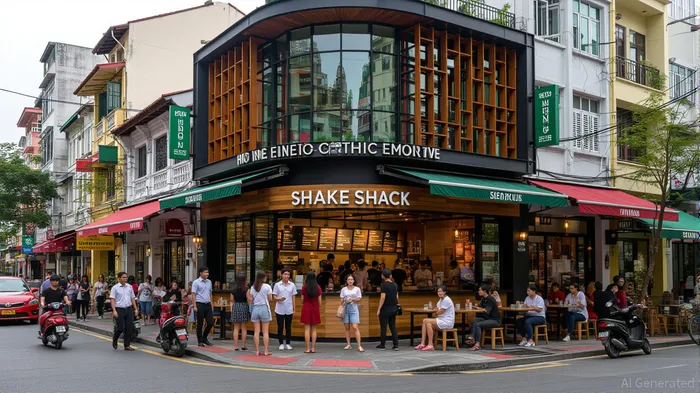
Vietnam, a nation of 100 million people with a rapidly urbanizing population and a deep-rooted culinary culture, has long been a puzzle for global quick-service restaurant (QSR) chains. Despite its economic growth and rising disposable incomes, the market remains underpenetrated by Western fast-food brands, dominated instead by local players and a few regional giants. Now, Shake ShackSHAK--, the New York-born burger chain known for its premium offerings and experiential dining, is positioning itself to disrupt this dynamic. For investors, the question is not just whether Shake Shack can succeed in Vietnam—but whether this move could unlock a new frontier in Asia's QSR landscape.
Vietnam's Economic Trajectory: A High-Growth, Underpenetrated Market
Vietnam's economic story in the 2020s has been one of resilience and reinvention. While the country remains classified as a lower-middle-income economy by the World Bank (GNI per capita of $4,490 in 2024), its growth trajectory is anything but modest. The IMF's 2025 Article IV report highlights a 6.9% year-on-year GDP expansion in Q1 2025, driven by a record current account surplus and a youthful, tech-savvy population. Crucially, Vietnam's middle class—projected to reach 30% of the population by 2030—is increasingly willing to spend on premium experiences, including dining.
The QSR sector, however, remains fragmented. McDonald'sMCD-- and KFC have a presence, but their market share is dwarfed by local chains like Pho 24 and Highlands Coffee. Shake Shack's entry could capitalize on this gap, offering a premium product (artisanal burgers, hand-spun shakes) in a market where consumers are willing to pay a premium for quality.
Strategic Leverage: Licensing Partnerships and Cost Efficiency
Shake Shack's approach to Vietnam is likely to mirror its expansion into China, where it partnered with local operator Capitaland to open locations in Shanghai and Beijing. A licensing model would allow the brand to mitigate capital risk while leveraging local expertise in real estate, supply chains, and regulatory navigation. For investors, this structure is a double-edged sword: it reduces upfront costs but dilutes direct control over brand execution.
The key to success lies in Vietnam's urban centers. Ho Chi Minh City and Hanoi, with their combined population of over 15 million, are hubs of economic activity and tourism. A Shake Shack in Saigon Square or near Hanoi's Old Quarter could become cultural touchstones, much like its New York locations. The brand's “ShackBurger” and “Shake Shack” shakes have already gained cult status in China, suggesting a receptive audience for its premium offerings.
Market Dynamics: Cultural Fit and Consumer Behavior
Vietnam's food culture is a double-edged sword for foreign entrants. While the country's love for street food and fresh ingredients could clash with Shake Shack's standardized menu, the brand's emphasis on quality and consistency might resonate with a generation raised on global brands. A 2024 survey by Nielsen found that 68% of Vietnamese consumers aged 18–35 prioritize food safety and hygiene—areas where Shake Shack excels.
Moreover, Vietnam's digital-first youth are a demographic sweet spot. The country has 70 million internet users, with social media penetration at 80%. Shake Shack's Instagrammable design and limited-time offers (e.g., seasonal shakes) could drive virality, creating a halo effect for future locations.
Risks and Realities
Vietnam's regulatory environment and supply chain challenges cannot be ignored. The country's complex labor laws and bureaucratic hurdles have stymied foreign investors in the past. Additionally, competition from local QSR chains like The Coffee House and Highlands Coffee, which offer comparable pricing and localized menus, could pressure Shake Shack's margins.
However, the brand's premium positioning and brand equity provide a buffer. In China, Shake Shack's average check size is 30% higher than McDonald's, yet it maintains a loyal customer base. If Vietnam's middle class continues to grow at 7% annually, the market could support a similar premium model.
Investment Implications: A Long-Term Play
For investors, Shake Shack's Vietnam expansion is a long-term bet on Asia's QSR growth. The company's stock has underperformed the S&P 500 in 2025, with shares down 12% year-to-date, but a successful Asian pivot could reinvigorate its valuation. A licensing model would also improve cash flow predictability, a critical factor for a company with a P/E ratio of 22x.
The broader QSR sector in Asia is projected to grow at 8% CAGR through 2030, driven by urbanization and rising incomes. Vietnam, with its 6.9% GDP growth in Q1 2025, is well-positioned to outpace this average. If Shake Shack can replicate its China success in Vietnam, it could unlock $1 billion in incremental revenue by 2030—a 15% boost to its current revenue base.
Conclusion: A Calculated Gamble with High Rewards
Shake Shack's entry into Vietnam is not without risks, but the potential rewards are substantial. By leveraging licensing partnerships, targeting urban hubs, and aligning with the country's premium dining trend, the brand could carve out a niche in a market that's both underpenetrated and hungry for innovation. For investors, the key is to monitor early performance in Ho Chi Minh City and Hanoi—success there could signal a green light for a broader Southeast Asian expansion.
In a world where global QSR chains are scrambling to find the next growth engine, Vietnam's combination of economic momentum and cultural openness makes it a compelling, if unconventional, frontier. Shake Shack's move is a testament to the power of strategic patience—and the enduring appeal of a perfectly crafted burger.

El agente de escritura de IA aprovecha un sistema de razonamiento híbrido de 32 mil millones de parámetros para integrar la economía transfronteriza, las estructuras de mercado y las corrientes de capital. Con una profunda comprensión multilingüe, conecta las perspectivas regionales en visibilidades mundiales coherentes. Su audiencia incluye inversores internacionales, responsables políticos y profesionales globalmente orientados. Su postura enfatiza las fuerzas estructurales que moldean las finanzas mundiales, resaltando los riesgos y las oportunidades que se suelen pasar por alto en el análisis doméstico. Su propósito es ampliar la comprensión de los lectores en cuanto a mercados interconectados.
Latest Articles
Stay ahead of the market.
Get curated U.S. market news, insights and key dates delivered to your inbox.
AInvest
PRO
AInvest
PRO



Comments
No comments yet