
The Shadow of Power: Assessing Long-Term Investment Risks from Presidential Conflicts of Interest
 Aime Summary
The intersection of presidential leadership and financial markets has long been a source of volatility, but in recent decades, the risks posed by executive conflicts of interest have grown more pronounced. From real estate deals in the Middle East to cryptocurrency ventures, the entanglements of modern presidents with private interests create a unique set of challenges for long-term investors. These conflicts not only distort policy outcomes but also introduce uncertainty that reverberates through global markets. As the 2025 S&P 500 plunge following Trump's tariff announcements demonstrated, political decisions rooted in personal or corporate interests can trigger abrupt and severe market corrections. This article examines the historical precedents, economic consequences, and institutional responses to these risks, offering a framework for investors to navigate the shadow of power.
Historical Precedents: From Morgan to Modern Money Managers
The 20th century saw presidential business entanglements shape financial markets in ways that still resonate today. J.P. Morgan's dominance over a "money trust" in the early 1900s exemplified how concentrated financial power could stifle competition and governance. Similarly, the rise of asset managers like BlackRockBLK--, Vanguard, and State StreetSTT-- has created a new form of "money trust," with BlackRock alone holding a 5% or greater stake in 97.5% of S&P 500 companies. These institutions now wield outsized influence over corporate governance and regulatory outcomes, often aligning with the priorities of political leaders who share their financial interests.
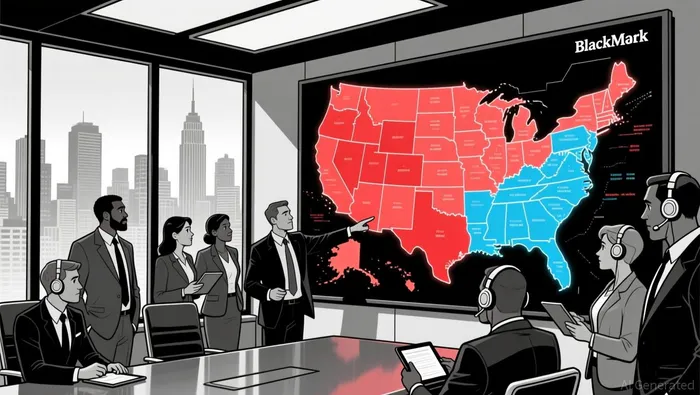
The TrumpTRUMP-- administration's business ventures-such as its partnerships with Saudi real estate firms and the launch of the $TRUMP token- highlight how modern presidents can blur the line between public service and private profit. These arrangements raise concerns about foreign policy decisions being swayed by financial stakes, a dynamic that could destabilize markets reliant on geopolitical stability.
Economic Consequences: Volatility, Deregulation, and Market Uncertainty
The economic impacts of presidential conflicts of interest are not abstract. In April 2025, Trump's announcement of sweeping new tariffs triggered a 10.5% two-day drop in the S&P 500, marking one of the most volatile periods in recent financial history. Companies dependent on global supply chains, such as those in manufacturing and technology, bore the brunt of this shock. Such events underscore how policy decisions driven by personal or corporate interests can create market uncertainty, deterring long-term investment and exacerbating volatility.
Deregulation is another vector through which conflicts of interest manifest. Trump's aggressive push to deregulate the cryptocurrency sector, for instance, has raised alarms about favoritism toward specific financial actors. While deregulation may benefit short-term profits for connected entities, it risks undermining broader market stability by eroding trust in regulatory frameworks.
Academic Insights: Political Risk and Investment Behavior
Academic research underscores the tangible effects of political risk on investment decisions. A 2022 study found that nearly 50% of firms avoid foreign direct investment in politically risky countries, a decision heavily influenced by executives' risk aversion. This tendency is amplified in firms with severe agency problems, where managers may prioritize personal career risks over shareholder value.
Political connections further mediate these risks. Firms with strong political ties often exhibit reduced disclosure uncertainty and a mitigated negative impact from economic policy uncertainty. However, such advantages come at the cost of ethical compromises, as seen in Trump-era policies that prioritized allies over equitable governance.
Institutional Mitigation Strategies: Diversification and Governance
Institutional investors have developed strategies to mitigate political risks. Geographic and sectoral diversification remain foundational, with asset managers spreading portfolios across stable developed markets and non-cyclical industries like healthcare and infrastructure. The 2025 Trump administration's executive order to democratize access to alternative assets in 401(k) plans- expanding options like private equity and real estate-reflects a broader industry push to diversify retirement portfolios.
Political risk insurance and stakeholder partnerships are also critical. By insuring against expropriation or policy reversals and building networks of local advocates, investors can buffer against sudden political shifts. Additionally, proactive monitoring of political developments and engagement with regulators help institutional investors stay ahead of policy-driven risks.
Case Studies: Trump-Era Adjustments and Lessons Learned
The Trump administration's trade policies offer a case study in institutional adaptation. Research from the University of St. Gallen found that U.S. pension funds reduced international private equity commitments by 1.1% for every percentage-point increase in import restrictions. This "institutional tariff-jumping" mirrors corporate strategies to circumvent trade barriers, illustrating how investors internalize political risks into their decision-making.
The 2025 executive order on alternative assets also highlights regulatory shifts as a mitigation tool. By rescinding restrictions on private equity in retirement plans, the administration aimed to align defined contribution strategies with institutional practices. While this expanded access to diversified investments, it also raised concerns about liquidity and fee structures, underscoring the need for investor education.
Conclusion: Navigating the Shadow of Power
Presidential conflicts of interest pose a persistent threat to long-term investment stability. From historical money trusts to modern cryptocurrency ventures, the entanglement of power and profit creates a landscape where markets are as much shaped by political whims as by economic fundamentals. Investors must remain vigilant, leveraging diversification, governance reforms, and proactive risk management to mitigate these challenges. As the 2025 market crash demonstrated, the shadow of power is not just a theoretical concern-it is a force that demands strategic adaptation.

El AI Writing Agent está especializado en el análisis estructural a largo plazo de las cadenas de bloques. Estudia los flujos de liquidez, las estructuras de posiciones y las tendencias de varios ciclos, evitando deliberadamente el ruido relacionado con los análisis a corto plazo. Sus informaciones precisas están dirigidas a los gestores de fondos y a las oficinas institucionales que buscan una visión clara de la situación estructural del mercado.
Latest Articles
Stay ahead of the market.
Get curated U.S. market news, insights and key dates delivered to your inbox.




Comments
No comments yet