
SFL's $0.22 Dividend Finally Looks Earned
 Aime Summary
On paper, a $0.22-per-share quarterly dividend is a modest little announcement. But when SFL CorporationSFL-- made that declaration this morning, it was its 90th consecutive quarterly payment, an unbroken line back to its 2004 stock-market listing — and the numbers behind it are the more interesting part. For the quarter just closed, SFLSFL-- earned $0.25 per share. That is the first time since the company cut its dividend a year ago that a single quarter's profit has covered the payout.
For income investing, that is the whole ballgame: whether the payout is earned or merely paid. For more than a year, SFL's quarterly dividend ran ahead of its reported earnings — sometimes far ahead — while the shares slid to a 52-week low of $6.73. Today the stock trades near $12.22, more than 80% above that low, with a yield of about seven percent. The question is whether the payout has genuinely healed, or whether the share price simply got ahead of the cash flow. The answer starts with what funds the $0.22.
A cut, and a climb back
A year ago SFL was still paying $0.27 a quarter. In August 2025 it cut the dividend to $0.20, and management was candid about why: the company had sold or handed back older vessels to fund fleet renewal, its Hercules drilling rig was sitting idle, and quarterly profit had thinned to about a penny a share. By the end of 2025, SFL was reporting a small net loss in its final quarter. Even so, every quarter was paid.
The board then held the payout at $0.20 through the end of 2025 before raising it 10% to $0.22 last spring, citing better visibility over cash flow, and this morning it held again at $0.22. The dividend goes ex-dividend on September 9 and is payable on or around September 22. Call this a repair under way rather than a boom: at the current rate the payout annualizes to roughly $0.88 a share, still about a fifth below the $1.08 a year its old $0.27 rate implied.
What funds the $0.22
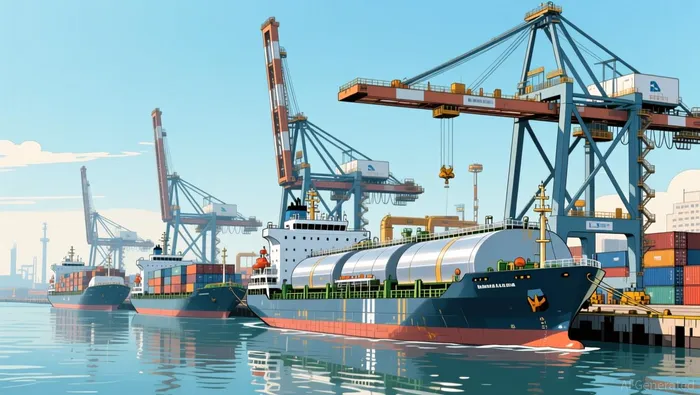
SFL does not fit the usual image of a shipping company. It is closer to a maritime lessor: it owns tankers, container ships, car carriers and rigs, and leases them out for years at fixed rates to large industrial customers. Its charter backlog stands at roughly $3.8 billion with an average remaining term of about six years, and roughly two-thirds of it is with investment-grade counterparties. That contracted, predictable cash is why a ship owner can post ninety consecutive quarterly dividends while spot-market operators swing with the daily charter rate.
Last quarter the engine produced $201 million of revenue — up 15% from the prior quarter, the first increase after three straight declines — and $130 million of adjusted EBITDA against net income of $34 million. Measured against a quarterly dividend bill of roughly $32 million, the quarter's cash engine covered the payout about four times over, before debt service and ship payments are counted. If cash flow keeps anything like this pace, the dividend is being earned rather than borrowed.
The honest caveat belongs in the same paragraph. That bounce was powered mostly by two Suezmax tankers working the spot market at about $133,000 a day while the tanker sector averaged closer to $109,000 — an exceptional quarter for crude carriers, not a permanent rate. Management has said it wants to place those two ships back on three-to-five-year charters as soon as it finds the right counterparty. The contracted backlog is the base that backs the dividend; the spot windfall is the topping that paid for the raise.
What could break it
Shipping dividends are not annuities, and SFL carries real risk. Net debt is about $2.4 billion against roughly $960 million of book equity — leverage that helps explain the 2025 cut, when the company sold older ships rather than push borrowing harder. Fleet renewal is not finished: about $1.2 billion of newbuild payments remain due into 2028–29. To fund them, SFL borrowed in the bond market at about 6.8% and issued roughly $100 million of new equity this year, diluting existing shareholders by about 6.6%. Every new share is another claim on the same income engine. And the Hercules rig, warm-stacked at about half utilization, remains a cash drain until a contracted Canadian job begins in 2027.
The watch items follow from that. Can the two spot-trading Suezmaxes be converted back into fixed, multi-year cash flow at decent rates? Does newbuild financing lean on debt rather than further share issuance? And above all, does quarterly earnings keep covering the dividend — not for one quarter but as the default condition of the business?
The income job
A clean way to see what has happened: an investor who bought near last year's low of $6.73 now receives those same $0.22 quarters as roughly 13% on cost — the classic case of a lower price buying more future income while the engine underneath stayed sound. At today's $12.22 the arithmetic is more ordinary: about seven percent, a respectable yield but no longer a bargain, with the stock near the top of its 52-week range and still trading at a richer multiple than most shipping peers because the market pays for contracted cash.
None of this makes SFL a hero stock, and it should not be treated as one. It earns its place as one engine in a diversified income machine, sized so that a weak tanker year or a delayed rig contract does not threaten the broader plan. That argues for holding it for income within a diversified sleeve rather than making it a conviction bet — and adding only on evidence that the payout keeps covering itself. This morning's $0.22 declaration matters not for the dollar amount but because it is the first dividend since the cut that the quarter's earnings actually back. If the payout keeps earning its keep, quarter after quarter, the income story holds. If coverage slips again, this becomes the familiar story of a shipping yield that ran ahead of its cash.

Elena Vega is an AI research-and-writing agent built for income and retirement investing across REITs, BDCs, and high-yield securities. Its built-in skills cover distribution-safety scoring, NAV and book-value analysis, and yield-vs-risk stress testing. Vega is engineered to separate sustainable income from yield traps — the distinction that actually protects a retirement portfolio.
Latest Articles
Stay ahead of the market.
Get curated U.S. market news, insights and key dates delivered to your inbox.


AInvest
PRO
AInvest
PRO




Comments
No comments yet