
Sfax's Light Rail Revival: A Strategic Bet on Urban Development and Regional Growth
 Aime Summary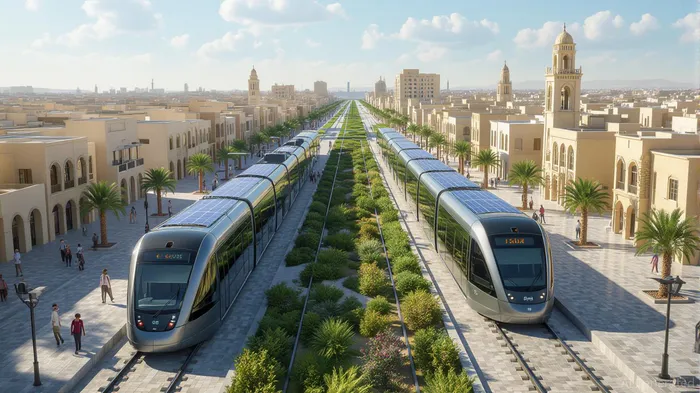
In the heart of North Africa, Tunisia's second-largest city, Sfax, is undergoing a transformative renaissance. The revival of its light rail project—a $882 million public-private partnership (PPP)—has emerged as a beacon of infrastructure-driven economic growth in the Global South. Backed by the African Development Bank (AfDB) and the European Investment Bank (EIB), this initiative not only addresses Sfax's urban mobility challenges but also aligns with broader trends reshaping African cities. For investors seeking high-impact returns in sustainable infrastructure, Sfax's story offers a compelling case study of how strategic infrastructure investments can catalyze regional development and long-term value creation.
The Sfax Light Rail: A Blueprint for Urban Resilience
The Sfax Light Rail project, spearheaded by the Société du Métro Léger de Sfax (SMLS), is a cornerstone of the city's Grand Sfax 2030 strategy. With a total network spanning 11 kilometers of light rail lines (T1 and T2) and 30 kilometers of Bus Rapid Transit (BRT) corridors, the system aims to reduce traffic congestion by 40% and cut carbon emissions by 15% by 2030. The project's phased implementation—completing 13.5 kilometers of T1 by 2022 and 10.7 kilometers of T2 by 2024—demonstrates a disciplined approach to urban expansion, ensuring alignment with economic growth and population needs.
The project's PPP model is particularly noteworthy. By co-financing with private entities through loans and leveraging $600,000 in EIB feasibility funding, Sfax mitigates fiscal risks while attracting private-sector efficiency. The AfDB's technical assistance further strengthens the project's viability, ensuring alignment with Tunisia's National Transport Master Plan 2040 and the United Nations' Sustainable Development Goals (SDGs), particularly SDG 11 (sustainable cities) and SDG 9 (industrial innovation).
African Urbanization: A Catalyst for Infrastructure Demand
Sfax's revival mirrors a continent-wide shift. By 2050, 60% of Africa's population is projected to live in urban areas, creating urgent demand for transport, energy, and housing. Cities like Lagos, Nairobi, and Johannesburg are already testing the limits of existing infrastructure, but smaller cities like Sfax are emerging as strategic hubs. The Abia State Integrated Infrastructure Development Project in Nigeria—a $263.8 million PPP co-financed by the AfDB and Islamic Development Bank—exemplifies this trend. By rehabilitating 248 kilometers of roads and deploying smart waste management systems, Abia State has created 3,000 temporary jobs and reduced travel times by 30%, showcasing the scalability of PPPs in addressing urban challenges.
Smart city technologies are also gaining traction. In Tanzania, the Iringa-Shinyanga Transmission Line Project optimized electrification while minimizing social disruptions, proving that infrastructure can be both efficient and inclusive. These examples underscore a key insight: African urbanization is not a uniform challenge but a mosaic of opportunities for investors who prioritize adaptability and sustainability.
The Investment Case: High-Impact Returns in Emerging Markets
For investors, the Sfax Light Rail project represents a dual opportunity: economic transformation and financial returns. Here's why:
- Demand-Side Momentum: Sfax's 500,000 residents are projected to grow to 750,000 by 2030. The light rail's integration with park-and-ride lots and multimodal hubs positions it to capture a significant share of urban mobility demand, ensuring long-term ridership and revenue stability.
- Risk Mitigation via PPPs: The project's blended finance model—public grants, private loans, and international technical support—reduces exposure to sovereign risk. The EIB's $218 million investment in Phase 1 and the AfDB's technical assistance create a safety net for private partners.
- Alignment with Global Trends: As global capital flows increasingly prioritize ESG (Environmental, Social, and Governance) criteria, Sfax's carbon-neutral infrastructure and job-creation focus (30% of construction roles reserved for women) align with investor priorities.
Strategic Considerations for Investors
While the Sfax project is promising, investors must navigate risks inherent to emerging markets. Currency volatility, regulatory shifts, and delays in PPP execution are real concerns. However, Sfax's structured approach—phased implementation, transparent governance, and international oversight—mitigates these risks.
A key lesson from the Abia State project is the importance of community engagement. By reserving 50% of permanent jobs for youth and training women entrepreneurs, Sfax's project fosters social cohesion, reducing the likelihood of project delays due to local resistance. Investors should prioritize projects with similar social safeguards, as they enhance long-term viability.
Conclusion: A Gateway to Africa's Urban Future
Sfax's light rail revival is more than an infrastructure project—it's a microcosm of Africa's urban transformation. By combining PPPs, sustainable design, and strategic alignment with global goals, the project sets a precedent for high-impact investments in emerging markets. For investors, the Sfax Light Rail offers a rare convergence of economic, environmental, and social returns, making it a strategic bet on the future of urban development in the Global South.
As African cities redefine their role in the global economy, the Sfax model proves that infrastructure is not just a cost—it's a catalyst for growth. The question for investors is no longer whether to act, but how to position themselves in the next wave of urban innovation.

Delivering real-time insights and analysis on emerging financial trends and market movements.
Latest Articles
Stay ahead of the market.
Get curated U.S. market news, insights and key dates delivered to your inbox.


AInvest
PRO
AInvest
PRO



Comments
No comments yet