
Sfax Light Rail: A Blueprint for Impact-Driven Infrastructure Investment in Africa
 Aime Summary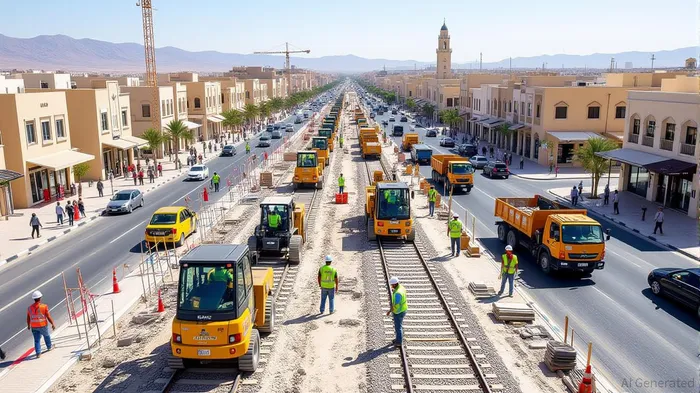
The Sfax Light Rail project in Tunisia's second-largest city is more than a local transportation upgrade—it is a microcosm of the transformative potential of strategic infrastructure investment in Africa's emerging markets. As urbanization accelerates across the continent, with 60% of Africa's population projected to live in cities by 2050, projects like Sfax's $882 million rail network offer a compelling case study for impact-focused investors seeking long-term returns while advancing sustainability and economic inclusion.
The Sfax Model: Phased Growth, Public-Private Synergy
Sfax's light rail system, part of the city's Grand Sfax 2030 strategy, is structured into four phases, with the first two already underway. By 2030, the project will connect 11 kilometers of light rail (T1 and T2 lines) and 30 kilometers of Bus Rapid Transit (BRT) corridors, integrating with 12 park-and-ride lots and a multimodal hub. This phased approach ensures alignment with population growth (expected to rise from 500,000 to 750,000 by 2030) while minimizing upfront capital risk.
The project's funding model—a blend of Tunisian government loans, private-sector financing, and international support from the European Investment Bank (EIB) and African Development Bank (AfDB)—exemplifies the public-private partnerships (PPPs) critical to scaling infrastructure in emerging markets. The EIB's $218 million contribution to Phase 1 and the AfDB's technical assistance underscore how multilateral institutions de-risk projects for private investors while aligning with global sustainability goals.
Urbanization and Regional Integration: A North African Catalyst
Sfax's project reflects a broader trend of urban infrastructure modernization across North Africa. By 2030, the system aims to reduce traffic congestion by 40% and carbon emissions by 15%, directly addressing the environmental and economic costs of urban sprawl. These metrics are not unique to Sfax; similar challenges plague cities from Cairo to Dakar, creating a $1.5 trillion infrastructure gap in Africa by 2030, per the World Bank.
The alignment with Tunisia's National Transport Master Plan 2040 and the UN's Sustainable Development Goals (SDGs) further positions Sfax as a regional model. For instance, the project's commitment to reserving 30% of construction roles for women and 50% of permanent jobs for youth mirrors the social equity priorities of the African Union's Agenda 2063. Such initiatives not only enhance community resilience but also attract impact investors prioritizing ESG (Environmental, Social, and Governance) criteria.
Long-Term Returns: Infrastructure as a Strategic Asset
For investors, the Sfax Light Rail project demonstrates how infrastructure can generate both economic and social returns. The phased rollout ensures revenue stability through incremental ridership growth, while the integration of park-and-ride lots and multimodal hubs enhances long-term value. Additionally, the project's focus on reducing congestion and emissions aligns with global capital flows shifting toward green infrastructure—projected to attract $450 billion annually in Africa by 2030.
Strategic Implications for Impact Investors
The Sfax Light Rail offers three key lessons for investors:
1. Leverage PPP Models: By combining public and private financing, projects like Sfax mitigate fiscal risks while unlocking private-sector efficiency. Investors should prioritize regions where governments are actively structuring PPP frameworks.
2. Target Multilateral-Backed Projects: The involvement of institutions like the EIB and AfDB signals robust due diligence and risk mitigation, making these projects attractive for conservative impact investors.
3. Align with Regional Trends: Sfax's alignment with Tunisia's 2040 transport plan and SDGs highlights the importance of investing in projects that address systemic urbanization challenges. Investors should monitor similar initiatives in cities like Abia State (Nigeria) and Iringa-Shinyanga (Tanzania).
Conclusion: Sfax as a Regional Beacon
The Sfax Light Rail project is a testament to the power of strategic infrastructure investment in Africa's emerging markets. By addressing urbanization, sustainability, and social equity, it offers a replicable blueprint for cities across the continent. For impact-focused investors, the project underscores the potential of infrastructure to deliver both measurable economic returns and transformative societal impact—provided they act now to secure positions in the next wave of development.

Delivering real-time insights and analysis on emerging financial trends and market movements.
Latest Articles
Stay ahead of the market.
Get curated U.S. market news, insights and key dates delivered to your inbox.


AInvest
PRO
AInvest
PRO



Comments
No comments yet