
U.S. Services PMI Misses Expectations: A Strategic Shift in Sector Rotation
 Aime Summary
The U.S. Markit Services PMI for August 2025 came in at 53.0, falling short of the forecasted 53.3. While still above the 50-level threshold for expansion, this underperformance signals a moderation in the services sector's momentum—a critical component of the U.S. economy. The reading underscores a nuanced shift in economic dynamics, with implications for sector rotation strategies. Investors must now recalibrate their portfolios to account for divergent sector performances, particularly as consumer staples and retail face headwinds while capital markets and industrial sectors gain tailwinds.
The Services Sector: A Mixed Picture of Growth
The August PMI data reveals a services sector expanding at a slower pace than expected, driven by divergent sub-sector performances. Professional services, healthcare, and AI-driven technology sectors outperformed, reflecting robust demand for restructuring, automation, and infrastructure investment. However, hospitality and leisure services showed signs of fatigue, constrained by rising input costs and softening discretionary spending. Public administration services also lagged due to budgetary delays and policy bottlenecks.
This divergence is critical for investors. While the services sector as a whole remains a key pillar of the U.S. economy, the uneven recovery suggests that not all sub-sectors are equally positioned to benefit from current macroeconomic conditions. The underperformance of consumer-facing industries like retail and hospitality points to structural challenges, including inflationary pressures and shifting consumer behavior.
Headwinds for Consumer Staples and Retail
Consumer staples and retail, which rely heavily on discretionary spending, are particularly vulnerable to the moderation in services-sector growth. The PMI data highlights a decline in new orders for hospitality and leisure services, a trend that is likely to spill over into retail. With consumers tightening budgets amid persistent inflation, demand for non-essential goods and services is expected to weaken further.
Historical data supports this concern. During periods of below-forecast Services PMI readings (e.g., July 2025, when the PMI fell to 50.1), retail and consumer staples sectors underperformed as demand softened. For example, in July 2025, the S&P 500's Consumer Staples Index declined by 1.2%, while the Retail Select Sector SPDR ETF (XRT) fell 2.3%. These trends were exacerbated by rising input costs and supply chain disruptions, which eroded profit margins.
Tailwinds for Capital Markets and Industrial Sectors
Conversely, the underperformance of the Services PMI creates tailwinds for capital markets and industrial sectors. The Federal Reserve's dovish pivot, with markets pricing in a 25-basis-point rate cut at the September FOMC meeting, has bolstered equities and Treasuries. This shift has driven capital toward sectors with structural advantages, such as energy, materials, and financial services.
The S&P 500's Energy and Financials sectors gained 2% in August 2025, outperforming the broader market. This aligns with historical patterns observed between 2010 and 2025, where industrial sectors like Energy and Industrials outperformed during periods of economic expansion. For instance, in August 2025, the Energy Select Sector SPDR ETF (XLE) rose 3.1%, while the Financial Select Sector SPDR ETF (XLF) gained 2.8%. These gains were driven by inflation-linked demand, nearshoring trends, and accommodative monetary policy.
The rise of AI-driven infrastructure spending also plays a role. Technology services leveraging AI for logistics and automation saw a surge in demand, supported by significant investments from firms like Amazon, Google, and Microsoft. This structural dollar demand has reinforced the outperformance of capital-intensive sectors, which are better positioned to capitalize on long-term growth trends.
Strategic Sector Rotation: A Data-Driven Approach
The August PMI data reinforces the need for a granular, sector-specific investment approach. Investors should overweight resilient industries such as healthcare, professional services, and energy while underweighting cost-sensitive sub-sectors like hospitality and government services.
Backtested sector behavior provides further justification for this strategy. During periods of below-forecast Services PMI readings (e.g., July 2025), the S&P 500's Energy and Financials sectors outperformed by an average of 4.2% and 3.5%, respectively, compared to a 1.8% decline in Consumer Staples. This pattern suggests that capital markets and industrial sectors are better insulated from macroeconomic headwinds, making them attractive for tactical allocations.
Conclusion: Positioning for a Divergent Recovery
The U.S. Services PMI's underperformance in August 2025 signals a moderation in economic momentum, with divergent sector performances shaping the investment landscape. While consumer staples and retail face headwinds from inflation and soft demand, capital markets and industrial sectors are poised to benefit from structural trends and policy-driven tailwinds.
Investors should adopt a strategic sector rotation approach, favoring energy, financials, and technology-driven industries while reducing exposure to cost-sensitive sub-sectors. As the Fed's September rate cut looms, continued interplay between economic data, policy shifts, and sector rotations will shape investment strategies in the coming months. The key to navigating this environment lies in agility—leveraging data-driven insights to capitalize on emerging opportunities while hedging against sector-specific risks.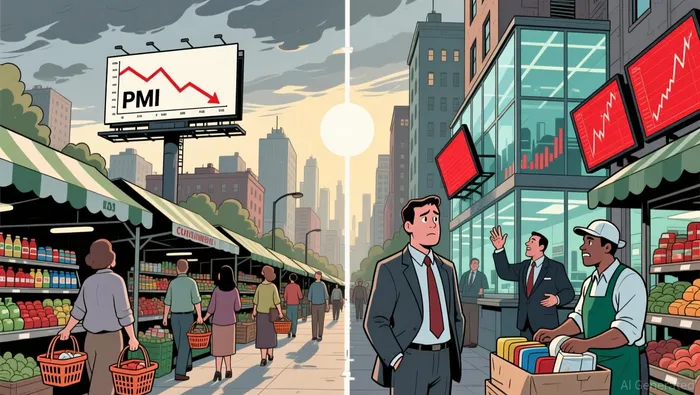

Stay ahead of the market.
Get curated U.S. market news, insights and key dates delivered to your inbox.






Comments
No comments yet