
SeoulTech Scientist Creates Artificial Synapses Mimicking Human Brain Function for Next-Gen AI Chips
ByAinvest
Wednesday, Sep 3, 2025 3:10 pm ET1min read
MSFT--
MAI-Voice-1, a powerful text-to-speech model, can generate a full minute of natural speech in under a second, operating efficiently on a single GPU. This model powers features like Copilot Daily and Copilot Podcasts and is accessible through Copilot Labs. Users have noted its expressive and empathetic tones, a marked improvement over older, more robotic synthetic voices.
MAI-1-preview, Microsoft's first self-trained foundation model, is now available for public testing on platforms like LMArena. Built using approximately 15,000 Nvidia H100 GPUs, it employs a mixture-of-experts architecture for efficiency.
This launch is part of Microsoft's broader strategy to control its core AI technology entirely. AI chief Mustafa Suleyman has emphasized the need for in-house capability to ensure long-term cost efficiency and reduce external dependencies. Microsoft's focus on training models smarter, not just larger, optimizes computational resources and data usage, representing a nuanced shift in AI development.
Analysts are closely watching the market reaction. The development of independent, top-tier AI models could solidify Microsoft's market leadership. The company is positioning itself to lead, not follow, in the AI race.
References:
[1] https://inews.zoombangla.com/microsofts-new-voice-ai-rivals-openai-with-mai-1-independence/
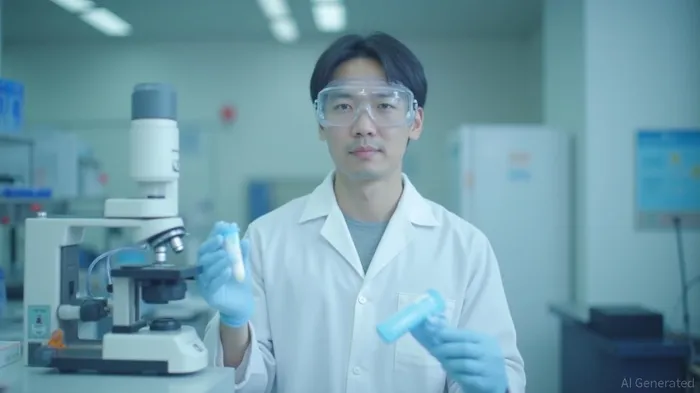
Dr. Eunho Lee, an Assistant Professor at Seoul National University of Science and Technology, has developed artificial synapses that mimic human brain function for next-gen AI chips. His research improves ion uptake in electrolyte-based organic transistors, making them more efficient and paving the way for ultra-low-power co-processors in wearables, cameras, and IoT nodes. The materials also support bioelectronic interfaces for closed-loop therapies, electrochemical biosensors, and environmental monitors.
Microsoft has announced the launch of two new in-house artificial intelligence models, MAI-1-preview and MAI-Voice-1, marking a strategic shift away from reliance on external partners like OpenAI. This move signifies a significant investment in proprietary technology, as reported by Reuters [1]. The company's stock has responded positively, climbing nearly 9% this quarter, indicating investor confidence in Microsoft's AI capabilities.MAI-Voice-1, a powerful text-to-speech model, can generate a full minute of natural speech in under a second, operating efficiently on a single GPU. This model powers features like Copilot Daily and Copilot Podcasts and is accessible through Copilot Labs. Users have noted its expressive and empathetic tones, a marked improvement over older, more robotic synthetic voices.
MAI-1-preview, Microsoft's first self-trained foundation model, is now available for public testing on platforms like LMArena. Built using approximately 15,000 Nvidia H100 GPUs, it employs a mixture-of-experts architecture for efficiency.
This launch is part of Microsoft's broader strategy to control its core AI technology entirely. AI chief Mustafa Suleyman has emphasized the need for in-house capability to ensure long-term cost efficiency and reduce external dependencies. Microsoft's focus on training models smarter, not just larger, optimizes computational resources and data usage, representing a nuanced shift in AI development.
Analysts are closely watching the market reaction. The development of independent, top-tier AI models could solidify Microsoft's market leadership. The company is positioning itself to lead, not follow, in the AI race.
References:
[1] https://inews.zoombangla.com/microsofts-new-voice-ai-rivals-openai-with-mai-1-independence/
Stay ahead of the market.
Get curated U.S. market news, insights and key dates delivered to your inbox.


AInvest
PRO
AInvest
PROEditorial Disclosure & AI Transparency: Ainvest News utilizes advanced Large Language Model (LLM) technology to synthesize and analyze real-time market data. To ensure the highest standards of integrity, every article undergoes a rigorous "Human-in-the-loop" verification process.
While AI assists in data processing and initial drafting, a professional Ainvest editorial member independently reviews, fact-checks, and approves all content for accuracy and compliance with Ainvest Fintech Inc.’s editorial standards. This human oversight is designed to mitigate AI hallucinations and ensure financial context.
Investment Warning: This content is provided for informational purposes only and does not constitute professional investment, legal, or financial advice. Markets involve inherent risks. Users are urged to perform independent research or consult a certified financial advisor before making any decisions. Ainvest Fintech Inc. disclaims all liability for actions taken based on this information. Found an error?Report an Issue


ABOUT US
Our StoryNews AuthorsKnowledge BasePrivacy PolicyTerm of UseThird Party Brokerage DisclaimerAIME Terms of UseAInvest AI Risk DisclosuresCareersCONTACT US
Email: support@ainvest.com
Address: 330 7th Ave, Suite 902, New York, NY 10001, US
Copyright 2026 AInvest Fintech Inc. All rights reserved.


Comments
No comments yet