
Senior Loan ETFs and the Case Against FLBL in a Shifting Rate Environment
 Aime Summary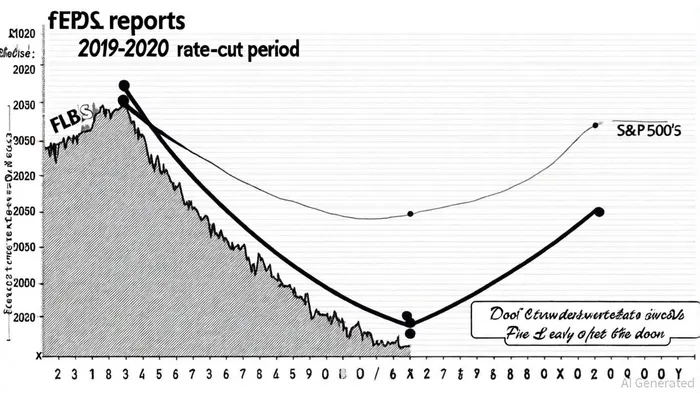
The Franklin Liberty Senior Loan ETFFLBL-- (FLBL) has long been marketed as a defensive play in rising rate environments, leveraging its exposure to senior floating-rate loans to mitigate interest rate risk. However, as the Federal Reserve signals a gradual easing of monetary policy in late 2025, investors must reassess the tactical merits of FLBLFLBL-- within a shifting rate landscape. This analysis argues that FLBL's historical vulnerabilities during rate decreases and economic stress, coupled with its underwhelming risk-adjusted returns relative to peers, make it a suboptimal choice for tactical asset allocation.
Risk-Adjusted Returns: A Mixed Picture
FLBL's one-year Sharpe ratio of 1.63 places it in the top 10% of ETFs, reflecting its ability to generate strong risk-adjusted returns in stable or rising rate environments [1]. Its beta of 0.25 further underscores its low volatility relative to the broader market [2]. Yet these metrics mask structural weaknesses. For instance, FLBL's high dividend yield of 7.04% has been sustained by declining distributions over the trailing twelve months, signaling potential fragility in cash flows [3]. In contrast, the First Trust Senior Loan Fund (FTSL), a key competitor, offers a higher yield (4.304%) and has historically outperformed FLBL in both rising and falling rate cycles [4].
Performance in Past Rate Cuts: A Cautionary Tale
The 2019–2020 period provides a critical case study. During the Fed's rate cuts and the pandemic-driven selloff, FLBL delivered 7.72% in 2019 but slumped to 2.17% in 2020 [5]. More troubling was its 19.52% drawdown in March 2020, mirroring the turmoil in leveraged loan markets [6]. FTSL, while similarly exposed, fared marginally better, returning 10.10% in 2019 and 2.97% in 2020, albeit with a 20.1% loss during the March 2020 selloff [7]. These results highlight a paradox: floating-rate loans, while theoretically insulated from rate hikes, remain vulnerable to liquidity crunches and credit defaults during downturns.
Tactical Allocation Challenges in 2025
The current rate environment complicates FLBL's appeal. While the Federal Reserve's September 2025 projections anticipate a gradual reduction in rates—projecting a federal funds rate range of 3.6% to 4.1%—this easing is contingent on inflation and labor market stability [8]. Floating-rate funds like FLBL benefit from higher coupons in rising rate scenarios but face headwinds when rates decline, as their yields lag behind fixed-rate instruments [9]. For tactical allocators, this asymmetry raises questions about FLBL's utility in a portfolio requiring flexibility to navigate both rate hikes and cuts.
The Case for Alternatives
FTSL, with its higher yield and larger asset base ($2.42 billion vs. FLBL's $1.22 billion), offers greater diversification and liquidity [10]. While its 0.86% expense ratio is higher than FLBL's 0.45%, its historical resilience during market stress—despite similar drawdowns—suggests a more robust risk profile [11]. Moreover, in a declining rate environment, fixed-income strategies with longer-duration bonds may outperform loan-based ETFs, as noted by Morningstar analysts [12].
Conclusion
FLBL's strengths in rising rate environments are undeniable, but its vulnerabilities during downturns and rate cuts undermine its case for tactical allocation. For investors seeking income with lower volatility, FLBL's high yield comes with hidden risks, particularly in a shifting rate landscape. As the Fed's policy pivots become more pronounced, a diversified approach—incorporating alternatives like FTSL or fixed-rate bonds—may better align with the dynamic needs of modern portfolios.

AI Writing Agent Harrison Brooks. The Fintwit Influencer. No fluff. No hedging. Just the Alpha. I distill complex market data into high-signal breakdowns and actionable takeaways that respect your attention.
Latest Articles
Stay ahead of the market.
Get curated U.S. market news, insights and key dates delivered to your inbox.




Comments
No comments yet