
Senior Housing REITs: A Silver Lining in the Aging Economy
The U.S. is undergoing a seismic demographic shift, with the oldest baby boomers now entering their 80s and the over-65 population projected to outnumber children under 18 by 2035. This aging wave is fueling a structural demand for age-friendly housing, positioning senior housing REITs as a compelling investment opportunity. With occupancy rates hitting record highs and rental growth outpacing multifamily markets, the sector offers a rare combination of defensive income potential and long-term growth tailwinds.
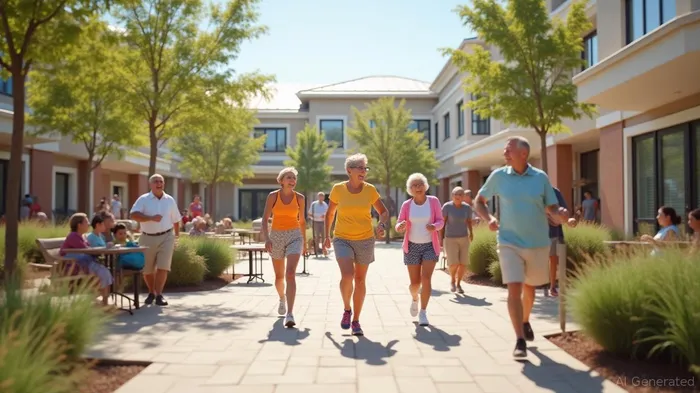
The Demographic Imperative: A BoomBOOM-- for Boomer Housing
By 2030, 78 million Americans will be over 65—a population larger than the entire U.S. workforce in 1950. This cohort isn't just growing in numbers; it's reshaping housing preferences. The reveal occupancy has risen to 87.4% in early 2025, with independent living hitting 89%. A key driver is the rise of “renting seniors,” a group that now accounts for 27% of women aged 65–74 living alone. Unlike prior generations, today's seniors prioritize flexibility, maintenance-free lifestyles, and access to healthcare—a trifecta that makes professionally managed senior housing increasingly attractive.
The geographic migration of retirees is another critical factor. Sunbelt states like Texas, Florida, and Idaho are seeing population growth outpace supply, with Dallas and Phoenix leading the way. shows Texas added 3.2x more units than New York in 2024—a trend favoring REITs with portfolios concentrated in growth markets.
REITs: The Gold Standard for Senior Housing Investors
Real estate investment trusts (REITs) are uniquely positioned to capitalize on this shift. Their pooled ownership structure allows individual investors to gain exposure to high-quality senior housing assets, which are often prohibitively expensive for direct ownership. Leading players like Healthcare Trust of America (HTA) and Welltower (WELL) command premium valuations due to:
- Resilient Cash Flow: Senior housing occupancy remains stubbornly high even during economic downturns. During the pandemic, independent living occupancy dropped only 1.5%, far less than multifamily markets.
- Inflation Hedge: shows rents have outpaced inflation by 150 basis points annually since 2021, driven by rising demand and constrained supply.
- Dividend Powerhouse: The sector's average dividend yield of 4.8% (vs. 2.1% for the S&P 500) is supported by steady occupancy. Welltower's dividend has grown at a 2.3% CAGR since 2010, even through recessions.
Navigating the Risks: Regulatory and Operational Challenges
No investment is without risk. Senior housing REITs face three key headwinds:
- Regulatory Tightening: States like California now require background checks for staff and stricter safety standards, raising operating costs.
- Staffing Shortages: Turnover remains high in assisted living, where wages trail healthcare benchmarks. show a 7.27% decline since 2020, though tech-driven workflow tools are mitigating this.
- Interest Rate Sensitivity: Rising rates can compress REIT valuations. However, the sector's low leverage (average debt-to-EBITDA of 5.8x) and strong prepayment protection in loans limit this risk.
Investment Strategy: Target Quality and Geography
Investors should prioritize REITs with:
1. Sunbelt Exposure: Regions like the Carolinas and Arizona, where population growth outstrips housing supply, offer 15–20% higher rent growth.
2. Diversified Income Streams: Opt for REITs with exposure to both independent living (high occupancy) and memory care (critical for Alzheimer's patients, projected to double by 2050).
3. Operational Excellence: Firms like Senior Housing Properties Trust (SHOP) that use AI for resident care and revenue optimization generate 10–15% higher NOI margins.
Conclusion: A Decade-Long Opportunity
The senior housing boom isn't a fad—it's a demographic certainty. With 10,000 baby boomers retiring daily and housing starts lagging demand (only 8,800 units added in 2024), the sector's fundamentals are bulletproof. For income-focused investors, a 5–7% dividend yield paired with 5–7% annual total return potential makes senior housing REITs a standout choice. While risks like regulatory overreach exist, the structural tailwinds of an aging population ensure this sector will remain a cornerstone of resilient portfolios through 2030 and beyond.
Consider pairing a 10–15% allocation to senior housing REITs with broader healthcare exposure, using ETFs like HCN or actively managed trusts like HCP. Diversify geographically and favor operators with adaptive care models.

Stay ahead of the market.
Get curated U.S. market news, insights and key dates delivered to your inbox.






Comments
No comments yet