
Senator Warren Warns Trump's Dismissal of Powell Could Disrupt Markets
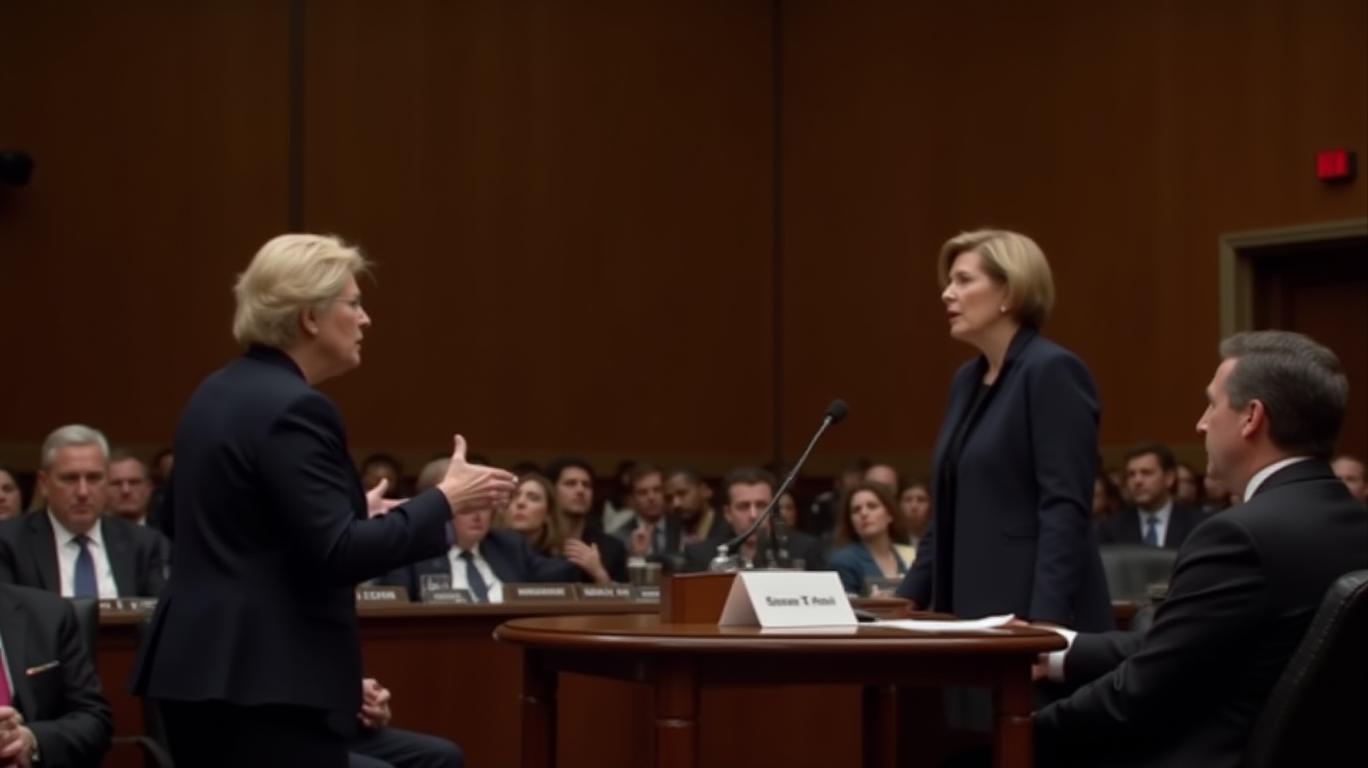
U.S. Senator Elizabeth Warren has cautioned that Federal Reserve Chairman Jerome Powell may be dismissed by Donald Trump. Warren, a prominent Democrat, criticized Trump's actions as "lawless" and expressed concern that such a move could disrupt U.S. markets and undermine the independence of key regulatory institutions.
Warren's comments come amid broader concerns about Trump's approach to federal agencies and his tendency to dismiss officials who do not align with his policies. She specifically highlighted Trump's massMASS-- firings of federal employees, describing these actions as part of a broader pattern of behavior that threatens the stability of U.S. institutions.
The senator also warned that Trump's potential dismissal of Powell could have significant implications for the U.S. economy. She argued that removing Powell, who has been a key figure in maintaining financial stability, could weaken investor confidence and ultimately harm the broader economic landscape. Warren's concerns are rooted in the belief that Powell's leadership has been crucial in navigating the complex economic challenges posed by the ongoing trade wars and other global economic pressures.
Warren's criticism extends beyond Trump's actions, as she also expressed opposition to the reappointment of Powell by President Joe Biden. She cited Powell's stance on reducing financial regulations as a reason for her opposition, suggesting that his policies could further destabilize the financial system.
Despite her opposition to Powell's reappointment, Warren emphasized her support for the independence of the Federal Reserve and other regulatory bodies. She argued that these institutions play a critical role in maintaining the stability and integrity of the U.S. financial system, and that their independence must be protected from political interference.
Trump, meanwhile, has been exerting pressure on the Federal Reserve to lower interest rates, arguing that this would stimulate economic growth. He has publicly criticized the Fed's policies, accusing them of being too restrictive and hindering economic progress. Powell, however, has maintained that the Fed's decisions are based on economic data and not political pressure.
The potential dismissal of Powell by Trump is seen as part of a larger effort to assert control over independent agencies. This move, if executed, could set a dangerous precedent for future administrations, potentially leading to increased political interference in regulatory bodies. Warren's warnings underscore the importance of maintaining the independence of these institutions to ensure the stability and integrity of the U.S. financial system.
Legal experts have noted that the U.S. has a clear legal framework to protect the independence of the Federal Reserve. The precedent set by the case of Humphrey's Executor v. United States provides legal protection for the Fed chairman against arbitrary dismissal. This means that any attempt by Trump to remove Powell would face significant legal hurdles and could have serious political repercussions.
Powell's term is set to continue until 2026, and he has stated that he will not resign prematurely despite the pressure from Trump. The Federal Reserve has consistently maintained that its policy decisions are based on independent assessments of economic data and financial conditions, rather than political pressures. Powell and his team are likely to continue adjusting interest rates based on economic realities, even if this means diverging from Trump's views.
Analysts suggest that, given the potential market impact, Trump is unlikely to attempt to dismiss Powell lightly. However, Trump's strong leadership style during his term makes it impossible to completely rule out this possibility. In the realm of politics, anything can happen.
The interaction between Trump and the Federal Reserve is drawing intense scrutiny from the financial markets. If the market perceives that the Fed is yielding to political pressure and making inappropriate rate adjustments, investor confidence could plummet, affecting the stability of the stock market and capital flows. Therefore, the Fed must communicate carefully with the market to maintain confidence in its policy decisions.

Stay ahead of the market.
Get curated U.S. market news, insights and key dates delivered to your inbox.


AInvest
PRO
AInvest
PRO



Comments
No comments yet