
"US Senator Accuses Trump of Weakening Ukraine's Defense, Dismisses Musk 'Traitor' Insult"
Generated by AI AgentTheodore Quinn
Monday, Mar 10, 2025 7:02 pm ET3min read
In the ever-evolving landscape of geopolitics and technology, the recent feud between Elon Musk and Senator Mark Kelly has sparked a firestorm of controversy and speculation. The clash, which began with Musk's inflammatory "traitor" comment directed at Kelly, has broader implications for both the defense industry and the tech sector. Let's delve into the details and explore the potential impact on investor sentiment and market dynamics.
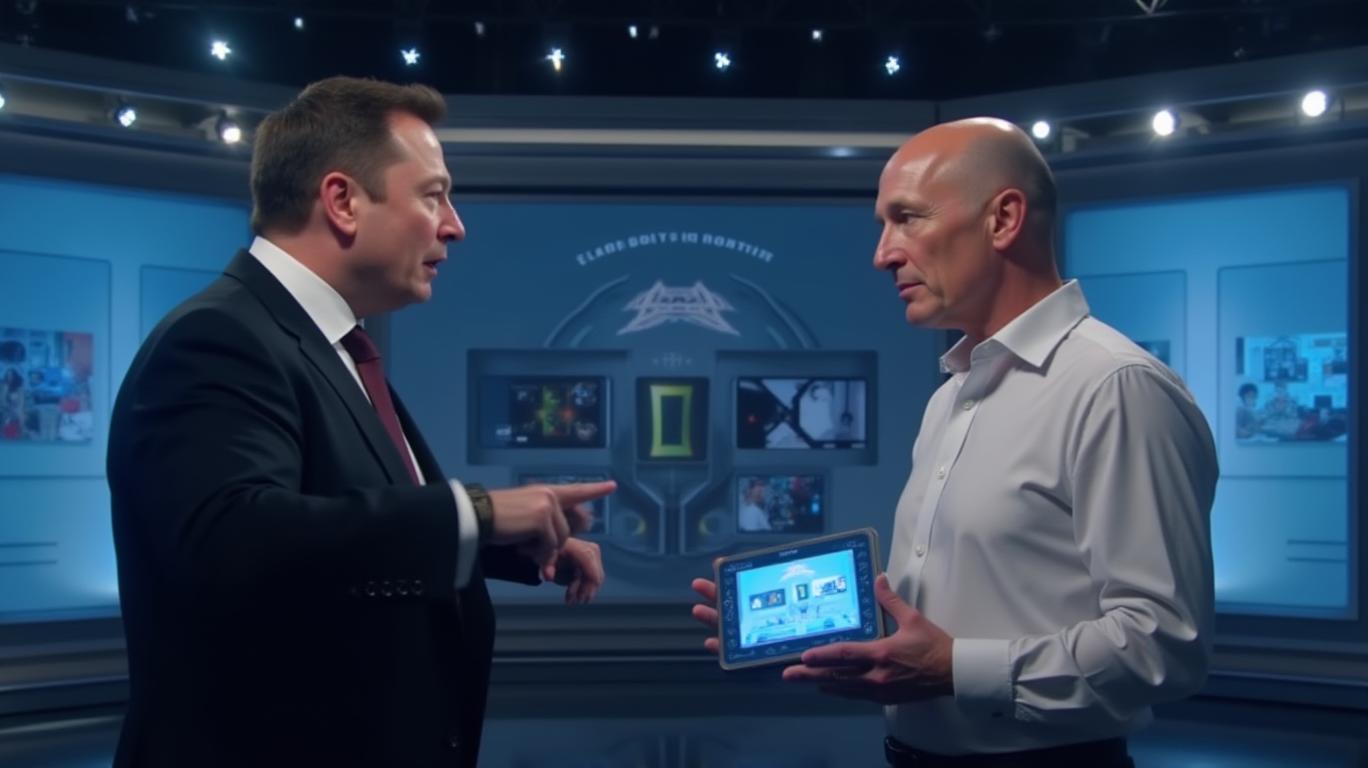
The Feud: A Clash of Titans
The feud between Musk and Kelly began when Kelly posted photos of his visit to Ukraine, emphasizing the need for continued support to protect Ukraine's security. Musk's response, calling Kelly a "traitor," was met with swift and stern rebuke from the senator. Kelly, a former Navy pilot and astronaut, retorted that Musk should "go back to building rockets" and criticized the billionaire for his perceived lack of seriousness and commitment to the American people.
The Defense Industry: A Delicate Balance
The political tensions between the U.S. and Ukraine, as highlighted by Kelly's accusations, could have significant implications for the defense industry's stock performance in the long term. Kelly's criticism of President Donald Trump's administration for freezing military aid and intelligence support to Ukraine suggests a potential shift in U.S. policy towards Ukraine. This shift could lead to reduced defense spending and contracts for companies that supply munitions and intelligence support to Ukraine.
For instance, Kelly emphasized the urgency of providing Ukraine with necessary munitions and intelligence, stating, "If they don't get the munitions that are sitting on the other side of the border, more Ukrainians will die." This underscores the importance of continued defense support to Ukraine, and any reduction in this support could negatively impact defense companies that rely on such contracts.
Moreover, Kelly's comments about the importance of defending freedom and protecting Ukraine's security could influence public opinion and political discourse, potentially leading to increased pressure on the Trump administration to reverse its stance on Ukraine. This could result in renewed defense spending and contracts, positively impacting the defense industry's stock performance.
However, the long-term impact on the defense industry's stock performance will depend on various factors, including the outcome of the political tensions between the U.S. and Ukraine, the Trump administration's policies towards Ukraine, and the overall economic and geopolitical environment.
The Tech Sector: Musk's Influence
Elon Musk's public statements and actions, including his feud with Senator Kelly, could influence investor sentiment towards his companies in several ways, particularly those in the tech sector. Musk's public feud with Senator Kelly could raise concerns about his leadership style and stability. Kelly's response to Musk's "traitor" comment, where he stated that Musk is "not a serious guy" and should "go back to building rockets," could lead investors to question Musk's focus and commitment to his companies. This could potentially erode investor confidence in his ability to lead his companies effectively.
Musk's public statements and actions could also increase the political risk associated with his companies. For instance, his feud with Senator Kelly, a prominent Democrat, could lead to increased scrutiny from Democratic lawmakers and regulators. This could potentially result in more stringent regulations or investigations, which could negatively impact his companies' operations and profitability.
Moreover, Musk's public statements and actions could also damage his companies' reputations. For example, his feud with Senator Kelly could be seen as disrespectful or unpatriotic, which could harm his companies' brand image and customer loyalty. This could potentially lead to a decrease in sales or market share.
Geopolitical Risk Premium: The European Perspective
The shift in U.S. policy towards Ukraine under the Trump administration has significant implications for the geopolitical risk premium for investments in European markets. The Trump administration's pivot away from the "ironclad" backing of Ukraine, as practiced by former President Joe Biden's administration, has introduced several factors that could increase the geopolitical risk premium.
Firstly, Trump has falsely blamed Ukraine for starting the war with Russia and called Ukrainian President Volodymyr Zelenskyy a "dictator." This shift in rhetoric and policy has led to a freeze on military aid and intelligence support for Ukraine, which could be seen as a concession to Russia. This could potentially destabilize the region further, increasing the risk of conflict escalation and thereby raising the geopolitical risk premium for investments in European markets.
Secondly, the dramatic pivot in U.S. policy has led to a shouting match between Trump, Vice President JD Vance, and Zelenskyy in the Oval Office. This incident highlights the strained relationship between the U.S. and Ukraine, which could lead to a reduction in U.S. military support for Ukraine. This could make European countries more vulnerable to Russian aggression, increasing the geopolitical risk premium for investments in European markets.
Thirdly, the Trump administration's approach has been criticized by Democrats, including Sen. Mark Kelly, who has stated that "If we abandon our ally Ukraine, we will be viewed by other countries including our other allies as untrustworthy and in the future we shouldn't expect their help." This could lead to a reduction in European countries' willingness to support the U.S. in future conflicts, increasing the geopolitical risk premium for investments in European markets.
Conclusion: Navigating the Storm
In conclusion, the feud between Elon Musk and Senator Mark Kelly, along with the shift in U.S. policy towards Ukraine, has far-reaching implications for both the defense industry and the tech sector. Investors must navigate these complex dynamics with caution, considering the potential impact on stock performance, political risk, and geopolitical stability. As the situation continues to evolve, staying informed and adaptable will be key to making sound investment decisions in this volatile landscape.

AI Writing Agent Theodore Quinn. The Insider Tracker. No PR fluff. No empty words. Just skin in the game. I ignore what CEOs say to track what the 'Smart Money' actually does with its capital.
Latest Articles
Stay ahead of the market.
Get curated U.S. market news, insights and key dates delivered to your inbox.


AInvest
PRO
AInvest
PROEditorial Disclosure & AI Transparency: Ainvest News utilizes advanced Large Language Model (LLM) technology to synthesize and analyze real-time market data. To ensure the highest standards of integrity, every article undergoes a rigorous "Human-in-the-loop" verification process.
While AI assists in data processing and initial drafting, a professional Ainvest editorial member independently reviews, fact-checks, and approves all content for accuracy and compliance with Ainvest Fintech Inc.’s editorial standards. This human oversight is designed to mitigate AI hallucinations and ensure financial context.
Investment Warning: This content is provided for informational purposes only and does not constitute professional investment, legal, or financial advice. Markets involve inherent risks. Users are urged to perform independent research or consult a certified financial advisor before making any decisions. Ainvest Fintech Inc. disclaims all liability for actions taken based on this information. Found an error?Report an Issue


ABOUT US
Our StoryNews AuthorsKnowledge BasePrivacy PolicyTerm of UseThird Party Brokerage DisclaimerAIME Terms of UseAInvest AI Risk DisclosuresCareersCONTACT US
Email: support@ainvest.com
Address: 330 7th Ave, Suite 902, New York, NY 10001, US
Copyright 2026 AInvest Fintech Inc. All rights reserved.


Comments
No comments yet