
Senate Republicans Propose Changes to Trump’s Tax-and-Spending Package in July 2025
 Aime Summary
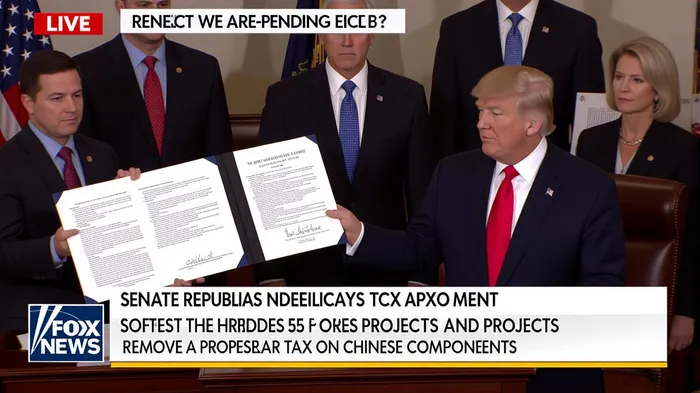
Senate Republicans introduced an amendment in July 2025 aimed at modifying key provisions within President Trump’s proposed tax-and-spending package. The amendment seeks to adjust the phase-out schedule of subsidies for wind and solar projects, as well as eliminate a proposed excise tax on components sourced from China.
The original proposal outlined by the administration included a gradual reduction in financial incentives for renewable energy over a defined timeline. However, the amendment put forward by Senate Republicans aims to soften the pace of this phase-out, allowing for continued support of the sector during a period of transition. This adjustment is intended to provide greater stability for developers and investors who rely on these subsidies to fund and execute large-scale renewable projects.
In addition to revising the subsidy phase-out, the amendment also targets a separate component of the tax-and-spending plan. The original proposal included an excise tax on solar and wind equipment manufactured in China. This measure was designed to address trade imbalances and protect domestic manufacturing interests. However, the amendment seeks to remove this excise tax entirely, signaling a shift toward a more market-oriented approach.
The proposed changes reflect a broader strategy to balance economic growth with energy policy objectives. By extending the availability of subsidies, the amendment supports the continued development of renewable energy infrastructure, which has seen significant growth in recent years. At the same time, the removal of the excise tax acknowledges the role of international supply chains in the production of critical components, many of which remain essential to the U.S. energy sector.
The amendment is currently under review and is expected to be debated as part of the larger tax-and-spending package. If approved, it will influence the trajectory of renewable energy investment and policy for years to come. The changes could also affect the competitive landscape for domestic and international suppliers, reshaping procurement decisions in the clean energy market.
Industry stakeholders have been closely monitoring the legislative developments, as the outcome will impact project planning, capital allocation, and long-term operational strategies. Developers, investors, and manufacturers will need to adjust their expectations based on the final structure of the tax-and-spending package.
The Senate’s proposed amendment underscores the ongoing evolution of U.S. energy policy and the political dynamics shaping its implementation. As the debate continues, the final version of the package will determine the extent to which subsidies are maintained and how international trade considerations are integrated into domestic energy strategy.

Stay ahead of the market.
Get curated U.S. market news, insights and key dates delivered to your inbox.


AInvest
PRO
AInvest
PRO



Comments
No comments yet