
U.S. Senate Releases Draft Crypto Market Structure Bill Aims to Resolve Regulatory Gaps, Boost Innovation
 Aime Summary
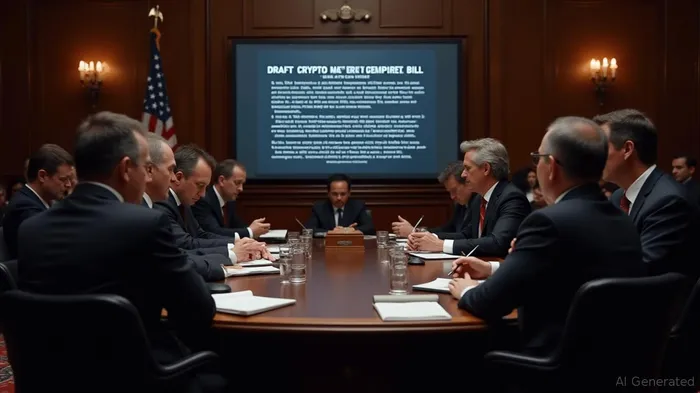
The U.S. Senate has released a draft of a comprehensive crypto market structure bill, marking a critical step toward establishing a cohesive regulatory framework for digital assets. Spearheaded by a bipartisan group of senators, including Tim Scott, Cynthia Lummis, Bill Hagerty, and Bernie Moreno, the proposal aims to address longstanding ambiguities in crypto regulation while fostering innovation and investor protection. The draft builds on prior legislative efforts, such as the House-passed CLARITY Act and the Lummis-Gillibrand bill, and introduces a structured approach to defining digital assets, streamlining oversight, and enhancing transparency.
The bill’s key components include clarifying the classification of tokens as commodities, securities, or other asset types—a move designed to resolve jurisdictional disputes between the SEC and CFTC. It also targets regulatory fragmentation by consolidating oversight and reducing the “patchwork” of rules that have hindered industry growth. Additional priorities include improving banking access for crypto firms, strengthening anti-money laundering (AML) measures, and establishing clearer disclosure requirements for digital assetDAAQ-- projects. A Request for Information (RFI) has been issued to gather public and industry feedback on over 35 topics, reflecting the complexity of crafting a durable regulatory framework.
Analysts emphasize that regulatory clarity is essential for the U.S. to maintain its global leadership in digital assets. The current environment, often described as a “Wild West,” creates uncertainty for businesses and investors alike. By addressing issues like stablecoin oversight, DeFi exemptions, and investor protection, the bill could unlock institutional capital, foster innovation, and reduce illicit activities. For instance, stablecoin regulation is positioned to prevent collapses akin to Terra/Luna, while DeFi provisions seek to balance decentralization with necessary safeguards. The RFI’s focus on SEC-CFTC jurisdiction and investor protection mechanisms underscores the need for flexible yet robust rules.
Challenges remain, however. Achieving bipartisan consensus across legislative chambers and reconciling diverse industry interests will be pivotal. The fast-evolving nature of blockchain technology also demands legislative agility to avoid stifling future innovations. Nonetheless, the bill’s proactive approach—prioritizing stakeholder engagement and long-term adaptability—signals a departure from reactive enforcement strategies. If enacted, the framework could position the U.S. as a global hub for crypto innovation while safeguarding against regulatory arbitrage and market instability.
The draft’s release represents a watershed moment for the crypto sector, offering a blueprint for integrating digital assets into the broader financial system. By addressing foundational gaps in token classification, oversight, and transparency, the bill seeks to create a balanced ecosystem that supports growth without compromising security. As the RFI process unfolds, industry stakeholders and policymakers will have the opportunity to refine the proposal, ensuring it aligns with both technological advancements and investor needs. This collaborative effort could pave the way for a resilient, transparent, and innovation-driven crypto market structure in the U.S.

Stay ahead of the market.
Get curated U.S. market news, insights and key dates delivered to your inbox.






Comments
No comments yet