
US Senate rejects Democratic government funding bill; next vote is on Republican bill
ByAinvest
Friday, Oct 3, 2025 2:46 pm ET1min read
US Senate rejects Democratic government funding bill; next vote is on Republican bill
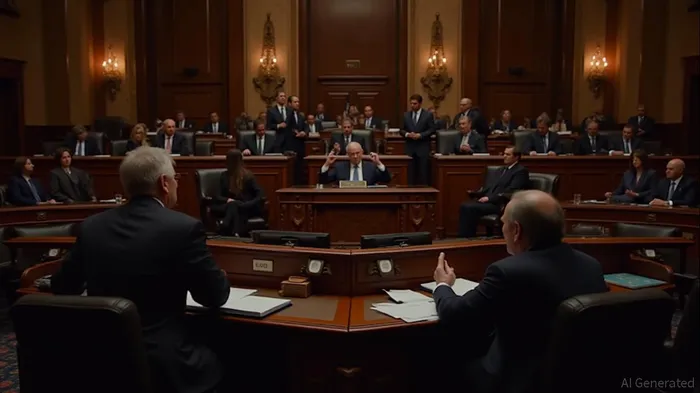
The US Senate has rejected a Democratic bill aimed at funding the federal government through October 31, extending enhanced health insurance premium subsidies, and restoring Medicaid funding cuts. The Senate voted 47-53 against the Democratic proposal, which was designed to address the expiration of enhanced subsidies under the Affordable Care Act (ACA) by the end of the year and to reverse Medicaid cuts .The Senate is now set to hold a procedural vote on a Republican-passed "clean" funding bill, which also failed in a previous vote. Senate Majority Leader John Thune (R-SD) criticized the Democratic bill as a "laundry list" of liberal priorities that would add $1.5 trillion to the deficit. Thune has indicated he is open to negotiating an extension of the ACA subsidies if Democrats agree to reopen the government, but only if paired with broader reforms to address waste, fraud, and abuse .
Senate Democratic Leader Chuck Schumer (D-NY) has criticized the Republican bill for not addressing the impending rise in health insurance premiums, which could increase by 114 percent on average if the enhanced ACA subsidies expire. Schumer argues that the Democratic bill was necessary to keep the government open and address these critical health care issues .
The Senate's rejection of the Democratic bill puts the government on a near-certain path to a shutdown. Senate Democrats have voted down both a Democratic and a Republican short-term spending bill, and the Senate has adjourned until tomorrow morning. This leaves the government at risk of shutting down for the first time in nearly seven years at midnight Wednesday .
The failure to pass a funding bill means that thousands of federal workers face furloughs or layoffs. The White House has advised agencies to prepare for an orderly shutdown, with the nonpartisan Congressional Budget Office estimating that around 750,000 federal workers could be furloughed each day once a shutdown begins .
The shutdown is a result of Democrats' demands to address health care subsidies and Medicaid cuts before passing a funding bill. Democrats have argued that Republicans are trying to "bully" them by refusing to negotiate on these issues. The last government shutdown occurred in Trump's first term and lasted 35 days, causing significant disruptions and missed paydays for federal workers .
The Senate's vote reflects a rare opportunity for Democrats to use their leverage to achieve policy goals, with their base voters spoiling for a fight with the Trump administration. However, the shutdown could have significant economic and political implications, and it remains unclear how or when the impasse will be resolved.
Stay ahead of the market.
Get curated U.S. market news, insights and key dates delivered to your inbox.


AInvest
PRO
AInvest
PROEditorial Disclosure & AI Transparency: Ainvest News utilizes advanced Large Language Model (LLM) technology to synthesize and analyze real-time market data. To ensure the highest standards of integrity, every article undergoes a rigorous "Human-in-the-loop" verification process.
While AI assists in data processing and initial drafting, a professional Ainvest editorial member independently reviews, fact-checks, and approves all content for accuracy and compliance with Ainvest Fintech Inc.’s editorial standards. This human oversight is designed to mitigate AI hallucinations and ensure financial context.
Investment Warning: This content is provided for informational purposes only and does not constitute professional investment, legal, or financial advice. Markets involve inherent risks. Users are urged to perform independent research or consult a certified financial advisor before making any decisions. Ainvest Fintech Inc. disclaims all liability for actions taken based on this information. Found an error?Report an Issue


ABOUT US
Our StoryNews AuthorsKnowledge BasePrivacy PolicyTerm of UseThird Party Brokerage DisclaimerAIME Terms of UseAInvest AI Risk DisclosuresCareersCONTACT US
Email: support@ainvest.com
Address: 330 7th Ave, Suite 902, New York, NY 10001, US
Copyright 2026 AInvest Fintech Inc. All rights reserved.


Comments
No comments yet