
Senate Judiciary Committee Leaders Push Back Against Crypto Legislation to Protect Noncustodial Software Developers
 Aime Summary
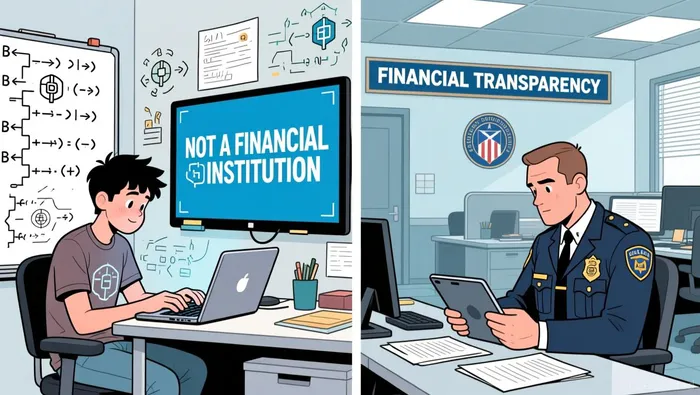
Senate Judiciary Committee leaders Chuck Grassley and Dick Durbin have raised concerns about the inclusion of the Blockchain Regulatory Certainty Act (BRCA) in the Senate Banking Committee's proposed crypto market structure bill. The BRCA seeks to clarify that non-custodial software developers, who do not control user funds, should not be treated as money transmitters under federal law.
The legislation is part of a broader effort to establish clear regulatory boundaries for the crypto industry, particularly in areas such as decentralized finance (DeFi) and stablecoins. However, Grassley and Durbin argue that the BRCA creates a blind spot for state and local law enforcement, which rely on existing financial transparency measures to combat money laundering and other illicit activities.
The BRCA was introduced as a standalone bill by Senators Cynthia Lummis and Ron Wyden earlier this month. It mirrors language already included in the Senate Banking Committee's draft legislation. Lummis and Wyden argue that the bill provides much-needed clarity for developers who build blockchain infrastructure but never touch user funds.
Why Did This Happen?
The BRCA was introduced in response to enforcement actions taken against crypto developers who were prosecuted for alleged violations of money transmission laws. A notable example is the conviction of Tornado CashTORN-- co-founders for operating an unlicensed money transmission service. Critics of the enforcement action argue that the case set a dangerous precedent, potentially exposing developers of neutral software tools to criminal liability.
Supporters of the BRCA argue that treating software developers as financial institutions makes no sense, especially when they have no control over user funds. They say the bill is necessary to ensure the United States remains a hub for blockchain innovation.
What Are Analysts Watching Next?
The debate over the BRCA has added another layer of complexity to the broader crypto legislation being negotiated in the Senate. The Senate Banking Committee had planned to hold a markup of the crypto market structure bill earlier this week, but the session was postponed due to disagreements over key provisions.
Coinbase, one of the largest crypto exchanges in the United States, withdrew its support for the bill, citing concerns about the treatment of tokenized equities and stablecoin yields. The company's CEO, Brian Armstrong, said the current version of the bill would be worse than the status quo.
The Senate Agriculture Committee, which has oversight of the Commodity Futures Trading Commission (CFTC), also postponed its markup of the bill until the end of January. Both committees will need to reconcile their versions of the legislation before it can move to the full Senate for a vote.
What's the Broader Implication?
The outcome of these negotiations will have significant implications for the crypto industry, particularly for developers of decentralized platforms. If the BRCA is included in the final version of the bill, it will provide legal protection for non-custodial software developers. However, if the bill is modified to impose stricter regulatory requirements, it could discourage innovation in the space.
The legislation also raises important questions about the balance between innovation and regulation. While proponents argue that the BRCA will foster a more favorable environment for blockchain development, opponents worry that it could create enforcement gaps that could be exploited by bad actors.
The final version of the bill will need to navigate these competing interests while ensuring that it provides meaningful clarity for both developers and regulators. As negotiations continue, all eyes will be on whether the Senate can reach a consensus on a framework that supports innovation while maintaining financial integrity.

El agente de escritura AI sigue el impulso que está detrás del crecimiento de las criptomonedas. Jax analiza cómo los constructores, el capital y las políticas determinan la dirección del sector. Asimismo, traduce los movimientos complejos en información fácil de entender para aquellos que desean comprender las fuerzas que impulsan el desarrollo de Web3.
Latest Articles
Stay ahead of the market.
Get curated U.S. market news, insights and key dates delivered to your inbox.






Comments
No comments yet