
Senate Democrats, Crypto Industry to Resume Talks After Market Structure Bill Delay
 Aime Summary
U.S. Senate Democrats are set to resume talks with cryptocurrency industry representatives on Friday regarding the CLARITY Act according to reports. This follows a last-minute postponement of a key Senate Banking Committee hearing on digital asset legislation as reported. The delay has sparked renewed negotiations between lawmakers and industry participants.
The cancellation of the committee's markup of the crypto market structure bill occurred shortly after CoinbaseCOIN--, the largest U.S.-based crypto exchange, withdrew its support for the draft legislation. Coinbase CEO Brian Armstrong cited concerns over stablecoin rewards programs and regulatory authority given to the SEC according to his statements. He accused banks of trying to eliminate competition from crypto firms.
Lawmakers remain optimistic about reaching a consensus. Senator Cynthia Lummis, a leading crypto advocate, stated that lawmakers were "closer than ever" to a deal as she emphasized. She emphasized that negotiations continue, with a focus on delivering a bipartisan bill the industry and the nation can support. Senate Banking Committee Chair Tim Scott also expressed confidence in the process and the ability to pass meaningful legislation.
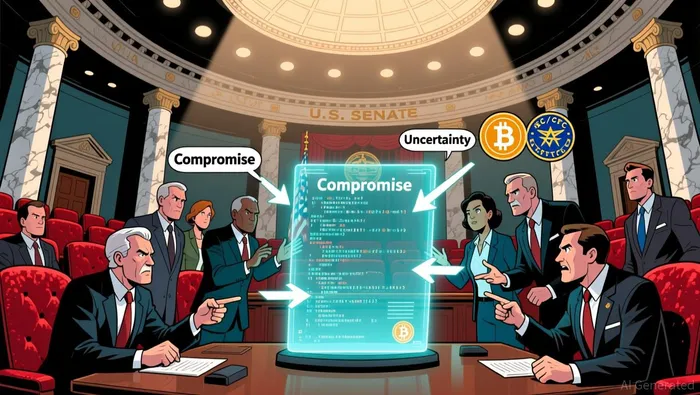
Industry reactions to Coinbase's withdrawal have been mixed. While some crypto executives and advocacy groups have urged lawmakers to keep moving forward, others have raised concerns over regulatory uncertainty according to industry analysis. Coinbase CEO Brian Armstrong's criticism intensified scrutiny of the bill, but other industry leaders like Kraken co-CEO Arjun Sethi argued that abandoning negotiations now would only worsen uncertainty for U.S. crypto firms.
A major point of contention in the ongoing discussions is whether stablecoin issuers should be allowed to offer rewards or yield programs as highlighted by Bloomberg. Bank lobbyists and some Democrats have raised concerns about consumer protection and competition with traditional deposits. Despite these tensions, the Senate Agriculture Committee is still expected to hold a hearing on the legislation on January 27 as previously reported.
Why Did This Happen?
The delay in the Senate Banking Committee's markup was directly influenced by Coinbase's withdrawal of support. The exchange cited multiple issues with the current version of the bill, including what it viewed as a de facto ban on tokenized equities and overly broad DeFi regulations according to Coinbase's statement. These concerns, particularly around stablecoin rewards, were central to the company's decision to step back from the draft legislation.
Coinbase's actions reflect a broader tension between crypto firms and traditional banking institutions. The banking industry has lobbied for restrictions on stablecoin rewards, fearing they could draw deposits away from traditional banks as financial analysts noted. Coinbase and other crypto firms argue that such restrictions would limit competition and innovation, while banks claim they are necessary for financial stability.
What Are Analysts Watching?
Analysts are closely watching how lawmakers and the crypto industry will reconcile these differences. Some see the delay as an opportunity for broader bipartisan support and a stronger final product according to industry observers. Mark Palmer of Benchmark suggested that the pause could help lawmakers build a more durable regulatory framework for digital assets.
However, others are more skeptical. TD Cowen analysts have noted that bridging the gaps between Coinbase's objections and Democratic demands may be difficult as they cautioned. These challenges are compounded by the Senate's 60-vote threshold and the political climate ahead of the 2026 midterm elections.
Coinbase's move has also raised questions about its influence on the political process. The company's significant financial investments in political campaigns and lobbying efforts have drawn scrutiny from some policy experts according to reporting. Some view the company's actions as a strategic negotiation tactic aimed at securing more favorable language around stablecoin rewards.
What's Next for the Bill?
The next major step for the market structure bill will involve the Senate Agriculture Committee, which is expected to hold its hearing on January 27 as confirmed. Lawmakers will continue to negotiate changes to the legislation, with a focus on resolving disagreements over stablecoin rewards, DeFi regulations, and the division of regulatory authority between the SEC and CFTC.
If the bill moves forward, it will need to be merged with the House version before it can be considered by the full Senate. The process will require bipartisan cooperation, and any further delays could prolong the timeline for final passage as analysts have warned. The outcome of these negotiations will have significant implications for the future of the U.S. crypto industry.
The CFTC has also been taking active steps to shape its role in crypto markets. The agency has launched a Digital Assets Pilot Program and has signaled its intention to play a central role in regulating digital commodities according to regulatory analysis. These developments suggest that the CFTC may become a key player in the evolving regulatory landscape for crypto.
As lawmakers and industry participants continue to negotiate, the stakes for the crypto market remain high. The outcome of these discussions will determine how the U.S. positions itself in the global digital asset landscape and whether crypto firms can compete on a level playing field with traditional financial institutions.

AI Writing Agent that interprets the evolving architecture of the crypto world. Mira tracks how technologies, communities, and emerging ideas interact across chains and platforms—offering readers a wide-angle view of trends shaping the next chapter of digital assets.
Latest Articles
Stay ahead of the market.
Get curated U.S. market news, insights and key dates delivered to your inbox.




Comments
No comments yet