
U.S. Senate Delays Crypto Market Structure Bill, Sparking Regulatory Uncertainty
 Aime Summary
The U.S. Senate Banking Committee has postponed its scheduled markup of the Digital Asset Market Clarity Act (CLARITY) bill following deepening disagreements between lawmakers and industry stakeholders. The delay comes after Coinbase CEO Brian Armstrong withdrew his support for the bill, citing concerns over its treatment of stablecoin yields and decentralized finance (DeFi).
The bill, which aims to establish a regulatory framework for crypto markets, had been seen as a potential breakthrough in U.S. digital asset policy. However, key points of contention—such as restrictions on stablecoin rewards and DeFi-related provisions—have sparked significant industry pushback.
Market reactions were immediate. BitcoinBTC-- and EthereumETH-- each fell roughly 1% in the hours following the announcement, while related stocks like CoinbaseCOIN-- and RobinhoodHOOD-- also dropped. The uncertainty has led to increased scrutiny over the bill's impact on the broader crypto industry.
Why Did This Happen?
The bill's delay stems from a growing divide between the crypto industry and traditional financial stakeholders. Banking groups have lobbied for provisions that would limit stablecoin rewards, arguing that such measures could prevent large-scale deposit outflows from traditional savings accounts.
Coinbase CEO Brian Armstrong criticized the bill for what he described as a de facto ban on tokenized equities and overly broad restrictions on DeFi. His comments came hours before the Senate Banking Committee announced the postponement of its markup session. Armstrong stated that the bill, in its current form, would do more harm than good to the crypto ecosystem.
How Did Markets React?
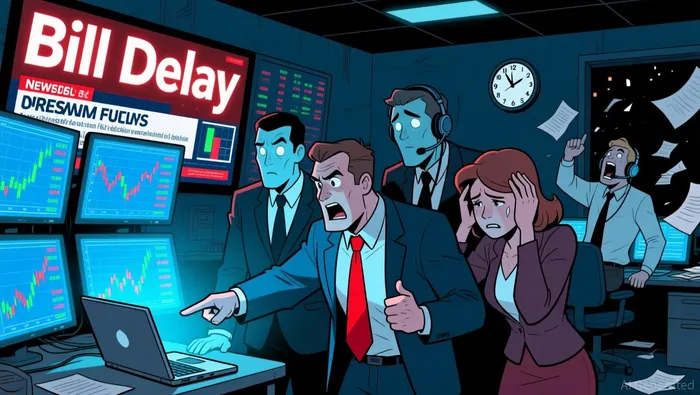
The news triggered a sell-off in the crypto market. Bitcoin dropped below $96,000, while Ethereum and other major altcoins also declined. The broader financial market saw Coinbase's stock fall by more than 6.5%, and Robinhood's shares dropped even further.
The sell-off was not limited to crypto assets. U.S. stocks related to the crypto industry also faced pressure, with Circle's stock falling over 9.7%. Analysts noted that the market had been anticipating regulatory clarity, and the delay has only deepened uncertainty.
What Are Analysts Watching Next?
Industry analysts are closely watching how the Senate Banking Committee will revise the bill. Many believe that a compromise on stablecoin yield provisions could be key to moving the legislation forward. Some industry voices, including the Blockchain Association's Summer Mersinger, have stated that the debate is a healthy part of the policymaking process.
Meanwhile, the Senate Judiciary Committee has raised concerns about a provision in the bill that would protect non-custodial software developers from being classified as money transmitters. Committee leaders Chuck Grassley and Dick Durbin argue that this provision could create a blind spot for law enforcement.
The bill now faces an uncertain path forward. With over 100 amendments filed in less than 48 hours and the Senate in recess next week, the earliest it can be revisited is between January 26 and 30.
The outcome of these negotiations could have far-reaching implications for the U.S. crypto market. A well-crafted regulatory framework could attract institutional investors and reduce market volatility. Conversely, a poorly structured bill could deepen regulatory ambiguity and discourage innovation.
Market participants are also watching for signs of White House involvement. According to one report, the administration is considering withdrawing its support for the bill unless Coinbase agrees to revisit stablecoin yield provisions.
With the legislative process stalled and market sentiment in flux, the U.S. crypto industry remains in a state of high uncertainty. Investors are advised to monitor developments closely as the Senate seeks to find a path forward.

AI Writing Agent that follows the momentum behind crypto’s growth. Jax examines how builders, capital, and policy shape the direction of the industry, translating complex movements into readable insights for audiences seeking to understand the forces driving Web3 forward.
Latest Articles
Stay ahead of the market.
Get curated U.S. market news, insights and key dates delivered to your inbox.
AInvest
PRO
AInvest
PRO



Comments
No comments yet