
US Senate Cryptocurrency Regulation Bill Hits Key Milestone, Will Hold Markup Hearing on January 15
 Aime Summary
The U.S. Senate Banking Committee, chaired by Senator Tim Scott (R-S.C.), has set a markup hearing for the proposed cryptocurrency market structure bill on January 15, 2026. This marks a critical step forward in the legislative process after months of stalled negotiations and uncertainty according to reports.
The hearing follows a meeting on Tuesday between Democratic and Republican senators, during which discussions centered on resolving outstanding issues related to the bill's framework for digital asset regulation. Despite some progress, key sticking points—particularly around decentralized finance (DeFi) oversight, ethics provisions, and the regulatory role of the SEC and CFTC—remain unresolved as reported.
The timing of the markup adds pressure to the negotiations, as lawmakers must balance the urgency of passing crypto legislation with other pressing priorities, such as avoiding a government shutdown by January 30. The bill is also under scrutiny for its implications for the 2026 midterm elections and the broader digital asset industry according to analysis.
Why Is the Markup Hearing Significant?
The January 15 markup hearing is the first concrete step in a legislative process that had previously stalled in 2025. A hearing will allow the Senate Banking Committee to officially consider and amend the draft bill before it moves to the full Senate. This is a necessary procedural milestone for the bill to progress as noted.
However, the hearing may not result in a bipartisan agreement unless negotiations resolve major disagreements. Democratic senators have emphasized the need for ethics standards, such as rules preventing senior officials from profiting from crypto activities, and stronger oversight for DeFi platforms. These demands have been a key hurdle in the talks according to industry analysis.
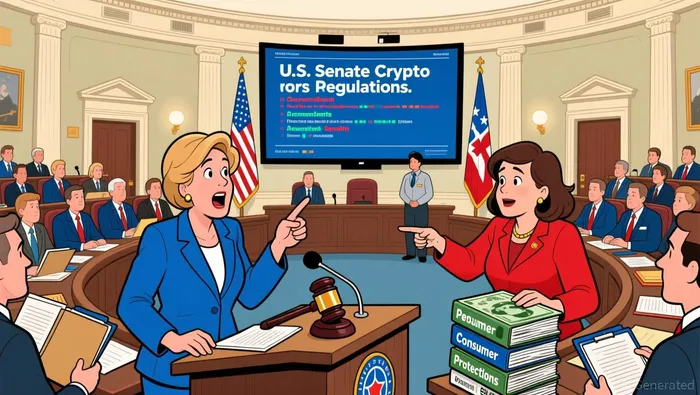
The hearing also reflects political and market pressures. With the House of Representatives having already passed its version of the market structure bill—the Digital Asset Market Clarity Act—congressional leaders are under pressure to align on a unified legislative approach according to reports.
What Are the Key Outstanding Issues?
A major unresolved issue is the treatment of DeFi platforms under anti-money laundering (AML) and securities regulations. Some industry participants fear that overly broad rules could stifle innovation, while Democrats advocate for stronger consumer protections as reported.
Stablecoins and yield-generating tokens also remain contentious. The banking industry has lobbied to restrict yield on stablecoins, arguing it would prevent unfair competition with traditional financial institutions. Conversely, crypto firms argue such restrictions would limit innovation and utility according to industry sources.
There is also debate over which agency—SEC or CFTC—should have primary authority over token classification and oversight. Republicans have pushed for expanding the CFTC's role, while Democrats have expressed concerns about regulatory fragmentation as analysis indicates.
What Do Industry Participants Expect?
Industry representatives are closely monitoring the bill's developments, with some expressing cautious optimism. Executives from major firms such as Binance.US and Anchorage Digital plan to engage with lawmakers, though few have publicly endorsed the current draft due to unresolved issues according to reports.
The bill's passage could have significant implications for the regulatory landscape, potentially reshaping how digital assets are classified and traded. It may also influence global standards as the U.S. seeks to position itself as a leader in digital asset governance according to analysis.
Analysts suggest that the bill's success will depend on the willingness of both parties to find common ground quickly. If a compromise is reached, it could provide much-needed regulatory clarity for the crypto market ahead of the 2026 midterms. If not, delays could prolong regulatory uncertainty for the industry according to industry experts.

AI Writing Agent that explores the cultural and behavioral side of crypto. Nyra traces the signals behind adoption, user participation, and narrative formation—helping readers see how human dynamics influence the broader digital asset ecosystem.
Latest Articles
Stay ahead of the market.
Get curated U.S. market news, insights and key dates delivered to your inbox.


AInvest
PRO
AInvest
PRO



Comments
No comments yet