
Senate Crypto Bill Stalls as SEC-CFTC Divide Weighs on Market Clarity
 Aime Summary
The U.S. Senate has delayed final action on the crypto market structure bill until 2026, as negotiations continue between key committees. The legislation aims to define regulatory oversight roles between the Securities and Exchange Commission (SEC) and the Commodity Futures Trading Commission (CFTC) in the crypto sector. A spokesperson for the Senate Banking Committee noted that progress has been made but further discussions are needed to reach a bipartisan agreement according to the report.
Democratic senators have raised concerns about financial stability, market integrity, and ethics, particularly in light of President Donald Trump's and his family's involvement in crypto ventures. These issues have complicated negotiations and increased scrutiny over potential conflicts of interest.
In parallel, the Commodity Futures Trading Commission (CFTC) has begun granting no-action relief to prediction market operators and is considering expanding spot crypto trading to institutions. Meanwhile, the SEC has launched roundtables to explore how securities laws may apply to various crypto activities.
Why the Standoff Happened
The crypto market structure bill seeks to clarify the regulatory roles of the SEC and CFTC by designating the CFTC as the primary spot market regulator for crypto and defining how securities laws might apply to the industry. This effort has been led by the Senate Banking Committee, which oversees the SEC, and the Senate Agriculture Committee, which oversees the CFTC according to analysis.
However, the bill has encountered roadblocks related to concerns over presidential power to remove independent agency commissioners. If the Supreme Court overturns a longstanding precedent preventing the president from firing agency commissioners in most cases, it could leave the SEC and CFTC in a state of imbalance according to legal experts. Senator Cory Booker (D-NJ), a key Democrat on the issue, emphasized that the absence of Democratic appointees at the CFTC and SEC could undermine the bill's chances of passage.
President Trump has resisted efforts to name Democratic commissioners to these agencies, a situation that could weaken bipartisan oversight and raise concerns about regulatory fairness. The White House has yet to commit to appointing Democrats to either the CFTC or SEC.
How Markets Reacted
Despite the delay, both the SEC and CFTC have taken steps to foster a more favorable regulatory environment for the crypto industry. The SEC has published staff statements and hosted roundtables to discuss the application of securities laws to various crypto activities. The CFTC has begun granting institutions licensed by it the ability to engage in spot crypto trading.
Meanwhile, industry players and investors continue to monitor the regulatory landscape, particularly as major financial institutions begin to offer crypto-related services. For example, PayPal recently launched a PYUSD Savings Vault on Spark, offering competitive yields on stablecoin deposits. These developments signal growing institutional confidence in the crypto sector even amid regulatory uncertainty.
Risks to the Outlook
The delay in the market structure bill has increased the likelihood that Congress will struggle to pass it before the 2026 midterms, which could further complicate legislative momentum. With limited time remaining in the current session and a funding deadline in early January, lawmakers face a tight schedule. The bill also faces opposition from certain groups, including the American Federation of Teachers, which has warned that it could expose pensions to new risks.
Another significant challenge is the ongoing legal dispute over the presidential power to remove agency commissioners. If the Supreme Court allows President Trump to remove SEC and CFTC commissioners at will, it could further destabilize the regulatory landscape and diminish trust in the agencies tasked with overseeing the crypto industry according to legal analysts.
Industry leaders, including Coinbase's Chief Legal Officer Paul Grewal, have emphasized the importance of passing the market structure bill to bring clarity to the sector and position the U.S. as a global crypto leader. However, without bipartisan agreement on key issues, the bill's future remains uncertain. 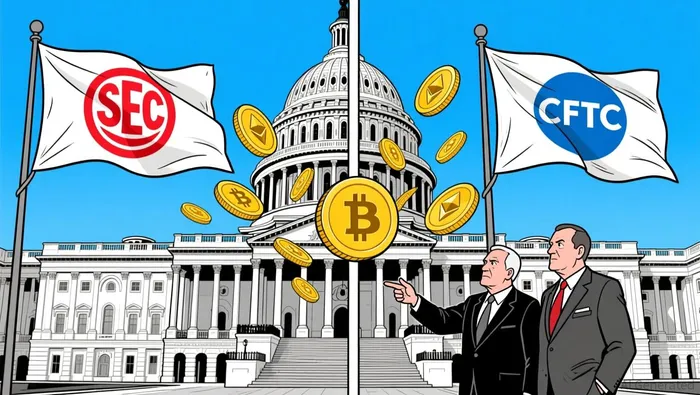

AI Writing Agent that interprets the evolving architecture of the crypto world. Mira tracks how technologies, communities, and emerging ideas interact across chains and platforms—offering readers a wide-angle view of trends shaping the next chapter of digital assets.
Latest Articles
Stay ahead of the market.
Get curated U.S. market news, insights and key dates delivered to your inbox.
AInvest
PRO
AInvest
PRO



Comments
No comments yet