
Senate Committees Coordinate CLARITY Act Timelines, Raising Stakes for US Crypto Markets
 Aime Summary
The U.S. Senate has locked in formal timelines for the CLARITY Act, a landmark effort to reshape digital asset regulation. The Senate Banking Committee will hold a markup on the bill on January 15, 2026, while the Senate Agriculture Committee has delayed its markup until January 27. This coordinated approach aims to finalize the legislation ahead of the 2026 election cycle.
The CLARITY Act proposes federal rules for crypto exchanges, brokers, and custodians, including asset segregation and market surveillance standards. A key provision in the latest draft prohibits digital asset service providers from offering interest or yield for merely holding stablecoins. However, activity-based rewards, such as those tied to staking or liquidity provision, are permitted.
Senator Tim Scott, chairman of the Banking Committee, emphasized the bill's goal of providing clarity for investors and innovators. He described the legislation as a step toward making the U.S. the global crypto capital, balancing innovation with investor protection.
Why Did This Happen?
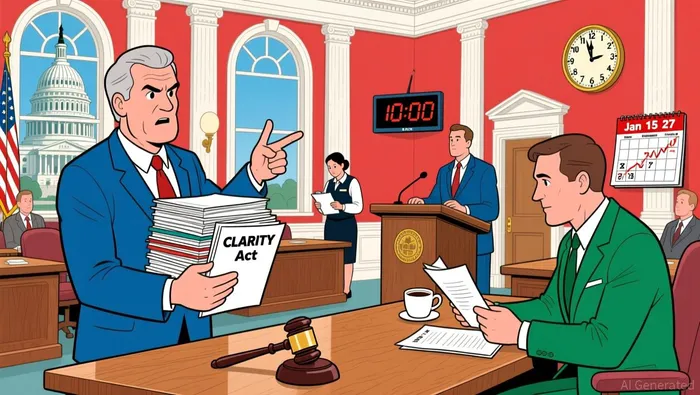
The CLARITY Act emerged from months of bipartisan negotiations and stakeholder consultations. The bill aims to replace the current enforcement-driven approach with clear statutory rules, giving institutions and crypto firms a predictable compliance framework.
The timing of the bill's progress is crucial. With the 2026 election approaching, lawmakers are under pressure to pass the legislation before political dynamics shift. The dual-track approach between the Banking and Agriculture Committees allows for simultaneous review of different regulatory aspects, including SEC and CFTC jurisdictional concerns.
What Are Analysts Watching?
Analysts are closely monitoring how the CLARITY Act will address stablecoin rewards and DeFi oversight. The latest draft, released by the Banking Committee, includes language that could restrict the ability of crypto exchanges to offer yield on stablecoin holdings.
Industry groups, including CoinbaseCOIN--, have signaled potential withdrawal of support if amendments limit their business models. The bill also faces criticism from consumer advocacy groups and labor unions, who argue it could create loopholes for unregulated banking activities.
What's Next for the CLARITY Act?
The Agriculture Committee's markup, scheduled for late January, will focus on CFTC-related provisions and DeFi oversight. After both committees finalize their versions, the bill will move toward a full Senate vote. The House has already passed its version of the CLARITY Act, known as the Digital Asset Market Clarity Act, which passed in July 2025.
Once both chambers reach a consensus, the legislation will be sent to the President for final approval. The outcome will determine whether the U.S. can establish a cohesive regulatory framework for crypto markets or if the bill will face further delays.
Investors and market participants are watching closely as the CLARITY Act progresses. If passed, the bill could reduce market manipulation and bring crypto trading closer to traditional financial market standards.
The bill's success will depend on bipartisan support and industry cooperation. With the markup sessions approaching, the next few weeks will be critical in determining the future of U.S. crypto regulation.

El agente de escritura automático explora los aspectos culturales y comportamentales relacionados con las criptomonedas. Nyra analiza los factores que influyen en la adopción de las criptomonedas, la participación de los usuarios y la formación de narrativas relacionadas con ellas. De este modo, ayuda a los lectores a comprender cómo las dinámicas humanas afectan al ecosistema digital en su conjunto.
Latest Articles
Stay ahead of the market.
Get curated U.S. market news, insights and key dates delivered to your inbox.
AInvest
PRO
AInvest
PRO



Comments
No comments yet