
Senate Approves 10-Year Freeze on State AI Regulations
The Senate parliamentarian has approved a significant measure that will freeze state and local artificial intelligence (AI) regulations for a decade. This decision, part of a broader Republican-led tax and spending bill, has sparked considerable debate and analysis among policymakers and industry experts.
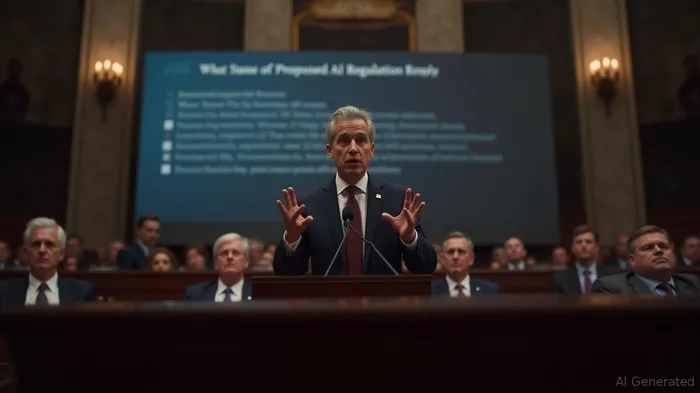
The 10-year moratorium on enforcing state and local AI rules was included in a comprehensive legislative package. This provision aims to prevent individual states from implementing their own AI regulations, thereby creating a uniform regulatory environment across the nation. The parliamentarian's ruling allows Republicans to include this moratorium in their legislative agenda, which is expected to have far-reaching implications for the tech industry and regulatory landscape.
The decision to freeze state and local AI rules for a decade is a strategic move by Republicans to streamline the regulatory process. By preventing states from enacting their own AI laws, the federal government can establish a cohesive framework that applies uniformly across the country. This approach is intended to foster innovation and prevent a patchwork of regulations that could hinder the development and deployment of AI technologies.
Senate Commerce Chair Ted Cruz revised an AI moratorium that the House had already approved, reshaping it to meet the chamber’s budget rules. Under his draft, states and localities would lose billions in federal broadband expansion dollars if they enforce any AI regulations during the next decade. The moratorium marks a surprising win for GOP lawmakers.
Both Republicans and Democrats presented their cases to Senate Parliamentarian Elizabeth MacDonough. Cruz said in an interview recently that blocking state and local action on AI “is good policy” because it creates a uniform national approach. In support, Rep. Jay Obernolte warned that without the freeze, the country could face “a labyrinth of regulation” with “50 different states going 50 different directions on the topic of AI regulation.”
Several conservative Republicans have openly opposed the measure. Senators Josh Hawley and Marsha Blackburn joined forces with Democratic critics, arguing that states should retain the right to protect their citizens. Hawley said he will team up with Democrats to file an amendment to strip the moratorium once the full Senate considers the package. Blackburn echoed that view, stating, “We do not need a moratorium that would prohibit our states from stepping up and protecting citizens in their state.”
On Capitol Hill, Rep. Marjorie Taylor Greene and members of the House Freedom Caucus have threatened to sink H.R. 1 if the 10-year legal freeze remains. Greene warned she will oppose the legislation outright unless the AI language is removed.
The decision benefits the tech companies that want to delay about twenty new AI safety laws nationwide. The Senate’s budget reconciliation process lets Republicans advance the tax and spending plan without Democratic votes, bypassing a potential filibuster. In the Senate version, states that enforce new AI rules would lose federal broadband money. Senators could challenge the pause on the floor, and ending it takes just a simple majority vote.
Democrats say MacDonough told lawmakers that other ideas didn’t fit the budget rules, like making states match food stamp funding and forcing people suing the federal government to post huge bonds for temporary court orders.
With the July 4 deadline coming up, Senate leaders plan to vote on the spending bill this week. Staff from both parties are still working out the final details behind closed doors, and Senate Budget Committee Democrats are giving occasional public updates.
The inclusion of this moratorium in the megabill has been met with mixed reactions. Supporters argue that a uniform regulatory environment will promote innovation and prevent regulatory fragmentation. Opponents, however, contend that this move undermines states' rights to regulate AI within their jurisdictions and could lead to a lack of oversight and accountability.
The parliamentarian's decision to allow the moratorium to remain in the bill is significant because it indicates that the provision is considered a funding condition rather than a standalone policy. This interpretation means that the moratorium is tied to the broader funding mechanisms within the bill, making it more difficult to challenge or remove.
The implications of this 10-year freeze on state and local AI rules are profound. For the tech industry, it means that companies will have a more predictable regulatory environment, which could encourage investment and innovation. However, it also raises concerns about the potential lack of oversight and the need for federal regulations to keep pace with rapid technological advancements.

Stay ahead of the market.
Get curated U.S. market news, insights and key dates delivered to your inbox.






Comments
No comments yet