
Semiconductors Outperform Autos as PCE Stabilizes
 Aime Summary
The U.S. PCE Price Index, a key inflation gauge for the Federal Reserve, has long served as a barometer for macroeconomic stability. Yet its surprises—deviations from market expectations—reveal more than just headline inflation trends. They expose divergent sectoral vulnerabilities and opportunities, offering a roadmap for strategic portfolio rotation. As the U.S. economy navigates a post-inflationary environment with PCE inflation stabilizing at 2.6% in June 2025, investors must recalibrate their allocations to harness the asymmetric performance of sectors like Semiconductors and Automobiles.
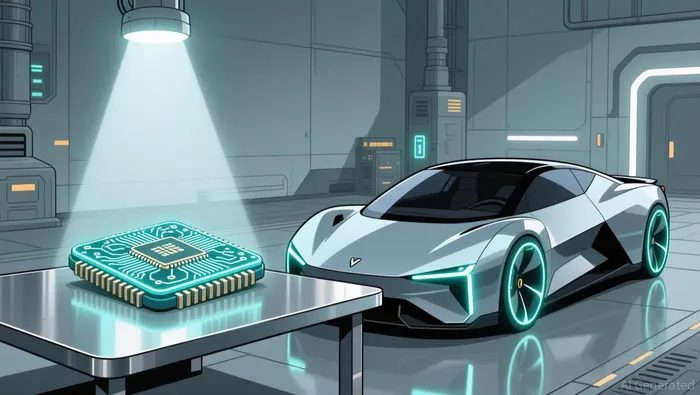
The Semiconductors sector has emerged as a standout performer in recent years, defying traditional inflationary headwinds. From 2022 to 2024, as core PCE inflation hovered near 2.9%, semiconductor producers demonstrated remarkable pricing power and demand resilience. NVIDIANVDA-- (NVDA), the sector's bellwether, surged 80% in 2025 alone, driven by insatiable demand for AI accelerators, cloud infrastructure, and 5G-enabled devices. This outperformance is not accidental. Semiconductors are inherently productivity-enhancing technologies, insulated from the drag of interest rates by their role in driving long-term economic growth.
Consider the data: Domestic semiconductor producer prices rose 6.1% in 2023, while import prices fell 3.8%, signaling robust pricing control. The Producer Price Index (PPI) for semiconductor manufacturing further climbed 2.2% in 2024, underscoring sustained demand. These metrics highlight a sector that thrives in moderate inflation, where innovation cycles and capital expenditures remain unshaken by rate hikes. For investors, this translates to a compelling case for overweighting Semiconductors in a 2.6% PCE environment.
Conversely, the Automobiles sector has struggled to adapt to the same inflationary backdrop. Historically sensitive to interest rates, consumer confidence, and trade policy, automakers have faced a perfect storm of headwinds. Tesla (TSLA), once a symbol of sectoral disruption, fell 12% in 2025 after a 15% gain in 2024, illustrating the sector's fragility. Auto loan rates averaging 7.6% have dampened demand, while tariffs on imports and lingering semiconductor shortages have constrained supply. New car prices, inflated by low inventory, have further eroded affordability, creating a self-reinforcing cycle of declining sales and inventory depletion.
The Automobiles sector's underperformance is not merely cyclical but structural. Unlike Semiconductors, which benefit from secular trends in digital transformation, automakers face a dual challenge: decarbonization mandates and the shift to software-defined vehicles. These transitions require capital-intensive retooling, which becomes riskier in a high-rate environment. With the Federal Reserve poised to cut rates in September 2025 if PCE inflation continues to moderate, the sector's recovery will likely lag, as rate-sensitive demand lags policy easing by months.
For investors, the implications are clear. A strategic rotation toward Semiconductors and away from Automobiles aligns with the macroeconomic realities of a post-inflationary world. This approach leverages the Semiconductors sector's low beta to interest rates and its role in productivity growth, while avoiding the Automobiles sector's high sensitivity to consumer and credit cycles.
Broader portfolio positioning should also reflect this divergence. Defensive allocations in technology-driven sectors can offset cyclical underweights in rate-sensitive industries. Moreover, as the Fed's policy pivot nears, investors must remain agile, adjusting exposures to capitalize on the next phase of inflation moderation.
In a world where inflation differentials dictate sectoral fates, the key to outperformance lies not in chasing short-term momentum but in understanding the structural forces reshaping industries. The PCE Price Index, with its subtle surprises, offers a lens through which to view these shifts—and a guide to navigating them profitably.

Stay ahead of the market.
Get curated U.S. market news, insights and key dates delivered to your inbox.


AInvest
PRO
AInvest
PRO



Comments
No comments yet