
Semiconductor Surge: NVIDIA and AMD Lead the AI Infrastructure Revolution
 Aime Summary
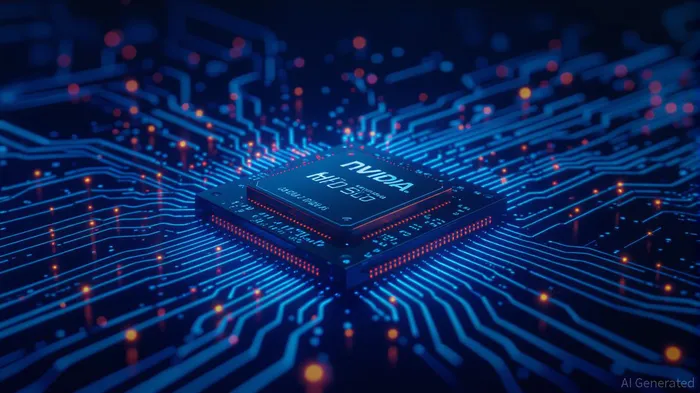
The recent premarket surge in NVIDIANVDA-- (NVDA) and AMDAMD-- (AMD) stocks—up 4.47% and 3.18%, respectively—signals a turning tide in the AI semiconductor market. With U.S. approval for NVIDIA's H20 chip exports to China and easing trade tensions, these companies are positioned to capitalize on a structural boom in generative AI infrastructure. But beyond short-term gains, the story is about enduring demand, strategic moves, and the risks that could upend this trajectory.
The Catalyst for the Surge
The immediate driver was the U.S. government's decision to allow NVIDIA's H20 AI chip exports to China—a reversal of the $4.5 billion revenue hit it faced in Q2 2024. This move unlocked pent-up demand from Chinese tech giants like ByteDance and Alibaba, which rushed to secure GPU orders for their AI models. NVIDIA's stock jumped to $171.40 pre-market, nearing its 2024 peak, while AMD's rise to $150.89 reflected broader optimism about the AI chip market's recovery.
The approval also validated NVIDIA's strategy to design chips compliant with export rules, such as its RTX Pro GPU. Meanwhile, AMD's MI350 series and partnerships with hyperscalers like Saudi-based Humain positioned it to capture AI inference markets, where its valuation discount (P/E of 23 vs. NVIDIA's 52) suggests upside potential.
Structural Growth Drivers: Why This Isn't a Flash in the Pan
The surge isn't just about short-term trade policy shifts. It reflects a secular trend in AI infrastructure spending, driven by three pillars:
1. GPU Shortages and Scaling Demands: NVIDIA's 80% market share in premium GPUs and its $26.3 billion data center sales in Q2 2024 underscore its dominance. But as AI models grow more complex, demand for high-end GPUs is outpacing supply.
2. Long-Term Contracts with Cloud Providers: Partnerships with TSMCTSM-- and Super Micro ComputerSMCI-- (SMCI) ensure robust manufacturing and server infrastructure, critical for scaling AI deployments.
3. New Markets and Ecosystem Plays: NVIDIA's UALink Consortium challenge highlights efforts to diversify revenue streams beyond hardware, while AMD's work with Humain signals opportunities in emerging AI hubs.
Risks on the Horizon
Despite the optimism, risks loom large. Geopolitical tensions could resurface, especially as China accelerates its own semiconductor development. Supply chain bottlenecks—particularly in advanced node fabrication—remain a concern, as does competition from firms like BroadcomAVGO--, which is leveraging AI networking and custom chip designs to carve out niche markets.
The GraniteShares NVYY ETF, which leverages NVIDIA exposure, offers high yields but comes with extreme volatility. Investors should tread carefully here, as its performance is acutely tied to near-term GPU demand fluctuations.
Investment Implications: Positioning for the AI Era
For investors seeking exposure to AI infrastructure, the choice between NVIDIA and AMD hinges on risk tolerance and strategic focus:
- NVIDIA: Its market leadership, data center revenue scale, and proprietary ecosystem (CUDA, Omniverse) make it the “moat” play. A return to $200/share is achievable if H20 shipments resume smoothly, but geopolitical and execution risks are material.
- AMD: A more value-oriented bet, with a lower P/E and a growing AI inference footprint. Its partnerships with hyperscalers and its ability to challenge NVIDIA in specific markets (e.g., cloud GPUs) justify a closer look.
Avoid overexposure to leveraged products like NVYY unless you can stomach extreme volatility. Instead, focus on companies with strong long-term contracts, such as NVIDIA's data center agreements and AMD's cloud collaborations.
Final Take: The AI Infrastructure Play Is Here to Stay
The premarket surge isn't just about trade policy; it's a vote of confidence in the AI revolution's staying power. As generative models drive demand for compute, NVIDIA and AMD—despite their challenges—are the twin engines powering this shift. Investors who align with structural growth in AI infrastructure stand to benefit, but vigilance on geopolitical and supply chain risks is essential.
In this new era, the question isn't whether to invest in AI chips—it's how to do so wisely.

Delivering real-time insights and analysis on emerging financial trends and market movements.
Latest Articles
Stay ahead of the market.
Get curated U.S. market news, insights and key dates delivered to your inbox.




Comments
No comments yet