
Semiconductor Plays in the Decoupling Era: How Geopolitics is Creating Undervalued Opportunities
The U.S.-China trade war has evolved into a full-blown tech cold war, with semiconductors at the epicenter. Amid escalating tariffs, export controls, and reciprocal sanctions, the semiconductor industry is fracturing into two parallel ecosystems: one dominated by the U.S. and its allies, the other by China's state-backed efforts. For investors, this bifurcation creates a rare opportunity to identify undervalued firms positioned to thrive in the era of decoupling. Here's how to navigate the chaos—and profit from it.
The Geopolitical Divide: A Semiconductor Cold War
The past year has seen unprecedented escalation. The U.S. has imposed sweeping export controls on advanced semiconductor equipment and software (e.g., EDA tools), while China retaliates with rare earth export curbs and retaliatory tariffs. The July 3 deal to lift U.S. EDA restrictions in exchange for Chinese rare earth shipments provides a temporary reprieve but doesn't resolve the core issue: neither side trusts the other's tech ambitions.
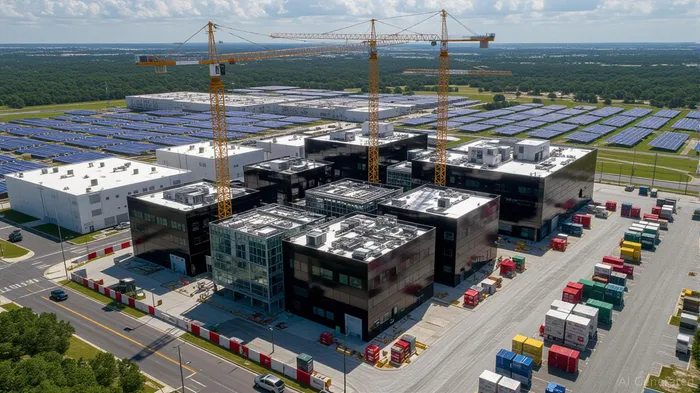
This mistrust is accelerating a global reshoring boom. U.S. tax incentives under the CHIPS Act (now offering a 35% investment tax credit) are fueling a wave of foundry construction in the U.S., while China races to build domestic capacity despite sanctions. The result? A fragmented market with winners and losers clearly defined by access to critical technologies and capital.
Winners: Firms with Irreplaceable Tech or Strategic Alliances
ASML Holding (ASML): The EUV Monopoly
ASML's extreme ultraviolet (EUV) lithography machines are the gold standard for advanced chipmaking. With no viable competitors (not even Chinese firms), ASMLASML-- remains indispensable to both U.S. and Taiwanese foundries. Its dominance is why it's a must-own stock in this environment.
Taiwan Semiconductor Manufacturing (TSMC): The Foundry Superpower
TSMC's cutting-edge 3nm and 2nm nodes are beyond China's current capabilities. With U.S. factories in Arizona and Texas (funded partly by CHIPS Act subsidies), TSMCTSM-- is the bridge between decoupling ecosystems. Its stock, however, has lagged expectations—making it a buying opportunity.
Applied Materials (AMAT): The Silicon Supply Chain King
Applied's deposition and etching tools are critical for chip fabrication. With 80% of its revenue tied to U.S. and Asian customers, it benefits from both CHIPS Act subsidies and the shift to localized production. Its valuation is still reasonable relative to growth prospects.Entegris (ENTG): The Invisible Infrastructure Play
Few investors know EntegrisENTG--, but its specialty materials (gases, chemicals) are essential for semiconductor manufacturing. With exposure to U.S. foundries and a fortress balance sheet, it's a low-risk, high-reward pick in the decoupling economy.
Losers: China's Struggling Chipmakers and U.S. Laggards
- SMIC and Huawei: Sanctions have frozen SMIC's progress at 28nm nodes, while Huawei's chip design arm struggles to compete without access to advanced EDA tools. Both are avoid at all costs unless they pivot to low-end markets.
- U.S. Firms Relying on Chinese Markets: Companies like IntelINTC-- (INTC) face margin pressure as China's subsidies undercut their pricing. Intel's stock has underperformed peers for years—this trend may continue.
The Undervalued Gem: Naura and Piotech (China's Hidden Plays)
While most Chinese semiconductor stocks are overpenalized, a few niche players could outperform. Naura and Piotech—blacklisted by the U.S. but state-backed—are racing to develop domestic EDA tools and lithography systems. While risky, their valuations are depressed enough to justify a small speculative position.
Risks and the 2025 Crossroads
- Policy Volatility: The August 2025 expiration of the U.S.-China tariff truce could trigger new rounds of escalation.
- Overbuilding: The rush to build foundries may lead to oversupply in 5–7 years.
- China's Innovation Surge: Don't underestimate Beijing's resolve. Breakthroughs in AI or quantum computing could shift the balance.
Final Take: Buy ASML and TSMC; Monitor China's Niche Players
The decoupling era is here to stay. Investors should focus on firms with irreplaceable tech, U.S. government backing, or exposure to domestic production incentives. Avoid anything reliant on cross-border trade.
Action Items:
1. Accumulate ASML and TSMC on dips.
2. Use the CHIPS Act's 35% tax credit to target U.S. semiconductor suppliers (e.g., AMATAMAT--, ENTG).
3. Keep a small position in Naura/Piotech for asymmetric upside if China's tech push succeeds.
The semiconductor cold war isn't ending anytime soon. Those who bet on the right firms now will be rewarded for years to come.

Stay ahead of the market.
Get curated U.S. market news, insights and key dates delivered to your inbox.




Comments
No comments yet