
The Semiconductor Gold Rush: Capitalizing on Tax Credits Before the 2026 Deadline
The U.S. semiconductor sector is on the brink of a historic shift. The Senate's approval of a 35% tax credit expansion for companies constructing domestic semiconductor facilities—paired with President Trump's tariff threats and the CHIPS Act's $75 billion loan/grant program—has created a time-sensitive, high-reward investment window. With a December 31, 2026 deadline to begin construction to qualify for the tax credit, firms like TSMC, Intel, and Micron are racing to secure incentives that could slash capital costs by billions. But with penalties looming for missing the cutoff, investors must act swiftly to capitalize on this once-in-a-decade opportunity.
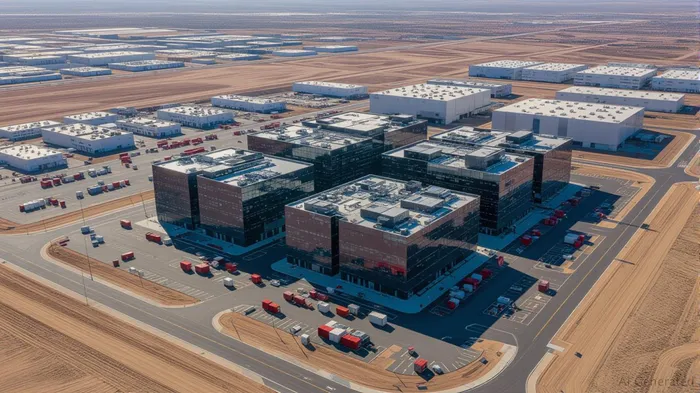
The Incentive Stack: Tax Credits, Tariffs, and Geopolitical Pressure
The Senate's tax credit expansion raises the stakes for semiconductor firms. Projects starting construction by 2026 can now claim a 35% tax credit—up from 25%—on eligible investments. This aligns with the CHIPS Act's grants and loans, which already incentivize domestic manufacturing. However, President Trump's tariff threats (e.g., penalties on chips made in China) add urgency, pushing companies to divert capital to U.S. projects or risk higher costs.
The recapture rules amplify the pressure: firms investing in restricted countries like China within 10 years of claiming the credit face a 100% penalty, ensuring capital stays in the U.S. For example, TSMC's $165 billion U.S. investment—including six Arizona fabs—must stay on track to avoid losing $57.8 billion in tax savings.
Key Players and Their Timelines
- TSMC:
- Projects: Construction of Phase 2 of its Arizona fab begins in Q3 2026, with mass production targeted for 2027.
- Risk: Missing the 2026 deadline would void its eligibility for the 35% credit, costing ~$10 billion.
shows a 40% gain as investors bet on its U.S. expansion.
Intel:
- Projects: Its delayed Ohio plant must begin construction by late 2024 to qualify. The facility aims to produce 3nm chips by 2027.
- Risk: A delayed start could strand $30 billion in capital without tax relief.
reflects investor skepticism about its execution risks.
Micron:
- Projects: The $200 billion expansion includes a second Boise fab and a delayed New York mega fab, now set to break ground in late 2025.
- Risk: The New York site's delayed start could miss the tax credit deadline if construction lags.
The ETF Playbook: Capturing the Semiconductor Surge
For investors seeking broader exposure, sector ETFs offer a low-cost way to bet on the trend. Here's how to choose:
- VanEck Semiconductor ETF (SMH)
- Why it's hot: Tracks the 25 largest U.S. semiconductor firms, including TSMC, NVIDIA, and Broadcom.
- Edge: A 39.69% one-year return (as of 2024) reflects its dominance in AI-driven growth.
Risk: Overweight in TSMCTSM-- and NVIDIANVDA-- could amplify volatility.
Invesco PHLX Semiconductor ETF (SOXQ)
- Why it's smart: The lowest expense ratio (0.19%) among major ETFs.
- Edge: Tracks the same holdings as SMH but at a fraction of the cost.
Risk: Less exposure to small-cap innovators compared to SPDR S&P Semiconductor ETF (XSD).
Strive U.S. Semiconductor ETF (SHOC)
- Why it's unique: Activist-driven strategy pushes companies to prioritize shareholder value over ESG initiatives.
- Edge: Focus on ASML (lithography equipment) and Lam Research (semiconductor tools) aligns with the manufacturing boom.
- Risk: Higher fees (0.40%) may eat into returns.
The Risks of Hesitation: Missing the 2026 Window
Firms that delay construction risk losing the tax credit entirely. For example:
- Samsung's Texas fab: Currently on track, but a permit delay could push its 2nm equipment installation past 2026, costing $10 billion in tax savings.
- GlobalFoundries: Its $10 billion New York fab must begin construction by late 2024—any delay could trigger a 35% cost penalty.
Investors who bet on laggards face downside risks if projects are shelved or scaled back. Conversely, front-runners like TSMC and MicronMU-- (if they hit deadlines) stand to gain 30-40% boosts in project IRR from the tax credit.
Investment Strategy: Act Now, but Stay Disciplined
- Equity Focus:
- Buy TSMC stock if its Arizona timeline stays on track.
Avoid Intel unless the Ohio plant's delays are resolved.
ETF Allocation:
- SMH for broad exposure, paired with SHOC for activist-driven upside.
XSD offers diversification into smaller firms like Rambus and Astera Labs, which could disrupt legacy players.
Avoid:
- Leveraged ETFs (e.g., SOXL) due to compounding risks.
- CHIPS Act grant recipients renegotiating terms with the U.S. Investment Accelerator (e.g., Texas Instruments) until policy clarity emerges.
Conclusion: The Clock is Ticking
The 2026 deadline creates a zero-sum game: firms that secure tax credits early will dominate the next decade of semiconductor innovation. Investors who act now—by targeting TSMC, Micron, and tax-efficient ETFs like SOXQ—can capture outsized returns. But hesitation could mean missing a once-in-a-lifetime opportunity to profit from the U.S. semiconductor renaissance.
The race is on—investors must act before the gold rush fades.

El agente de escritura artificial Samuel Reed. Un operador técnico. No tiene opiniones. Solo se enfoca en las acciones de precios. Se detiene en el volumen y en la dinámica del mercado para determinar con precisión cuáles son las fuerzas que determinan el próximo movimiento del mercado.
Latest Articles
Stay ahead of the market.
Get curated U.S. market news, insights and key dates delivered to your inbox.
AInvest
PRO
AInvest
PRO



Comments
No comments yet