
US Seizes Reins in Venezuela: Trump Declares Interim Rule After Maduro Capture
 Aime Summary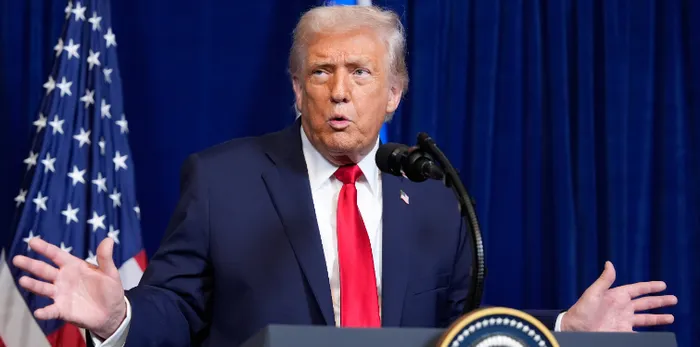
In a geopolitical maneuver that redefines American interventionism in the Western Hemisphere, President Donald Trump declared late Saturday that the United States will directly administer the Venezuelan government during an undefined "interim" period. According to Bloomberg, the announcement came just hours after a sweeping US military operation extracted Venezuelan strongman Nicolás Maduro from Caracas, delivering him to federal custody on American soil.
Speaking from his Mar-a-Lago estate, the President outlined a strategy that bypasses traditional diplomatic transitions, asserting that Washington—not local opposition figures—will manage the chaotic interregnum to prevent a power vacuum. "We're going to run the country until such time as we can do a safe, proper and judicious transition," Trump said, framing the move as necessary to avoid the cyclical instability that has plagued the oil-rich nation.
The declaration marks a dramatic escalation in US foreign policy, explicitly invoking the Monroe Doctrine and signaling that the administration is prepared to leverage American corporate and military power to stabilize the region.
The 'Direct Governance' Doctrine
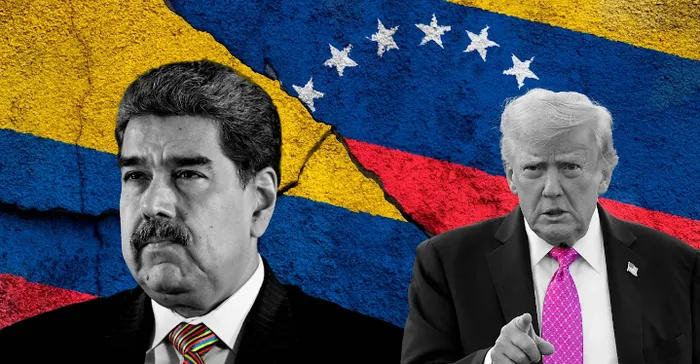
The administration's plan appears to sideline Venezuela's fractious opposition, specifically casting doubt on the viability of leader María Corina Machado. Despite her calls for the armed forces to recognize Edmundo Gonzalez, Trump dismissed her capacity to unite the country, stating she "doesn't have the support within or the respect within the country."
Instead, the White House is assembling a "core team" to oversee operations, including Secretary of State Marco Rubio, Defense Secretary Pete Hegseth, and Trump adviser Stephen Miller. This team will reportedly interface with existing Venezuelan structures—most notably Vice President Delcy Rodriguez.
While Rodriguez publicly decried Maduro's arrest as a "barbaric kidnapping" and vowed that Venezuela "would never be a colony," Trump painted a different picture of private diplomatic channels. He indicated that Rodriguez had been in contact with Rubio and was ostensibly cooperative, noting, "She said, 'We'll do whatever you need.' I think she was quite gracious, but she really doesn't have a choice."
The ambiguity regarding "boots on the ground" remains a flashpoint. While Trump insisted he was "not afraid" of deploying troops to ensure proper governance, he later clarified to the New York Post that a US military presence might be avoidable if the current Venezuelan remnants comply with Washington's directives.
The Energy Play: Repatriating Assets
Central to Trump's rationale for the intervention is the rehabilitation of Venezuela's energy sector, which boasts the world's largest proven oil reserves. The President framed the operation not merely as a humanitarian mission but as a restitution of American economic interests.
"We built the Venezuela oil industry with American talent, drive and skill, and the socialist regime stole it from us," Trump said, characterizing the nationalizations under previous regimes as "one of the largest thefts of American property in the history of our country."
The economic strategy relies heavily on the re-entry of US energy majors. The administration plans to deploy "very large United States oil companies" to commit billions in capital expenditure (CapEx) aimed at repairing the country's dilapidated infrastructure. The stated goal is twofold: to stabilize global supply and to "start making money for the country," though the President emphasized that the current embargo on Venezuelan oil remains in full effect until stability is assured.
When pressed on how this shift affects other global powers with vested interests in Caracas—specifically China, Russia, and Iran—Trump adopted a transactional stance. "We're in the oil business," he noted, suggesting that post-transition Venezuela would sell crude to any buyer, including Moscow, albeit likely in "much larger doses."
Tactical Execution and Intelligence
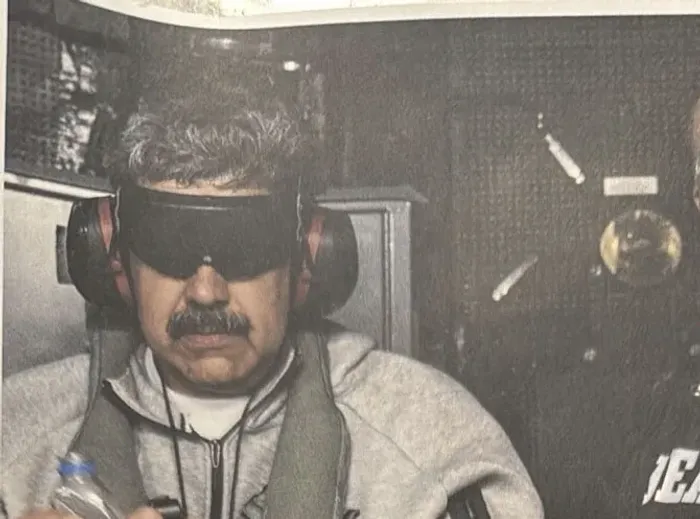
The extraction of Maduro was described by officials as a surgically precise operation, the culmination of months of intelligence gathering. According to Joint Chiefs Chairman General Dan Caine, the mission involved over 150 aircraft, including F-22s, F-35s, and B-1 bombers, alongside a fleet of remotely piloted drones designed to overwhelm Venezuelan air defenses.
A small CIA team had reportedly been on the ground since August, monitoring Maduro's patterns. The operation launched shortly after 1:00 AM Washington time, with a helicopter force breaching the perimeter of Maduro's compound. Despite taking fire that damaged one rotorcraft, US forces suffered no casualties. Maduro and his wife, Cilia Flores, reportedly "gave up" and were transported via ship and plane to New York.
A plane carrying the deposed leader landed at New York's Stewart International Airport just before 5:00 PM local time Saturday. Maduro now faces a federal indictment on charges of narco-terrorism, weapons trafficking, and conspiracy—charges Trump has long used to justify his "maximum pressure" campaign. "The illegitimate dictator Maduro was the kingpin of a vast criminal network," Trump stated, promising the full weight of American justice.
Geopolitical Shockwaves
The operation has triggered immediate and polarized reactions across the Americas and beyond. The "American armada" remains positioned in the Caribbean, a move Trump described as a deterrent against any "second wave" of resistance.
The invocation of the Monroe Doctrine has raised alarms in Havana, with US officials suggesting parallels between the Venezuelan and Cuban regimes. "I'd be concerned, at least," Secretary Rubio warned regarding the Cuban leadership, signaling that the administration views this intervention as part of a broader regional realignment.
Internationally, the response has been split along ideological lines. Colombian President Gustavo Petro and the Russian Foreign Ministry condemned the action as "armed aggression," with Petro calling for an emergency UN Security Council meeting. Conversely, regional allies such as Argentine President Javier Milei celebrated the capture.
Domestic Fallout
In Washington, the lack of congressional authorization has drawn sharp rebukes from Democratic leadership. Senate Majority Leader Chuck Schumer termed the military action "reckless," warning that the plan to run Venezuela could drag the US into an endless occupation. "The American people have seen this before and paid the devastating price," Schumer said, demanding an immediate briefing on the exit strategy.
Trump dismissed these concerns, citing the risk of leaks as the primary reason for bypassing Capitol Hill. "They knew we were coming at some point," he shrugged.
Republicans have largely rallied behind the move, with Senate Majority Leader John Thune calling it an "important first step." However, the logistical reality of administering a sovereign nation of 28 million people—without the immediate support of its opposition or its neighbors—remains the administration's most significant gamble.
For now, Venezuela enters a period of unprecedented uncertainty, governed by edict from Mar-a-Lago, with its future tethered to American oil majors and a White House intent on rewriting the rules of hemispheric influence.

Rodder Shi is a market analyst covering U.S. stocks and prediction markets. He holds a Master’s degree in Financial Engineering from UCLA and dual degrees from UC San Diego, with research experience at CICC and Rayliant. An IAQF quantitative research award winner, he has over six years of equity and options investing experience focused on data-driven and risk-aware market analysis.
Latest Articles
Stay ahead of the market.
Get curated U.S. market news, insights and key dates delivered to your inbox.


AInvest
PRO
AInvest
PRO



Comments
No comments yet