
SEI Investments Focuses on Growth and AI Integration as Digital Assets Evolve
 Aime Summary
- SEI Investments is prioritizing growth in wealth and asset management, leveraging AI and international expansion for revenue diversification.
- Deposit tokens are emerging as regulated digital instruments enabling secure, programmable financial flows between traditional and blockchain systems.
- The n-VM architecture is introducing multi-VM blockchain execution environments with shared consensus, offering enhanced efficiency and cross-chain interoperability.
SEI Investments Company, a leading provider of global investment processing and asset management solutions, is positioning itself for future growth through strategic R&D and international market expansion. The firm reported $150 million in sales last year, in part driven by the Stratos acquisition. Management has emphasized the importance of AI in accelerating service delivery and enhancing data-driven capital allocation.
The company's 85% revenue concentration in the US contrasts with growing interest in international markets, which it views as a key area for future diversification. SEISEIC-- also highlighted its focus on margin expansion through operational leverage and service enhancements.
Meanwhile, the emergence of deposit tokens is drawing attention from both institutional and retail stakeholders. These tokens, issued by commercial banks on blockchain networks, offer a regulated alternative to stablecoins and CBDCs. Unlike private stablecoins, deposit tokens are liabilities of regulated institutions, making them potentially more secure for institutional financial flows.
Early pilots by European banks demonstrate the utility of deposit tokens in cross-border payments and treasury management. The technology could streamline global financial transactions and reduce liquidity requirements while maintaining regulatory compliance.
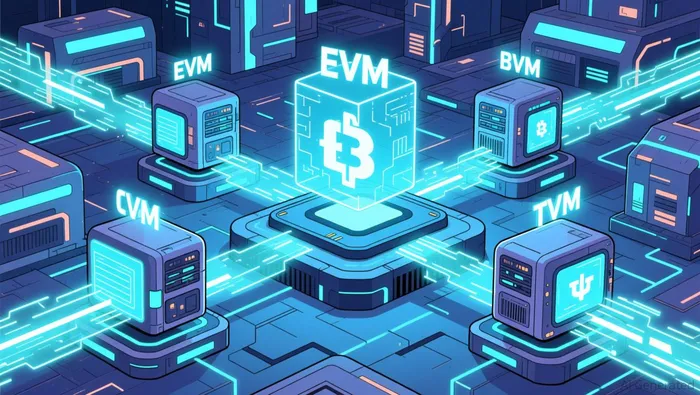
On the technical front, the n-VM architecture is redefining blockchain infrastructure by enabling parallel execution across multiple virtual machines (EVM, SVM, BVM, TVM) within a single consensus layer. This approach eliminates the need for bridges between chains and improves transaction throughput, with the implementation achieving up to 66,000 TPS.
The architecture is designed to be extensible, supporting new virtual machines without modifying the core framework. This modular design could facilitate broader adoption across diverse blockchain ecosystems, particularly in cross-chain applications and institutional use cases.
What is the significance of SEI Investments' strategic focus?
SEI Investments' emphasis on AI and international expansion underscores its long-term vision to remain competitive in a rapidly evolving financial services landscape. The company's recent acquisition and R&D efforts suggest a deliberate move toward innovation, particularly in capital allocation and wealth management. For investors, this strategy could lead to improved service efficiency and revenue diversification. However, as with any growth-focused company, operational execution will be key to delivering on these ambitions.
How do deposit tokens differ from stablecoins and CBDCs?
Deposit tokens are distinct from stablecoins and CBDCs in both issuance and regulatory context. While stablecoins are issued by private entities and often rely on reserve assets, deposit tokens are issued by commercial banks and backed by traditional deposit liabilities. This distinction offers greater regulatory clarity and institutional trust. Compared to CBDCs, which are issued by central banks, deposit tokens aim to provide programmable finance features, enabling smart contracts and automated financial workflows. These characteristics position deposit tokens as a complementary digital asset class in the broader blockchain ecosystem.
What are the potential benefits of the n-VM architecture?
The n-VM architecture's shared consensus and identity framework offer significant advantages in blockchain interoperability and efficiency. By eliminating the need for bridges between different virtual machines, the architecture streamlines cross-chain interactions and reduces latency. The implementation's high throughput and modular design also make it scalable, potentially supporting a wide range of applications in finance, supply chain, and enterprise solutions. However, widespread adoption will depend on achieving interoperability with existing systems and regulatory alignment, which remain ongoing challenges.

Blending traditional trading wisdom with cutting-edge cryptocurrency insights.
Latest Articles
Stay ahead of the market.
Get curated U.S. market news, insights and key dates delivered to your inbox.
AInvest
PRO
AInvest
PRO



Comments
No comments yet