
Security Priorities Undermine Nigeria's 5G Ambitions
 Aime Summary
Three years after Nigeria launched its 5G network, the country's coverage remains stuck at just 3%, far below regional peers and undermining broader digital transformation ambitions. Despite the African continent's growing appetite for advanced connectivity—evidenced by a projected $18 billion embedded finance market expansion by 2030—Nigeria's rollout has been mired in delays, raising concerns about infrastructure gaps and regulatory bottlenecks.
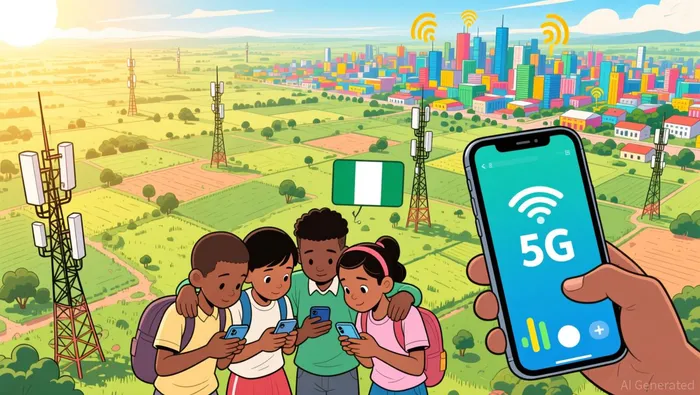
The sluggish progress contrasts sharply with the Middle East and North Africa (MENA), where 5G adoption is expected to surge from 7% of total connections in 2024 to 48% by 2030. This disparity highlights Nigeria's struggle to match the pace of neighboring regions, even as the country grapples with a dual crisis of security threats and economic instability. Recent high-profile kidnappings of over 300 schoolchildren in western Nigeria have further diverted government focus and resources from infrastructure projects, exacerbating delays in 5G deployment.
The Nigerian government has yet to provide a detailed explanation for the slow rollout, but experts point to a combination of factors. Meanwhile, the country's embedded finance sector-driven by fintechs like Lami Technologies and Payhippo—has shown resilience, with the market growing at a 15.7% annual rate since 2021. However, the absence of widespread 5G connectivity is seen as a drag on innovation, particularly in payments and digital banking, where real-time data processing is critical.
Security challenges have compounded the issue. The recent spate of school abductions, coupled with attacks on religious institutions, has forced authorities to prioritize immediate safety concerns over long-term infrastructure projects. President Bola Tinubu's decision to cancel international engagements, including the G20 summit, to address the security crisis underscores the political urgency. Yet, this focus has come at the cost of slowing down 5G-related initiatives, which require sustained investment and stakeholder collaboration.
In contrast, South Africa—a regional leader in digital innovation—is exploring a 20% tax on online gambling to fund regulatory frameworks and mitigate social harms. While Nigeria lacks a comparable fiscal strategy, the country's 5G stagnation risks isolating it from the continent's digital economy. The embedded finance report notes that Nigeria's fintech sector could benefit from 5G-driven improvements in transaction speeds and data analytics, but such gains remain out of reach without broader network access.
The situation reflects a broader tension in Africa's digital landscape: while regions like MENA are accelerating 5G adoption, others, including Nigeria, face structural challenges that hinder progress. Without urgent intervention, Nigeria risks falling further behind, even as its neighbors capitalize on the next phase of connectivity.

Stay ahead of the market.
Get curated U.S. market news, insights and key dates delivered to your inbox.






Comments
No comments yet